
Biogas Conditioning For CHP And Boiler: H2S And Moisture Removal
Raw biogas must be conditioned - hydrogen sulfide (H2S) removed to protect engines and boilers, moisture knocked out to avoid corrosion and condensate, and siloxanes and particulates filtered - before it can reliably fuel a CHP unit or boiler. Conditioning sits upstream of any upgrading and is what makes the gas engine-ready.
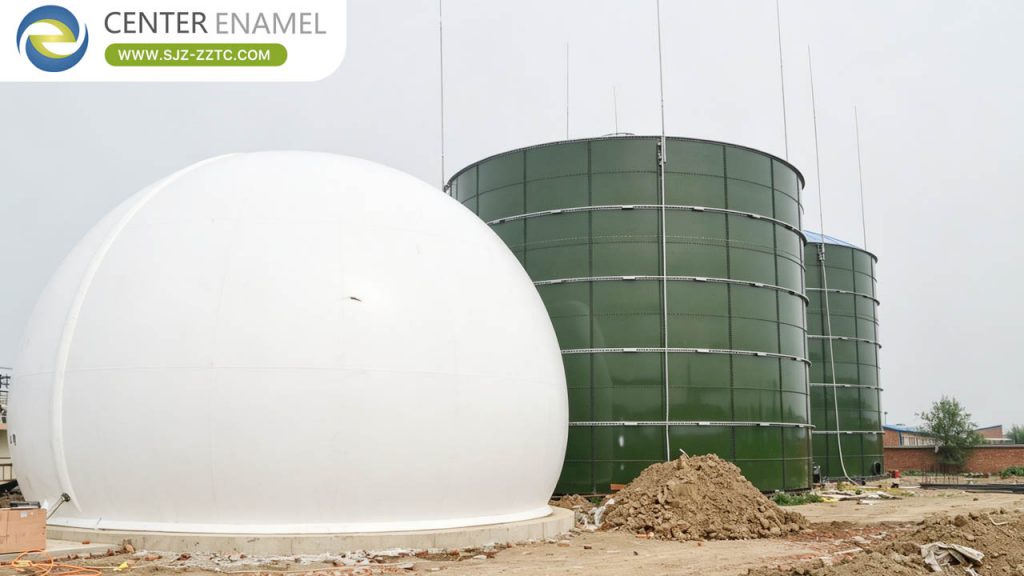
Why Raw Biogas Is Corrosive
Untreated biogas typically carries 0.1-2% H2S (sometimes higher on manure and sludge feeds), water vapor at near saturation, and traces of siloxanes and dust. Burned, H2S becomes sulfurous acid that eats engine valves, cylinder liners, and boiler tubes; moisture causes condensate and cold corrosion; siloxanes deposit abrasive silica on valves and turbines. Conditioning is the defense that lets the gas run for thousands of hours instead of hundreds.
The Conditioning Train
Conditioning chains three jobs: desulfurization to drop H2S into the tens-of-ppm range the engine tolerates, dehydration to remove most water vapor, and filtration for siloxanes and particles. The exact order and depth depend on the engine or boiler specification and on the raw gas - a boiler tolerates more H2S than a lean-burn engine, so the duty sets the target.
| Step | Removes | Common Method |
| Desulfurization | H2S | Biofilter, activated carbon, iron sponge, caustic scrubber |
| Dehydration | Water vapor | Chiller, refrigerant, or glycol contact |
| Filtration | Siloxanes, dust | Coalescing + activated carbon filter |
H2S Removal Methods
Biological desulfurization feeds a controlled air slip to the digester headspace or a biofilter and oxidizes H2S cheaply at low to moderate loads. Activated carbon and iron-based media capture H2S by adsorption or reaction and are simple but need media change. Caustic or oxidative scrubbers handle high and variable H2S but add reagent and waste streams. The choice balances H2S concentration, flow, and whether the site can service media.
CHP Vs Boiler Fit
A boiler is forgiving - it tolerates higher H2S and needs only light drying - so conditioning for a boiler is modest. A CHP engine, especially lean-burn, is strict: it wants very low H2S, low moisture, and clean siloxanes to protect the combustion path. The same raw biogas therefore gets a deeper train when the end use is power generation than when it is heat only.
| End Use | H2S Tolerance | Moisture Need | Siloxane Need |
| Boiler | Higher | Light drying | Modest |
| CHP engine | Very low | Deep dry | Strict |
| Engine (lean-burn) | Strictest | Deep dry | Strictest |
Project Case Study: Bangladesh Poultry Biogas
Project / Application: Poultry manure to biogas for power generation, Bangladesh. Industry: Livestock / biogas (engine-ready gas; noted as livestock, not municipal). Tank Type: CSTR + UASB. Key Requirements: Conditioned biogas feeding generation at about 2.0 kWh per m3.
| Field | Value | Source / Evidence |
| Daily Treatment Capacity | 47 t/d (poultry manure) | Company project reference |
| Treatment Process | CSTR + UASB anaerobic reactors | Company project reference |
| Biogas Production | 4,900 m3/day | Company project reference |
| Power Generation | 9,800 kWh/day (2.0 kWh/m3 biogas) | Company project reference |
| Effluent Standard | Complies with local regulations | Company project reference |
About Company
Shijiazhuang Zhengzhong Technology Co., Ltd (Center Enamel) is a comprehensive high-tech enterprise specializing in wastewater engineering, process section contracting, and equipment manufacturing. The company delivers biogas and wastewater projects through three main lines - EPC (turnkey) contracting, equipment supply, and process packages - covering livestock and municipal wastewater, biomass energy, industrial wastewater, and food waste. Its reactor portfolio spans CSTR, USR, UBF, UASB, IC, and EGSB, backed by in-house Glass-Fused-to-Steel tank manufacturing (enamel firing at 820-930 C) and certifications including ISO 9001, NSF/ANSI 61, and CE-EN 1090. With 35+ years of operation, a 150,000 m2 manufacturing base, and projects in 100+ countries, Center Enamel provides the single-responsibility engineering behind biogas engineering that conditions raw gas for reliable engine and boiler use - pairing anaerobic reactors such as CSTR and UASB with the desulfurization and drying the duty demands, as on the Bangladesh poultry plant generating 9,800 kWh per day.
Biogas conditioning is the upstream discipline - H2S, moisture, and siloxanes controlled to the end-use spec - that turns raw digester gas into fuel a CHP or boiler can burn for thousands of hours.
Frequently Asked Questions
Q1: Why is raw biogas corrosive? A1: H2S becomes acid on combustion; moisture and siloxanes add corrosion and abrasive deposits.
Q2: What does conditioning remove? A2: H2S, water vapor, siloxanes, and particulates.
Q3: How is H2S removed? A3: Biofilter, activated carbon, iron media, or caustic scrubber, by load and flow.
Q4: Does a boiler need conditioning? A4: Yes, but lighter than an engine - mainly drying and modest H2S control.
Q5: Why is CHP stricter? A5: Engines need very low H2S, moisture, and siloxanes to survive.
Q6: What is siloxane? A6: A silicon trace that deposits abrasive silica on engines and turbines.
Q7: Is conditioning the same as upgrading? A7: No; conditioning cleans for combustion, upgrading removes CO2 for biomethane.
Q8: What sets the target? A8: The engine or boiler manufacturer's gas spec.
Suggested CTA
Share your raw-biogas composition and end use with an engineer, or request a conditioning train outline for your plant.