
Biogas Digestate Storage and Retreatment: Best Practices and Advanced Technologies
While anaerobic digestion is widely celebrated for producing renewable energy and reducing greenhouse gas emissions, it generates a substantial secondary output: digestate. Comprising both solid and liquid fractions rich in nitrogen, phosphorus, and potassium, digestate serves as a high-grade organic fertilizer. However, without proper biogas digestate storage and retreatment, it can pose environmental challenges, including ammonia volatilization, odor emissions, and high transportation costs due to excess water content.
Implementing robust storage infrastructure and advanced retreatment technologies is vital for maximizing nutrient value, complying with strict environmental regulations, and improving the economic viability of commercial biogas operations.
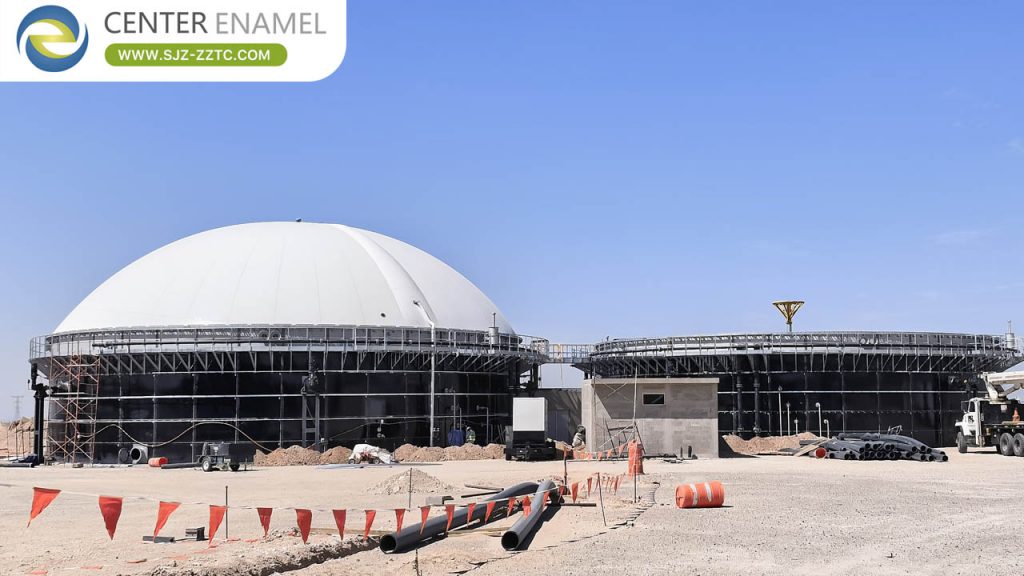
Key Requirements for Biogas Digestate Storage
Effective digestate storage prevents environmental contamination while preserving valuable agronomic nutrients:
- Covered Storage Structures: Modern storage tanks or lagoons must be fitted with gas-tight or impermeable covers (such as tent roofs, floating plastic membranes, or concrete domes) to capture residual methane emissions and drastically reduce foul odors and ammonia loss.
- Capacity Sizing: Storage facilities must be large enough to accommodate digestate volume during non-spreading seasons (such as winter or rainy periods) when local regulations prohibit field application. Most jurisdictions require a minimum of 4 to 9 months of storage capacity.
- Homogenization Equipment: Integrated vertical mixers or propeller stirrers installed within storage tanks prevent stratification, ensuring that solid particles do not settle permanently and that the fertilizer remains uniform prior to field application.
Digestate Retreatment and Resource Recovery Technologies
Because raw digestate typically consists of 90% to 98% water with low initial solid content, advanced retreatment and separation technologies are deployed to reduce volume and extract high-value products:
1. Solid-Liquid Separation
- Screw Press Filters: Mechanically press digestate through fine cylindrical screen meshes using a slow-rotating screw. They provide low energy consumption and produce a stackable, fiber-rich solid cake ideal for soil amendment or bedding.
- Decanter Centrifuges: Utilize high-speed centrifugal force to separate fine suspended particles and phosphorus into a dense solid cake while discharging a clear liquid centrate.
2. Nutrient Recovery and Advanced Polishing
- Ammonia Stripping and Scrubbing: Extracts volatile ammonium from liquid fractions, converting it into high-purity ammonium sulfate fertilizer.
- Reverse Osmosis and Membrane Filtration: Ultrafiltration and reverse osmosis polish separated liquid fractions, removing dissolved salts and heavy contaminants to produce clean water suitable for safe environmental discharge or industrial reuse.
Comparative Data Table: Digestate Storage and Retreatment Technologies
| Technology / Method | Primary Function | Key Operational Benefit | Output Product |
| Covered Storage Tank | Long-term containment | Prevents ammonia loss and captures residual gases | Liquid bio-fertilizer |
| Screw Press Filter | Mechanical dewatering | Low energy consumption, simple fibrous separation | Stackable solid cake (rich in P & fibers) |
| Decanter Centrifuge | High-force separation | High efficiency in removing fine particles & phosphorus | Nutrient-dense solid cake & clean centrate |
| Ammonia Stripper | Nitrogen extraction | Converts volatile ammonia into concentrated fertilizer | Commercial ammonium sulfate |
| Reverse Osmosis (RO) | Liquid polishing | Purifies liquid fraction for safe water discharge | Clean water permeate |
Frequently Asked Questions (FAQ)
Q1: Why is digestate storage required to be covered?
A: Covering digestate storage tanks prevents the loss of volatile nitrogen (ammonia) into the atmosphere, eliminates foul odor complaints from neighboring communities, and captures any residual biogas or methane emissions.
Q2: What is the main benefit of solid-liquid separation for digestate?
A: Solid-liquid separation drastically reduces the volume of liquid that needs to be transported to agricultural fields, concentrates valuable phosphorus into a stackable solid cake, and yields a pumpable liquid fraction that is easier to irrigate or process further.
Q3: Can treated digestate wastewater be safely discharged into local water bodies?
A: Raw or mechanically separated digestate cannot be directly discharged. However, when subjected to advanced polishing technologies such as ultrafiltration and reverse osmosis, the liquid can be cleaned sufficiently to meet strict environmental discharge or water reuse standards.