
Biogas End-Use Pathways Compared: CHP, Heat, and Vehicle Fuel
Biogas offers three main end-use pathways: on-site combined heat and power (CHP) for 35-45% electricity and 80-90% total energy, direct boiler heat, or upgrading to 95-99% methane biomethane for vehicle fuel or grid injection at 200-250 bar. The right pathway depends on local energy prices, distance to a gas grid, and transport-fuel demand.
Pathway 1: CHP (Power and Heat)
CHP burns raw biogas on site and returns 35-45% as electricity with heat recovered for process or space heating. It is the simplest, lowest-capital route and self-consumes the gas, avoiding compression. The limit is that value depends on local power and heat demand.
Pathway Comparison
| Pathway | Methane need | Pressure | Best when |
| CHP | Raw 55-65% | Atmospheric | On-site power/heat |
| Boiler heat | Raw 55-65% | Low | Process heat only |
| CBG vehicle | 95-99% | 200-250 bar | Fleet or fuel sales |
| Grid injection | 95-99% | Line pressure | Near gas network |
Pathway 2: Upgraded Biomethane
Where vehicle fuel or grid injection is the goal, an upgrading skid (PSA, membrane, or amine) lifts biogas to 95-99% methane. A compressor then brings it to 200-250 bar for tube trailers or dispensers, or to line pressure for injection. This unlocks higher-value markets but adds CAPEX and OPEX.
Quality Control Across Pathways
Every pathway needs H2S and moisture control; vehicles and grids also need siloxane removal. Consistent gas quality protects engines and compressors. A well-run plant holds 55-65% methane at the digester and 95-99% after upgrading, with the residue digestate returned as fertilizer.
Project Case Study
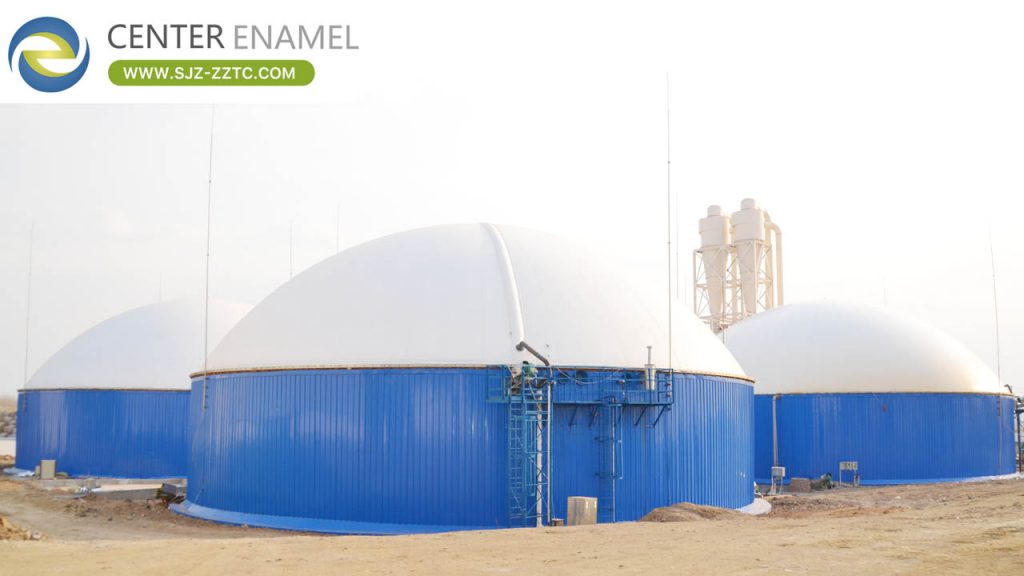
Zhenyuan Group Biogas Project in Henan. A vehicle-grade methane system digesting 650 T/D in CSTR reactors, yielding 3,000,000 m3 CH4/year — a real example of biogas carried all the way to a transport-fuel end-use rather than burned on site.
| Project | Zhenyuan Group Biogas Project in Henan |
| Location | Xinzheng, Henan, China |
| Industry | Renewable Vehicle Fuel |
| Application | Biogas end-use - vehicle fuel |
| Product | CSTR digester tanks (GFS) |
| Output | 3,000,000 m3 CH4/year |
| Status | Delivered 2013 |
About Shijiazhuang Zhengzhong Technology Co., Ltd (Center Enamel)
Shijiazhuang Zhengzhong Technology Co., Ltd (Center Enamel) backs pathway choice with quality control: every GFS plate is enameled by fusing glass to steel at 820-930 C, then inspected to ISO 28765 and ISO 9001 before shipment. That documented, repeatable quality is what lets a digester deliver consistent, H2S-resistant gas that downstream CHP or upgrading packages can rely on.
Advantages and Limitations
CHP is simplest and cheapest; upgraded CBG reaches higher-value markets. Limits: upgrading and compression add cost and media use; and raw-gas quality still needs H2S control regardless of path.
Comparison: CHP vs Upgraded CBG
| Criterion | CHP | Upgraded CBG |
| Value | Power + heat | Fuel / grid credit |
| CAPEX | Lower | Higher |
| Complexity | Low | Higher |
Pick the biogas pathway by local demand: CHP for on-site power and heat, upgraded biomethane for vehicle fuel or grid injection at 200-250 bar. Control H2S and moisture in every case. Send your energy profile and we will size the GFS digester for your chosen pathway.
Frequently Asked Questions (FAQ)
Q1: What are the main end uses of biogas?
A: CHP power and heat, boiler heat, and upgraded biomethane for vehicles or grid injection.
Q2: Is CHP better than vehicle fuel?
A: CHP is simpler and cheaper; CBG reaches higher-value markets but costs more to build and run.
Q3: How is biogas upgraded?
A: PSA, membrane, or amine skids lift it to 95-99% methane.
Q4: What pressure does vehicle biogas need?
A: Compression to 200-250 bar for dispensers or tube trailers.
Q5: What tank capacity is available?
A: GFS digester tanks from 200 m3 to 60,000 m3.
Q6: What standards apply?
A: GFS tanks follow ISO 28765 and AWWA D103; ISO 9001 quality system.
Suggested CTA
Tell us your energy demand and fuel options. We will size the GFS digester and buffer tankage for your biogas end-use pathway.