
Biogas Flaring: Why Is a Biogas Flare Needed in a Biogas Production System?
Biogas is a renewable energy source produced through anaerobic digestion, in which microorganisms break down organic materials such as agricultural waste, animal manure, food waste, and wastewater sludge without oxygen.
The resulting biogas mainly consists of methane (CH₄) and carbon dioxide (CO₂), along with smaller amounts of water vapor, hydrogen sulfide (H₂S), and other impurities.
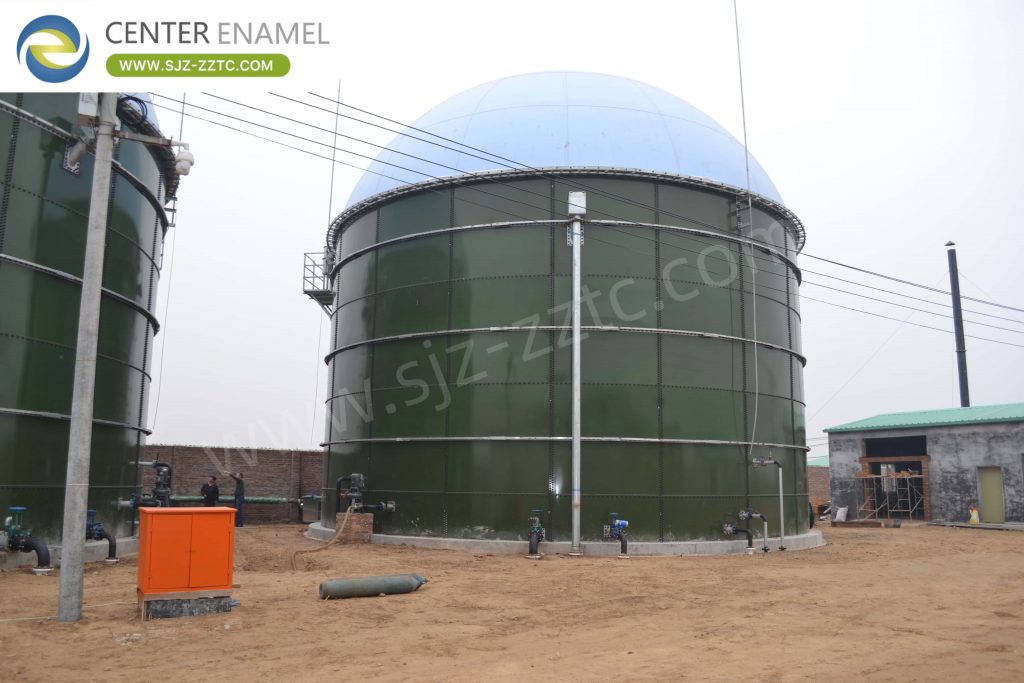
However, biogas cannot always be used directly after production. It needs proper treatment, pressure regulation, and flow monitoring before being supplied to energy-consuming equipment.
One important component of a biogas production system is the biogas flare, which safely burns excess biogas when it cannot be used for heating, electricity generation, or other applications.
Understanding the functions of each piece of equipment helps explain why a flare is not simply an optional burner, but an important part of a reliable biogas management system.
Gas Holder: Collecting and Storing Biogas
The gas holder is the first piece of equipment in the post-production process.
After anaerobic digestion, the generated biogas is collected and temporarily stored in a gas holder. Its primary function is to balance the difference between continuous gas production and fluctuating gas consumption.
Biogas production does not always match the demand from boilers, generators, or other equipment. For example, a digester may continuously produce gas even when a boiler is temporarily shut down.
A gas holder helps manage these variations by providing temporary storage and maintaining a relatively stable gas supply.
Its main functions include:
Collecting biogas from the anaerobic digestion system.
Providing temporary storage for produced gas.
Balancing variations between gas production and consumption.
Helping maintain stable gas pressure within the system.
Proper gas storage also reduces the likelihood of uncontrolled gas release caused by short-term differences between production and demand.
Biogas Dehydration: Removing Excess Moisture
Biogas leaving the gas holder normally contains water vapor. As the gas cools during transportation, some of this vapor condenses into liquid water.
Excess moisture can create several operational problems, including pipeline corrosion, blocked pipes, pressure losses, and damage to downstream equipment.
The biogas dehydration system removes moisture before the gas enters subsequent treatment and utilization equipment.
Common dehydration methods include:
Condensate separation: Removing liquid water through condensate traps and separators.
Cooling and condensation: Cooling biogas to condense water vapor, followed by liquid separation.
Adsorption drying: Using drying materials to absorb residual moisture.
Removing moisture helps protect pipelines, valves, booster fans, flowmeters, and combustion equipment.
It also improves the reliability of the entire biogas transportation system.
Desulfurization: Removing Hydrogen Sulfide
After dehydration, biogas enters the desulfurization system.
One of the most important impurities in raw biogas is hydrogen sulfide (H₂S). This gas has a characteristic rotten-egg smell and can become highly corrosive when it reacts with moisture.
Hydrogen sulfide can cause:
Corrosion of pipelines and metal components.
Damage to boilers, engines, and other equipment.
Increased maintenance costs.
The formation of sulfur dioxide (SO₂) during combustion.
Therefore, removing H₂S is essential for protecting downstream equipment and improving gas quality.
Common biogas desulfurization technologies include:
| Desulfurization method | Working principle | Typical application |
| Activated carbon | Adsorbs hydrogen sulfide onto a porous surface | Fine desulfurization |
| Iron oxide media | Reacts with H₂S to form iron sulfide compounds | Dry desulfurization |
| Biological desulfurization | Uses sulfur-oxidizing microorganisms to convert H₂S | Continuous biogas treatment |
| Chemical scrubbing | Uses chemical solutions to absorb or react with H₂S | Higher-capacity treatment systems |
The appropriate technology depends on the incoming H₂S concentration, gas flow rate, required outlet gas quality, and operating conditions.
Effective desulfurization helps extend equipment service life and reduces the risk of sulfur-related emissions during combustion.
Biogas Booster Fan: Increasing Gas Pressure
Once moisture and hydrogen sulfide have been removed, the treated biogas passes through a booster fan.
The main purpose of the biogas booster fan is to increase gas pressure so that biogas can be transported reliably to downstream equipment.
In actual operation, gas pressure may decrease because of pipeline resistance, filters, valves, and other equipment.
If the pressure is too low, the boiler or flare may not receive a stable gas supply.
A booster fan helps overcome these pressure losses and maintain the required operating pressure.
Its main functions include:
Increasing biogas delivery pressure.
Supporting stable gas transportation.
Compensating for pressure losses in pipelines.
Helping downstream combustion equipment operate reliably.
The booster fan must be selected according to the required gas flow rate, pressure increase, gas composition, and operating conditions.
Importantly, a booster fan is not a substitute for proper gas storage or pressure safety devices. It should operate together with appropriate monitoring and protection systems.
Flowmeter: Measuring Biogas Flow Rate
After pressure boosting, biogas passes through a flowmeter.
A flowmeter measures how much biogas moves through the pipeline over a given period. This information is essential for monitoring production, controlling gas distribution, and managing energy consumption.
For example, operators can use flow measurements to determine whether the amount of biogas supplied to a boiler is sufficient for its operating requirements.
Flow data also helps identify abnormal operating conditions, such as unexpected reductions in gas production or excessive gas consumption.
Common biogas flowmeter technologies include:
Thermal mass flowmeters.
Ultrasonic flowmeters.
Vortex flowmeters.
Differential pressure flowmeters.
Different technologies have different requirements regarding gas composition, moisture, pressure, accuracy, and installation conditions.
| Measurement parameter | Purpose | Operational benefit |
| Gas flow rate | Measures the volume or mass of gas flowing through the pipeline | Monitors gas supply |
| Gas pressure | Indicates the pressure available in the pipeline | Supports pressure management |
| Gas temperature | Helps interpret gas measurement conditions | Improves measurement reliability |
| Gas composition | Identifies methane and other gas concentrations | Supports energy and combustion management |
By monitoring these parameters, operators can make better decisions about whether biogas should be directed to energy-consuming equipment or the flare system.
Biogas Flare: Safely Burning Excess Biogas
The biogas flare is an important safety and environmental protection device in a biogas production plant.
Biogas production is generally continuous, but gas consumption is not always constant. Sometimes the plant produces more biogas than its boilers or generators can consume.
In other situations, downstream equipment may stop operating because of maintenance, unexpected breakdowns, or temporary shutdowns.
If the excess biogas has nowhere to go, pressure inside the gas collection and storage system may increase.
A biogas flare provides a controlled destination for this surplus gas by burning it instead of allowing uncontrolled methane release into the atmosphere.
During combustion, methane reacts with oxygen to produce carbon dioxide and water vapor:
CH₄ + 2O₂ → CO₂ + 2H₂O + Heat
This process converts methane into carbon dioxide and water under suitable combustion conditions.
Although carbon dioxide is still a greenhouse gas, methane has a much stronger warming effect over a given period. Therefore, properly operated flaring can significantly reduce the climate impact compared with directly releasing methane.
The flare also helps prevent uncontrolled gas accumulation and supports safer plant operation.
Why Is a Biogas Flare Necessary?
A common question is: If biogas can be used to generate electricity or produce heat, why does a biogas plant still need a flare?
The answer is that biogas production and energy demand are not always synchronized.
A flare provides an essential backup solution when the gas cannot be used effectively.
There are several important reasons why biogas plants need flare systems.
Preventing Uncontrolled Methane Emissions
Methane is the main combustible component of biogas and a powerful greenhouse gas.
If surplus biogas is released directly into the atmosphere, the methane contributes to climate change without providing any energy benefit.
A flare burns methane and converts it mainly into carbon dioxide and water vapor when combustion is effective.
This makes controlled combustion preferable to uncontrolled methane venting.
Managing Excess Biogas Production
Anaerobic digesters can produce biogas continuously, even when gas demand decreases.
For example, a facility may generate biogas throughout the night while its main boiler operates only during daytime production hours.
When gas production exceeds consumption and available storage capacity, the flare can burn the surplus gas.
This helps maintain a balance between gas production, storage, and utilization.
Protecting Equipment During Shutdowns
Boilers, generators, and other gas-consuming equipment require regular maintenance.
Unexpected equipment failures can also interrupt normal gas consumption.
During these periods, biogas production may continue. The flare provides an alternative route for disposing of the surplus gas and helps prevent excessive pressure buildup.
Improving Plant Safety
Biogas is flammable, and methane can form explosive mixtures with air under certain conditions.
Uncontrolled gas accumulation or leakage can create serious safety hazards.
A properly designed flare system provides a controlled combustion point for excess gas, helping reduce the risk of uncontrolled methane release.
However, a flare does not replace pressure relief devices, gas detection systems, ventilation, or other required safety measures.
Reducing Odors and Certain Harmful Compounds
Biogas may contain residual hydrogen sulfide and other odorous compounds.
Combustion can destroy some of these compounds, although sulfur-containing gases may be converted into sulfur dioxide.
For this reason, effective desulfurization before combustion remains important.
A flare should be designed and operated to meet applicable air emission requirements.
How Does a Biogas Flare System Work?
A typical biogas flare system consists of a gas inlet pipeline, control valves, an ignition system, a burner, and flame monitoring equipment.
When excess biogas needs to be disposed of, the control system directs the gas toward the flare.
The general operating process includes:
Gas collection: Excess biogas is collected from the gas storage and treatment system.
Gas supply: The gas is transported through the designated flare pipeline.
Ignition: A pilot burner or automatic ignition system provides an ignition source.
Combustion: Biogas enters the burner and is combusted under controlled conditions.
Flame monitoring: Sensors monitor flame conditions to confirm that combustion is occurring.
Safety control: If ignition fails or abnormal operating conditions occur, the control system responds according to the designed safety logic.
Modern flare systems may include automatic ignition, flame detection, temperature monitoring, pressure monitoring, and safety interlocks.
These features help ensure that excess biogas is burned reliably rather than released without control.
Different Types of Biogas Flare Systems
Biogas flares are generally divided into open flares and enclosed flares.
Open Flare
An open flare burns biogas through an exposed burner, allowing the flame to be visible.
Its advantages include relatively simple construction, straightforward installation, and lower equipment complexity.
However, combustion conditions can be more affected by wind and environmental conditions.
Enclosed Flare
An enclosed flare burns biogas inside an insulated combustion chamber.
Its main advantages include better control of combustion temperature, reduced visibility of the flame, and improved control over combustion conditions.
Enclosed systems are often suitable for facilities requiring more controlled combustion performance.
The choice depends on plant capacity, gas composition, operating conditions, environmental regulations, and project budget.
Biogas Flare vs. Biogas Boiler: What Is the Difference?
Both biogas flares and biogas boilers burn biogas, but they serve different purposes.
A boiler is designed to recover useful thermal energy, while a flare is primarily designed to safely dispose of excess or unusable biogas.
| Comparison | Biogas Flare | Biogas Boiler |
| Main purpose | Safely combust excess biogas | Generate useful heat |
| Energy recovery | Generally not designed for useful heat recovery | Transfers heat to water or another heating medium |
| Typical application | Surplus gas, shutdowns, emergencies | Industrial heating and hot water |
| Operating priority | Safety and controlled gas disposal | Energy utilization |
| Gas supply | Used when required for excess gas management | Used according to heat demand |
| Main benefit | Reduces uncontrolled methane release | Converts biogas into useful thermal energy |
A well-designed biogas plant should prioritize beneficial gas utilization whenever practical.
However, a flare remains necessary as a backup system because boilers and other energy-consuming equipment cannot always operate continuously.
Important Considerations When Operating a Biogas Flare
Installing a flare is only the first step. Proper operation and maintenance are equally important.
Plant operators should pay attention to the following factors:
Gas pressure: Ensure that the flare receives gas within its specified operating pressure range.
Gas flow rate: Select a flare with sufficient capacity for the expected surplus biogas production.
Ignition reliability: Regularly check the pilot burner and automatic ignition system.
Flame detection: Verify that flame sensors and associated safety controls work correctly.
Gas quality: Monitor moisture and hydrogen sulfide concentrations to protect equipment and control emissions.
Pipeline condition: Inspect valves, connections, condensate drains, and flame arrestors where installed.
Regular maintenance: Follow the manufacturer's inspection and maintenance recommendations.
The flare should also be designed in accordance with applicable local safety and environmental regulations.
A reliable system combines proper equipment selection, automatic control, regular inspection, and trained operators.
Conclusion
The post-production stage of a biogas plant involves several important processes: gas storage, dehydration, desulfurization, pressure boosting, and flow measurement.
After treatment and monitoring, biogas can be supplied to boilers or other energy-consuming equipment. When production exceeds demand, or when downstream equipment is unavailable, the biogas flare provides a controlled way to burn the surplus gas.
A biogas flare is therefore more than a simple combustion device. It plays an important role in methane emission management, plant safety, and operational reliability.
For any biogas project, combining efficient energy utilization with a properly designed flare system is an important part of achieving safe, stable, and environmentally responsible operation.
Looking for a reliable biogas flare system for your biogas plant? Contact our team today for professional advice and customized solutions tailored to your project requirements.
Whether you need a biogas flare, gas treatment equipment, or a complete biogas utilization system, we are ready to help you find the right solution. Get in touch with us to discuss your project!
Frequently Asked Questions (FAQs)
1. Why do biogas plants need a flare if they already have a boiler?
A boiler can only consume biogas when it is operating and has a demand for heat. However, anaerobic digesters may continue producing gas during boiler shutdowns, maintenance, or periods of low heat demand. A flare safely burns excess biogas when it cannot be used by the boiler or other equipment.
2. Does burning biogas in a flare eliminate methane emissions completely?
No. Proper combustion converts most methane into carbon dioxide and water vapor, significantly reducing methane emissions compared with direct venting. However, incomplete combustion, ignition failure, or poor operating conditions can result in methane slip. Regular inspection and proper flare operation are therefore essential.
3. Can a biogas flare operate automatically?
Yes. Modern biogas flare systems can use automatic ignition, flame detection, temperature monitoring, pressure monitoring, and control valves. When the system detects that excess biogas needs to be burned, it can activate the flare according to its programmed operating logic and safety requirements.