
Leading Biogas Plant Design and CSTR Process Soluiton Provider-Center Enamel
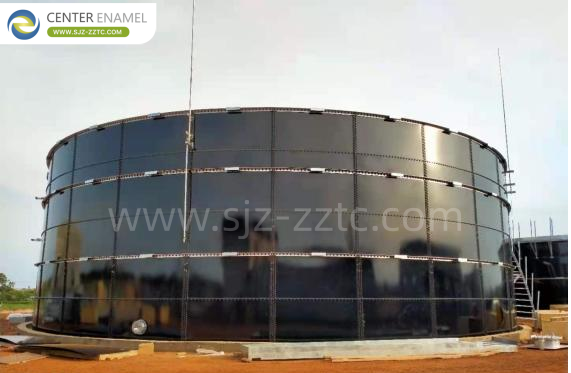
The core challenges of industrial wastewater treatment center on the "three highs"-high difficulty, high cost, and high energy consumption. Wastewater from new energy, chemical, and pharmaceutical industries is complex in composition with numerous characteristic pollutants, and traditional treatment processes are difficult to remove effectively. Chinese companies have significant price advantages in the mid-to-low-end equipment segment. The industry also faces continuous technological upgrade pressure from increasingly stringent emission standards, as well as new requirements for digitalization and low-carbon transformation on operational refinement management capabilities. To overcome these challenges within any advanced Biogas Plant Design, professional engineering approaches are required.
CSTR Applicable Scenarios
Primarily for high-solids organic pollutant treatment, widely used in food waste leachate, large-scale livestock manure, slaughterhouse wastewater, and food processing high-strength wastewater. Also suitable for municipal sludge and industrial organic sludge anaerobic digestion. In the agricultural and environmental sector, it is used for large-scale farm manure resource recovery, achieving wastewater reduction, harmless treatment, and energy recovery. In the food and brewing industry, it is suitable for high-oil, high-protein, high-suspended-solids wastewater. It is also suitable for small to medium-sized wastewater treatment projects, township decentralized wastewater treatment, and as a pretreatment process for high-strength organic wastewater in large industrial parks to reduce downstream load. It is particularly suitable for difficult-to-treat organic wastewater with complex composition, high solids content, and easy crusting, forming the core mechanism of the CSTR Process.
POME Operation and Maintenance Cost Analysis
O&M costs are moderate to low-biogas recovery benefits are exceptionally high-outstanding overall economics-one of the best input-output ratios in industrial wastewater treatment. POME has excellent biodegradability (BOD/COD 0.5-0.6) with very high anaerobic digestion efficiency-no expensive advanced oxidants or detoxification agents needed-only small amounts of lime/NaOH for pH adjustment and flocculants-low chemical costs. CSTR/USR anaerobic equipment is simple and durable-GFS tanks with 30+ year corrosion resistance, no precision wear parts-extremely low failure rates and minimal repair/replacement-controllable long-term O&M costs.
Biogas recovery is the core economic benefit-high-concentration organic wastewater produces exceptional biogas yields of 8-15 m³ per m³ POME-CHP can meet 30-50% of mill electricity demand, with waste heat for digester heating and FFB sterilization preheating-very high energy self-sufficiency, greatly reducing or eliminating external electricity purchases. Recovered palm oil from pretreatment oil separation can be sold as biodiesel feedstock or oleochemical raw material-substantial economic benefits.
Anaerobic effluent rich in nitrogen, phosphorus, and potassium can be used for palm plantation irrigation and fertilization after advanced treatment-dual resource recovery of water and fertilizer, further reducing treatment costs. Palm oil mills in Southeast Asia commonly benefit from renewable energy subsidies and carbon reduction credits (CDM/carbon trading)-biogas power projects can apply for carbon asset development for additional carbon revenue, further improving project economics. Overall, POME treatment system capital payback period is typically 5-8 years-biogas power generation revenues can fully cover O&M costs and generate net profit-one of the highest resource recovery value wastewater categories in industrial wastewater treatment, delivering both environmental management and clean energy recovery.
Center Enamel's Global Market Presence
Center Enamel's global business covers over 100 countries and regions, with 30,000+ successful overseas projects. Products are exported to all major regions including Europe, the Americas, the Middle East, Africa, Southeast Asia, and Latin America, with a well-established global localized service network. Domestically, the company is organized into North, South, Central, East, and Southwest marketing regions, covering environmental, water utility, livestock, and petrochemical customers nationwide. Internationally, the company adopts a "standardized products + localized adaptation" model-adjusting tank corrosion protection, sealing, and pressure standards for different national water quality and environmental regulations-with multiple global landmark projects: large-volume GFS tanks in Italy, 20 m tower water supply tanks in Colombia, coastal seawater treatment tanks in Costa Rica, large municipal wastewater aluminum dome projects in Saudi Arabia, etc. The company has established long-term stable strategic partnerships with many Fortune 500 companies, reinforcing its status as a top-tier Biogas Plant Design partner.
Overseas Installation and Delivery Capability
Center Enamel is the pioneer of Chinese GFS equipment exports, with installation service coverage across over 100 countries and regions-possessing full delivery capability across climates, regulations, and geographies. Overseas coverage includes Southeast Asia (Vietnam, Thailand, Malaysia, Indonesia, Cambodia, Bangladesh, Nepal, etc.), Africa (Ghana, South Africa, Mali, Guinea, Zambia, Kenya, Pakistan, etc.), Europe/Americas (Sweden, USA, Russia, etc.), the Middle East, and Latin America-adaptable to tropical rainy high-salt spray, high-altitude mountainous, Nordic severe cold, and high-standard European/American facility conditions.
The company uses a dual-service model of "own cross-border construction teams + overseas local agent coordination"-whether clients are in developed countries or remote developing regions-providing one-stop services including on-site survey, on-site installation, process commissioning, and operator training. Complete coverage covers biogas engineering, municipal wastewater, industrial wastewater, livestock manure, drinking water storage, and other global mainstream environmental engineering projects-possessing the full delivery capability to undertake large-scale tank farm projects in any country worldwide integrated into every modern Biogas Plant Design framework.
Center Enamel After-Sales and Technical Support Team
The after-sales team adheres to the service principles of rapid response, professional efficiency, and full-cycle support-providing 24/7 full-lifecycle O&M support to global clients. Standard remote services include fault diagnosis, process parameter adjustment, and tank anti-corrosion maintenance guidance. For domestic and long-distance overseas clients, overseas technical service personnel can be dispatched for on-site inspection, annual inspection, and equipment refurbishment as needed. The team also maintains long-term client feedback tracking mechanisms-regularly collecting tank and anaerobic equipment operational data to continuously optimize product structure and support processes. Supporting external technical expert teams provide specialized support for anaerobic process commissioning, biogas upgrading O&M, and wastewater upgrade/retrofit projects-ensuring long-term stable operation of domestic and overseas projects, continuously improving global client satisfaction and repurchase rates.
Flexible and Efficient Service Delivery System
Center Enamel's own cross-border construction teams + global localized agent network-modular GFS tank assembly with short construction periods and dismantlable/reusable capability-suitable for overseas short-term projects, phased expansions, and relocation needs-full-lifecycle after-sales O&M support ensuring long-term stable client operations, completing the seamless execution of each CSTR Process facility.