
Biogas Plant Design and Operation: A Complete Technical Guide
A biogas plant is a complete engineered system that converts organic waste into renewable energy and fertilizer. Beyond the digester tank itself, it includes feedstock preparation, gas storage, purification, and energy utilization equipment - and every component must be sized and operated as part of one integrated process.
Poorly designed biogas plants fail in predictable ways: digesters that are too small for the feedstock supply, gas storage that cannot absorb production peaks, and generators mismatched to gas output. Each mistake erodes the plant economics and damages confidence in the technology across the industry.
This complete technical guide walks through the core components of a biogas plant, the step-by-step design process, and the operational practices that keep gas production high and downtime low.
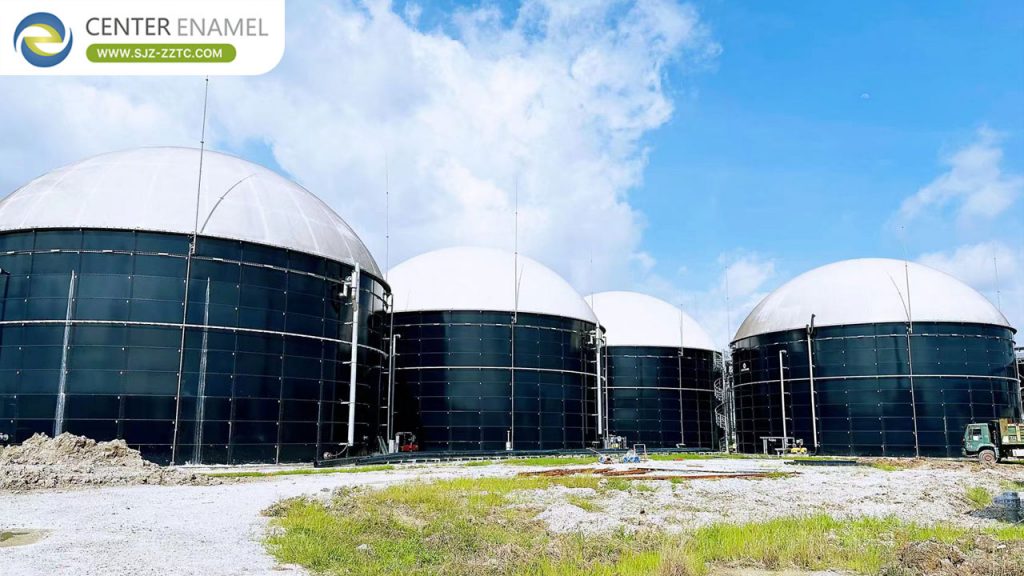
Understanding the Core Components of a Biogas Plant
A modern biogas plant is organized around five functional zones. Understanding how material and energy flow through these zones is the foundation of good design.
- Feedstock preparation: reception pit, macerator, mixing tank, and hygienisation unit that condition the substrate before digestion.
- Digester tank: the sealed, heated, and mixed vessel where anaerobic digestion occurs; glass-fused-to-steel and stainless steel tanks dominate commercial installations.
- Gas handling system: digester cover or separate gas holder, condensate trap, safety valves, and flare for excess gas.
- Gas purification: desulfurization and dehumidification units that protect downstream engines and upgrading equipment.
- Energy utilization: combined heat and power (CHP) units, boilers, or upgrading systems that convert biogas into electricity, heat, or biomethane.
Step-by-Step Biogas Plant Design Process
- Characterise the feedstock: determine daily tonnage, total solids content, and methane potential; this fixes the energy budget of the plant.
- Select the digestion regime: wet or dry, mesophilic or thermophilic, single-stage or two-stage, based on feedstock properties and hygiene requirements.
- Size the digester: digester volume = daily feedstock volume × hydraulic retention time; always add 10 to 15 percent design margin for operational flexibility.
- Design gas storage: gas storage capacity should absorb 6 to 12 hours of production to smooth downstream utilization.
- Choose the utilization route: electricity via CHP, pipeline injection after upgrading, or vehicle fuel - each changes the gas treatment train.
- Integrate digestate handling: separation, storage, and spreading or sale of the liquid and solid fractions.
Comparative Data Table: Biogas Plant Scales
Scale drives every design decision. As a rule of thumb, each Nm³ of biogas at 60 percent methane contains roughly 6 kWh of energy, so plant capacity is directly proportional to daily feedstock tonnage and its methane potential.
| Plant Scale | Feedstock Input | Digester Volume | Typical Output |
| Small / On-farm | 5-20 t/day | 100-500 m³ | 50-150 Nm³/h biogas; 50-150 kWₑ CHP |
| Medium / Commercial | 20-100 t/day | 500-2,500 m³ | 150-600 Nm³/h biogas; 150-600 kWₑ CHP |
| Large / Industrial | 100-500 t/day | 2,500-10,000 m³ | 600-2,500 Nm³/h biogas; RNG or 1-5 MWₑ power |
Operational Best Practices for Reliable Gas Production
The best biogas plants are not the most complex - they are the best monitored. A simple, well-executed operating routine outperforms sophisticated automation that nobody understands.
- Maintain a consistent feeding schedule: multiple small feedings per day stabilize the bacterial population far better than one large daily batch.
- Monitor temperature tightly: a swing of more than 1-2°C per day stresses methanogens and cuts gas yield.
- Track key process indicators: pH (6.8-7.6), volatile fatty acids, alkalinity, and gas composition (CH₄ 50-70%).
- Prevent corrosion and leaks: inspect tank coatings, gas membranes, and pipework on a preventive schedule; GFS tanks carry 25-30 year warranties for a reason.
- Keep a maintenance stock of critical spares: pumps, mixers, and CHP service kits are the most common failure points.
Frequently Asked Questions (FAQ)
Q1: How much does a commercial biogas plant cost?
A: Capital cost depends heavily on scale and scope. A small on-farm plant may cost USD 0.5-1.5 million, a medium commercial plant USD 3-10 million, and a large industrial plant USD 15-50 million or more. Digester tanks typically account for 20-35 percent of total capital cost.
Q2: What is the payback period for a biogas plant?
A: With feed-in tariffs, renewable energy credits, or waste-tipping fees, most commercial plants reach payback in 4 to 8 years. Plants that also sell digestate as fertilizer and use the heat from CHP units shorten payback by 1 to 2 years.
Q3: Which tank material is best for a biogas digester?
A: Glass-fused-to-steel (GFS) tanks are the industry standard for biogas digesters because the fused enamel coating resists the corrosive slurry environment, hydrogen sulfide attack, and UV exposure, with service lives of 25-30 years. Stainless steel is used where hygiene standards are stricter, such as food-waste pasteurisation lines.