
Biogas Plant Design: Engineering Principles, Components, and Layout Strategies
Designing a high-performance, safe, and economically viable biogas facility requires a rigorous engineering approach. Biogas plant design bridges biology, structural engineering, and fluid mechanics to convert complex organic waste streams into clean renewable energy and high-grade organic fertilizers. Whether configuring a small-scale agricultural biodigester or a multi-megawatt commercial facility, optimizing every engineering parameter from feedstock reception to biogas upgrading is essential for long-term project success.
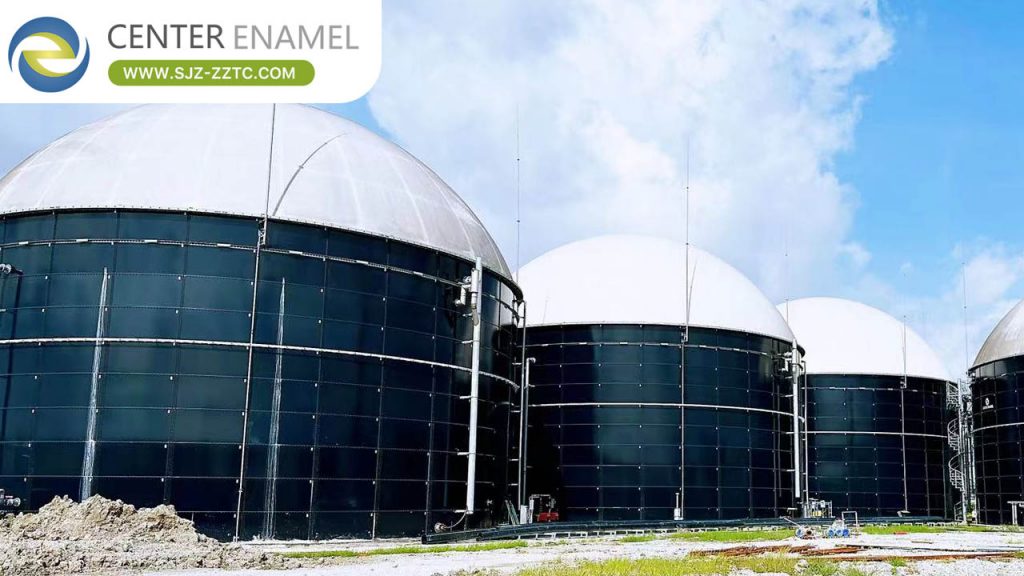
Core Structural and Mechanical Components in Biogas Design
A modern biogas plant is an integrated network of specialized mechanical, civil, and biological sub-systems:
- Feedstock Reception and Pre-Treatment: The front-end layout must safely handle raw inputs (manure, food waste, or industrial sludge). This section includes enclosed reception pits, heavy-duty macerators to reduce particle size, and pasteurization units to eliminate pathogens where required.
- The Anaerobic Digester Tank: The heart of the plant. Modern commercial systems typically utilize robust Glass-Fused-to-Steel (GFS) bolted tanks or heavy-duty reinforced concrete structures equipped with insulation layers to maintain constant internal temperatures.
- Internal Mixing and Heating Systems: To prevent dead zones and scum crust formation, engineers integrate mechanical agitators or gas recirculation systems, paired with hot-water heat exchangers to sustain optimal microbial activity.
- Gasholder and Pressure Management: Double-membrane roofs or independent external storage bladders buffer production and consumption variations. Automated pressure relief valves, flame arrestors, and condensate traps ensure strict operational safety.
Critical Engineering Parameters for Optimal Performance
Achieving maximum methane yield and stable biological conversion relies on fine-tuning several key engineering parameters:
- Thermal Regimes: Facilities must be engineered for either mesophilic (35°C to 37°C) or thermophilic (50°C to 55°C) operation, ensuring consistent heating via recovered thermal energy from Combined Heat and Power (CHP) units.
- Hydraulic Retention Time (HRT) and Solids Retention Time (SRT): Plant layout must accommodate adequate retention—typically 20 to 40 days for standard wet digestion—to allow slow-growing methanogenic archaea sufficient time to break down complex substrates.
- Piping and Safety Infrastructure: Biogas conveyance piping must feature a minimum 2% downward slope toward automatic condensate traps to prevent moisture blockages. All electrical components within hazardous zones must comply with strict explosion-proof classifications (e.g., NFPA 820 standards).
Comparative Data Table: Biogas Plant Design Configurations
| Design Parameter | Small-Scale Rural Plant | Commercial Agricultural Plant | Industrial Municipal Facility |
| Primary Reactor Structure | Masonry Fixed-Dome / Bag | Reinforced Concrete / GFS Tank | Bolted GFS Industrial Tanks / UASB |
| Digestion Technology | Fixed-dome or Floating-drum | CSTR or Plug Flow Reactor | High-Rate CSTR / UASB / Dry Digester |
| Thermal Control | Ambient / Passive ground heat | Automated internal heat exchangers | Advanced automated jacket heating |
| Gas Utilization | On-site cooking or single burner | Combined Heat and Power (CHP) | Biomethane Upgrading (RNG Grid Injection) |
| Operational Lifespan | 10 to 20 years | 20 to 30 years | 30 to 40+ years |
Frequently Asked Questions (FAQ)
Q1: What are the primary factors to consider during biogas plant layout design?
A: Critical design factors include proximity to feedstock sources and electrical/gas grids, geotechnical soil bearing capacity, prevailing wind directions for odor management, regulatory setback distances, and future expansion flexibility.
Q2: Why is tank material selection important in biogas engineering?
A: Anaerobic digestion generates corrosive gases like hydrogen sulfide and weak organic acids. Utilizing highly durable materials—such as Glass-Fused-to-Steel (GFS) panels or specially lined concrete—prevents structural degradation and extends the plant's operational lifespan.
Q3: How is system safety managed in biogas plant piping design?
A: Biogas safety is maintained by installing flame arrestors, pressure/vacuum relief valves, automatic condensate traps at all low piping points, and ensuring all electrical equipment meets explosion-proof hazardous area classifications.