
How We Deliver Reliable Biogas Plant Design for Global Clients
Global biogas policy has evolved from a purely waste treatment orientation to a core component of energy strategy and climate action. The EU, through the Renewable Gas Directive and REPowerEU Plan, has set mandatory targets for biomethane production growth and uses the Carbon Border Adjustment Mechanism to incentivize member states to improve organic waste treatment rates, incorporating biogas into the green hydrogen certification system. The US, under relevant energy legislation, provides multiple incentives such as production tax credits and investment tax credits for biogas and biomethane projects, and includes biogas in the Renewable Fuel Standard system.
China has incorporated biogas into its rural revitalization strategy and the "Rural Energy Revolution" priority development catalog, updated national standards for automotive biomethane, and promotes the integration of biomethane into urban gas pipeline networks. The global policy framework is shifting from fiscal subsidy-driven to carbon market-driven and quota-mandatory approaches, with more countries incorporating biogas into their Nationally Determined Contributions.
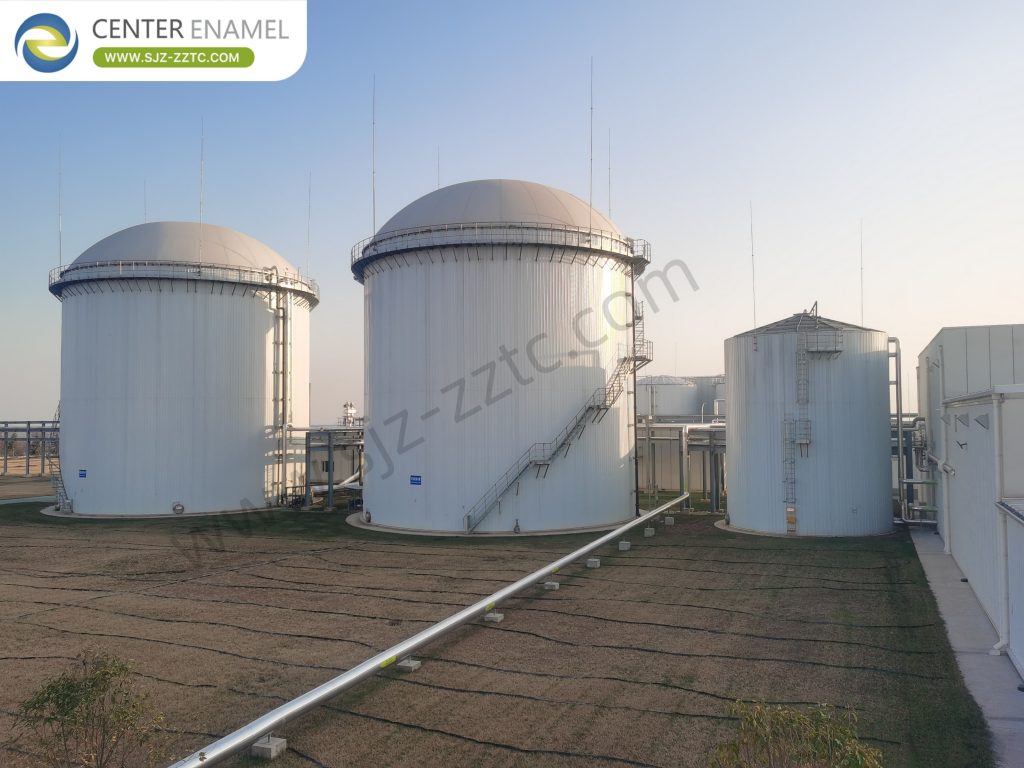
For project developers, this policy shift means one thing: Biogas Plant Design must now satisfy stricter environmental standards, capture more value from every feedstock stream, and remain economically viable over decades. The sections below outline how Center Enamel approaches this challenge—from feedstock selection and USR Process configuration to membrane roof sealing and global after-sales support.
USR Applicable Scenarios: Where the Process Fits Best
The USR Process is a dedicated process for agricultural high-solids wastewater, primarily suitable for large-scale livestock manure, livestock soaking water, agricultural straw leachate, and livestock slaughterhouse high-solids wastewater. For high-suspended-solids, high-organics, high-impurity wastewater conditions, it is the core process for rural livestock pollution treatment and agricultural organic waste resource utilization. It is suitable for township decentralized wastewater treatment and small to medium-sized agricultural enterprise wastewater treatment. It can serve as the primary process for large livestock base manure resource recovery, combining wastewater treatment with biogas recovery. It is also suitable for various high-solids, easily clogged, difficult-to-treat organic wastewater pretreatment, with superior suitability in agricultural environmental applications compared to other anaerobic processes.
| USR Applicable Scenario | Suitability |
| Large-scale livestock manure | Core process |
| Livestock soaking water | Core process |
| Agricultural straw leachate | Core process |
| Livestock slaughterhouse high-solids wastewater | Core process |
| Township decentralized wastewater | Suitable |
| Small to medium agricultural enterprise wastewater | Suitable |
| High-solids, easily clogged organic wastewater pretreatment | Suitable |
Biogas Sources: Five Major Organic Feedstock Categories
Biogas plants use organic waste as feedstock to produce biogas through anaerobic digestion—the core technological pathway for biomass energy utilization. Biogas sources cover five major organic feedstock categories:
Livestock manure (pig, cattle, poultry manure from large-scale farms)—rich in easily degradable organics with high gas production efficiency, the most mainstream biogas feedstock.
Crop straw and agricultural residues (corn stover, wheat straw, rice straw, vegetable waste)—high cellulose/hemicellulose content requiring pretreatment to improve gas yield.
Food waste and kitchen residues—rich in oils, starches, and proteins, with high organic loading and large gas production.
Municipal sludge (primary and waste activated sludge from WWTPs)—high solids content, suitable for high-solids anaerobic digestion.
Industrial organic waste residues and liquids (distillers' grains, sugar factory waste, fruit pomace, papermaking black liquor, etc.)—high-concentration organic liquids with excellent gas production efficiency.
Various feedstocks can be digested alone or in co-digestion, with mixed feedstocks providing more balanced nutrition and stable gas production. Core anaerobic processes use CSTR/USR with Center Enamel GFS tanks as digesters—corrosion-resistant, excellent sealing, ensuring stable anaerobic conditions and efficient biogas production.
| Feedstock Category | Key Characteristics | Design Consideration |
| Livestock manure | Easily degradable, high gas efficiency | Most mainstream feedstock |
| Crop straw & residues | High cellulose/hemicellulose | Pretreatment needed to improve yield |
| Food waste & kitchen residues | Rich in oils, starches, proteins | High organic loading, large gas output |
| Municipal sludge | High solids content | Suitable for high-solids anaerobic digestion |
| Industrial organic residues | High-concentration organic liquids | Excellent gas production efficiency |
Bangladesh Poultry Farm: A Biogas Plant Design Benchmark
Targeting local poultry farm manure resource recovery with daily treatment of 47 tons, influent COD, BOD, and SS as high as 50,000 mg/L, 25,000 mg/L, and 50,000 mg/L were reduced after CSTR + UASB anaerobic treatment to below 200 mg/L, 100 mg/L, and 100 mg/L respectively—effluent compliant with local environmental discharge standards. The project produces approximately 4,900 m³ biogas daily—each m³ biogas can generate 2 kWh of electricity, with daily power generation of 9,800 kWh—simultaneously achieving pollutant reduction and clean energy recovery. This is a benchmark project for livestock waste recycling in Southeast Asia.
| Parameter | Influent Concentration | Effluent Concentration |
| COD | 50,000 mg/L | Below 200 mg/L |
| BOD | 25,000 mg/L | Below 100 mg/L |
| SS | 50,000 mg/L | Below 100 mg/L |
| Daily treatment capacity | 47 tons | — |
| Daily biogas production | 4,900 m³ | — |
| Daily power generation | 9,800 kWh | — |
Overseas Installation Coverage and Delivery Capability
Center Enamel is the pioneer of Chinese GFS equipment exports, with installation service coverage across over 100 countries and regions—possessing full delivery capability across climates, regulations, and geographies.
Overseas coverage includes Southeast Asia (Vietnam, Thailand, Malaysia, Indonesia, Cambodia, Bangladesh, Nepal, etc.), Africa (Ghana, South Africa, Mali, Guinea, Zambia, Kenya, Pakistan, etc.), Europe/Americas (Sweden, USA, Russia, etc.), the Middle East, and Latin America—adaptable to tropical rainy high-salt spray, high-altitude mountainous, Nordic severe cold, and high-standard European/American facility conditions.
The company uses a dual-service model of "own cross-border construction teams + overseas local agent coordination"—whether clients are in developed countries or remote developing regions—providing one-stop services including on-site survey, on-site installation, process commissioning, and operator training. Complete coverage spans biogas engineering, municipal wastewater, industrial wastewater, livestock manure, drinking water storage, and other global mainstream environmental engineering projects—possessing the full delivery capability to undertake large-scale tank farm projects in any country worldwide.
| Region | Countries / Conditions Covered |
| Southeast Asia | Vietnam, Thailand, Malaysia, Indonesia, Cambodia, Bangladesh, Nepal |
| Africa | Ghana, South Africa, Mali, Guinea, Zambia, Kenya, Pakistan |
| Europe / Americas | Sweden, USA, Russia |
| Middle East & Latin America | Full regional coverage |
| Climate adaptability | Tropical high-salt spray, high-altitude, Nordic severe cold, EU/US standards |
After-Sales and Technical Support Team
The after-sales team adheres to the service principles of rapid response, professional efficiency, and full-cycle support—providing 24/7 full-lifecycle O&M support to global clients.
Standard remote services include fault diagnosis, process parameter adjustment, and tank anti-corrosion maintenance guidance. For domestic and long-distance overseas clients, overseas technical service personnel can be dispatched for on-site inspection, annual inspection, and equipment refurbishment as needed. The team also maintains long-term client feedback tracking mechanisms—regularly collecting tank and anaerobic equipment operational data to continuously optimize product structure and support processes.
Supporting external technical expert teams provide specialized support for anaerobic process commissioning, biogas upgrading O&M, and wastewater upgrade/retrofit projects—ensuring long-term stable operation of domestic and overseas projects, continuously improving global client satisfaction and repurchase rates.
Single and Double Membrane Roof Cover Solutions
Single and Double Membrane Roofs are proprietary airtight tank cover systems for anaerobic digestion and biogas storage projects, specifically developed for biogas collection and odor containment, representing a benchmark lightweight sealing solution for fermentation tanks. The single-layer membrane roof features a simple structure with economical cost, meeting basic biogas containment needs. The double-layer membrane roof consists of inner and outer corrosion-resistant membrane materials, with pressurized air in the interlayer forming rigid support, providing outstanding thermal insulation that reduces biogas condensate formation inside the tank, with enhanced wind and snow load resistance suitable for high-altitude and windy outdoor sites.
The membrane material is specialized aging-resistant and biogas-slurry-corrosion-resistant PVDF membrane, which will not leak or degrade from long-term contact with biogas or hydrogen sulfide. The flexible structure accommodates tank settlement and slight deformation without cracking or gas leakage. The lightweight design eliminates heavy steel support trusses, significantly reducing the load on the tank and foundation, saving construction costs. The roof integrates biogas outlets, safety pressure relief valves, and access channels, fully enabling closed gas collection for anaerobic fermentation tanks, recovering biogas for power generation and heating while blocking odor diffusion to meet environmental odor control requirements. It is widely used in large-scale livestock biogas projects, municipal sludge anaerobic digestion, and food waste fermentation projects, compatible with large-volume glass-fused-to-steel anaerobic tanks, with fast construction and simple maintenance requiring only periodic membrane seal integrity checks, offering significant overall engineering advantages.
| Membrane Roof Type | Key Features | Best Application |
| Single-layer | Simple structure, economical cost, basic biogas containment | Standard fermentation tanks |
| Double-layer | Inner + outer corrosion-resistant membranes, pressurized interlayer, thermal insulation, wind/snow resistance | High-altitude, windy outdoor sites |
Frequently Asked Questions
What feedstock is best for a USR Process biogas plant?
The USR Process excels with high-solids agricultural waste: livestock manure, soaking water, straw leachate, and slaughterhouse wastewater. It tolerates high suspended solids and impurities without clogging, making it ideal for farm-scale and township projects.
How does Biogas Plant Design affect long-term project economics?
Good design matches feedstock to process, selects corrosion-resistant GFS tanks, and integrates membrane roofs for gas capture. This reduces maintenance, extends equipment life beyond 30 years, and stabilizes biogas output for reliable revenue.
Can multiple feedstocks be co-digested in one plant?
Yes. Manure, crop straw, food waste, municipal sludge, and industrial organic residues can be digested alone or in co-digestion. Mixed feedstocks provide more balanced nutrition and more stable gas production.
Ready to start your Biogas Plant Design with a proven USR Process solution? Contact Center Enamel today—our engineers will match your feedstock profile to the optimal process configuration and tank system.