
Efficient USR Process with Optimized Biogas Plant Design for High-Solids POME Treatment Project Applications
The Asia-Pacific region, particularly China, has become the world's largest industrial wastewater treatment market, with the operation and maintenance service segment's contribution continuing to rise, marking a shift from project construction to long-term operational management. The North American market focuses on upgrading existing facilities, while Europe emphasizes high-value-added resource recovery technologies. Wastewater from the new energy industry chain (lithium batteries, photovoltaics, hydrogen) has become the most notable emerging growth area due to its complex composition and high treatment difficulty, generating significant demand for customized solutions. The maturity of third-party treatment models in industrial parks continues to improve, driving consolidation in the professional operation market. The Middle East has strong demand for advanced treatment and reuse of industrial wastewater due to water scarcity; manufacturing transfer in Southeast Asia drives local industrial wastewater treatment facility construction demand.
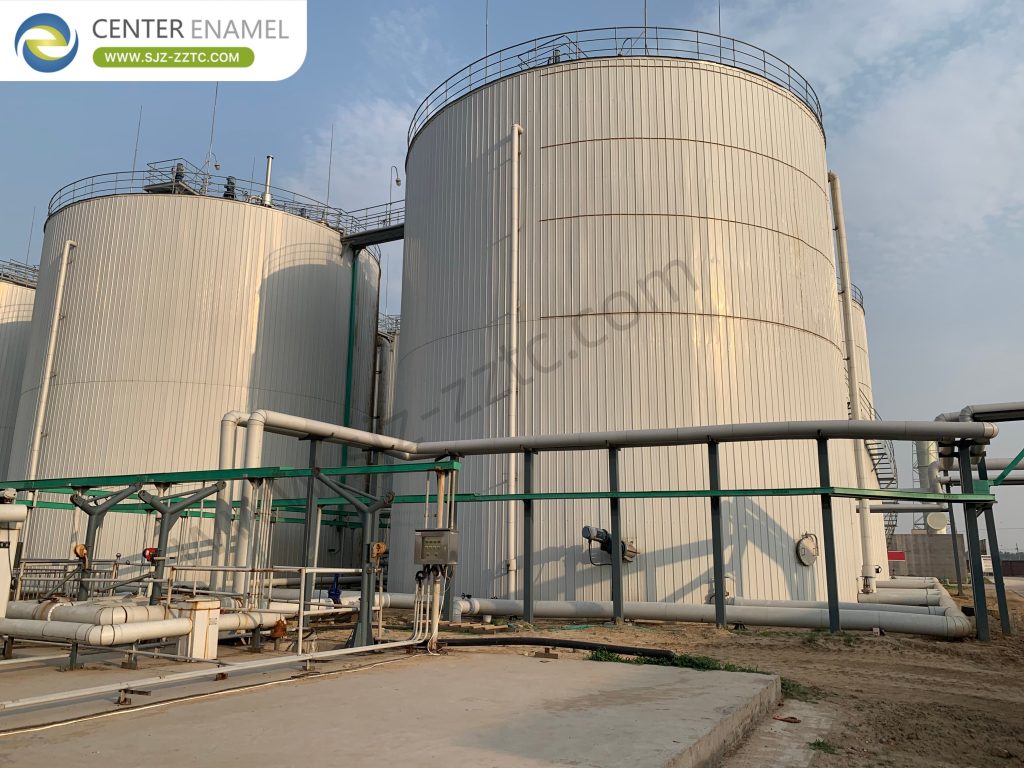
These regional shifts are pushing project owners toward partners who can deliver both process reliability and long-term operational economy. Meeting that expectation requires more than equipment supply-it demands integrated Biogas Plant Design that accounts for feedstock variability, climate, and local regulations from the outset. The USR Process has become a preferred technology in this context, especially where high-solids agricultural and agro-industrial wastewater must be treated economically.
USR Applicable Scenarios: Purpose-Built for High-Solids Agricultural Wastewater
Dedicated process for agricultural high-solids wastewater, primarily suitable for large-scale livestock manure, livestock soaking water, agricultural straw leachate, and livestock slaughterhouse high-solids wastewater. For high-suspended-solids, high-organics, high-impurity wastewater conditions, it is the core process for rural livestock pollution treatment and agricultural organic waste resource utilization. Suitable for township decentralized wastewater treatment and small to medium-sized agricultural enterprise wastewater treatment. Can serve as the primary process for large livestock base manure resource recovery, combining wastewater treatment with biogas recovery. Also suitable for various high-solids, easily clogged, difficult-to-treat organic wastewater pretreatment, with superior suitability in agricultural environmental applications compared to other anaerobic processes.
These scenarios share a common trait: feedstocks that would clog or destabilize conventional high-rate anaerobic reactors. The USR Process addresses this directly through its simplified internal structure and high solids tolerance, making it a reliable foundation for Biogas Plant Design in agricultural and agro-industrial settings. The same characteristics make it well suited to a POME Treatment Project, where oil, fiber, and colloidal solids present comparable challenges.
POME Operation and Maintenance Cost Analysis: Where the Economic Case Is Won
O&M costs are moderate to low-biogas recovery benefits are exceptionally high-outstanding overall economics-one of the best input-output ratios in industrial wastewater treatment. POME has excellent biodegradability (BOD/COD 0.5-0.6) with very high anaerobic digestion efficiency-no expensive advanced oxidants or detoxification agents needed-only small amounts of lime/NaOH for pH adjustment and flocculants-low chemical costs. CSTR/USR anaerobic equipment is simple and durable-GFS tanks with 30+ year corrosion resistance, no precision wear parts-extremely low failure rates and minimal repair/replacement-controllable long-term O&M costs.
Biogas recovery is the core economic benefit-high-concentration organic wastewater produces exceptional biogas yields of 8-15 m³ per m³ POME-CHP can meet 30-50% of mill electricity demand, with waste heat for digester heating and FFB sterilization preheating-very high energy self-sufficiency, greatly reducing or eliminating external electricity purchases. Recovered palm oil from pretreatment oil separation can be sold as biodiesel feedstock or oleochemical raw material-substantial economic benefits. Anaerobic effluent rich in nitrogen, phosphorus, and potassium can be used for palm plantation irrigation and fertilization after advanced treatment-dual resource recovery of water and fertilizer, further reducing treatment costs.
Palm oil mills in Southeast Asia commonly benefit from renewable energy subsidies and carbon reduction credits (CDM/carbon trading)-biogas power projects can apply for carbon asset development for additional carbon revenue, further improving project economics. Overall, POME treatment system capital payback period is typically 5-8 years-biogas power generation revenues can fully cover O&M costs and generate net profit-one of the highest resource recovery value wastewater categories in industrial wastewater treatment, delivering both environmental management and clean energy recovery.
These economics only materialize when the underlying Biogas Plant Design is correctly sized and the containment system is durable enough to avoid premature replacement. This is precisely why material selection and process configuration must be decided together at the design stage of any POME Treatment Project-a principle that carries directly into the reference project below.
Ghana Municipal Domestic Wastewater Treatment Project: Proven Multi-Process Delivery
Completed installation in 2021, treating 1,800 m³/day of municipal wastewater using UBF anaerobic + A²/O nitrogen/phosphorus removal mature processes. Equipped with multiple Center Enamel GFS tanks including 1 UBF anaerobic reactor, 1 secondary clarifier, and 2 internal/external double-layer A²/O biological tanks. Influent has high COD, BOD, suspended solids, and nitrogen/phosphorus concentrations-after full treatment, effluent parameters are significantly reduced with pH stable at 6.5-9.0, fully meeting local environmental discharge standards. Corrosion-resistant, conveniently assembled GFS tanks efficiently solve urban domestic wastewater pollution while balancing treatment effectiveness and O&M economics-a mature municipal wastewater case in Africa.
This project reflects the same engineering discipline applied across Center Enamel's portfolio: matching process configuration to feedstock characteristics, then selecting containment materials that can survive decades of aggressive service. That combination is equally essential in a POME Treatment Project and in any USR Process installation, and it is what the company's overseas delivery network is built to support.
Overseas Installation Coverage and Delivery Capability
Center Enamel is the pioneer of Chinese GFS equipment exports, with installation service coverage across over 100 countries and regions-possessing full delivery capability across climates, regulations, and geographies.
Overseas coverage includes Southeast Asia (Vietnam, Thailand, Malaysia, Indonesia, Cambodia, Bangladesh, Nepal, etc.), Africa (Ghana, South Africa, Mali, Guinea, Zambia, Kenya, Pakistan, etc.), Europe/Americas (Sweden, USA, Russia, etc.), the Middle East, and Latin America-adaptable to tropical rainy high-salt spray, high-altitude mountainous, Nordic severe cold, and high-standard European/American facility conditions.
The company uses a dual-service model of "own cross-border construction teams + overseas local agent coordination"-whether clients are in developed countries or remote developing regions-providing one-stop services including on-site survey, on-site installation, process commissioning, and operator training. Complete coverage covers biogas engineering, municipal wastewater, industrial wastewater, livestock manure, drinking water storage, and other global mainstream environmental engineering projects-possessing the full delivery capability to undertake large-scale tank farm projects in any country worldwide.
This delivery infrastructure is what allows a Biogas Plant Design developed for one region to be executed faithfully in another-adjusting for seismic zone, wind load, and local discharge standards without compromising process integrity. For a POME Treatment Project in Southeast Asia or a USR Process installation in Africa, the same standardized-plus-localized model applies.
After-Sales and Technical Support Team
The after-sales team adheres to the service principles of rapid response, professional efficiency, and full-cycle support-providing 24/7 full-lifecycle O&M support to global clients.
Standard remote services include fault diagnosis, process parameter adjustment, and tank anti-corrosion maintenance guidance. For domestic and long-distance overseas clients, overseas technical service personnel can be dispatched for on-site inspection, annual inspection, and equipment refurbishment as needed. The team also maintains long-term client feedback tracking mechanisms-regularly collecting tank and anaerobic equipment operational data to continuously optimize product structure and support processes.
Supporting external technical expert teams provide specialized support for anaerobic process commissioning, biogas upgrading O&M, and wastewater upgrade/retrofit projects-ensuring long-term stable operation of domestic and overseas projects, continuously improving global client satisfaction and repurchase rates.
Long-term performance in a POME Treatment Project depends as much on operational support as on initial design. The data collected through this feedback loop feeds directly back into future Biogas Plant Design iterations-closing the gap between theoretical performance and real-world results.
Aluminum Geodesic Dome Roof: Engineered Cover for Biogas and Odor Control
Aluminum Geodesic Dome Roof independently developed by Center Enamel is manufactured using high-strength aluminum alloy plates through integral stamping. It features a triangular grid spherical self-supporting structure, enabling large-span full coverage without internal support columns. Made of aluminum alloy, the roof offers excellent weather resistance and corrosion resistance, capable of long-term protection against acid rain, salt spray, and UV radiation, suitable for various extreme outdoor climate conditions. The structural design complies with international AWWA D108 standards, with aluminum plate thickness, rib cross-sections, and joint connections all verified by finite element stress analysis, ensuring wind and snow load resistance that meets building code requirements across different global regions.
The weight of the Aluminum Geodesic Dome Roof is only one-third to one-half of a steel roof with the same span, significantly reducing the load on the tank top and allowing direct installation without tank wall reinforcement. The roof provides superior overall sealing performance, with double sealing between panels using specialized sealant strips and mechanical interlocking, enabling both airtight gas storage and enclosed odor control, suitable for biogas collection and storage, wastewater tank odor control, and drinking water contamination prevention. The support-column-free design does not interfere with the installation and operation of internal equipment such as mixers and water distributors. The aluminum material does not support microbial growth, requiring no anti-corrosion maintenance over long-term use, resulting in low total life-cycle costs.
For any Biogas Plant Design intended to capture and utilize gas, the roof is not a secondary component-it determines whether biogas can be safely contained and odor emissions controlled. In a POME Treatment Project producing 8-15 m³ of biogas per m³ of wastewater, this sealing integrity directly protects both the economic return and the environmental compliance of the entire installation.
Need a dependable partner for your POME Treatment Project? Reach out to Center Enamel for a free consultation and a customized USR Process + Biogas Plant Design solution tailored to your needs. We're here to help-get in touch today.
FAQ
What makes the USR Process suitable for a high-solids POME Treatment Project?
The USR Process tolerates high suspended solids, resists clogging, requires no granular sludge formation, and starts up quickly. It handles the high-oil, high-fiber, high-temperature nature of palm oil mill effluent.
What does effective Biogas Plant Design include for palm oil mills?
It covers feedstock characterization, anaerobic reactor sizing, GFS tank specification, gas collection and desulfurization, CHP integration, and compliance with local discharge and odor standards.
Why choose Center Enamel for overseas POME Treatment Project delivery?
We provide GFS tanks with 30+ year corrosion resistance, installation coverage in 100+ countries, 24/7 after-sales support, and CE, NSF, WRAS, ISO9001, and ASME certifications.