
Custom Biogas Plant Project Design & CSTR Process for Food Waste Treatment-Center Enamel
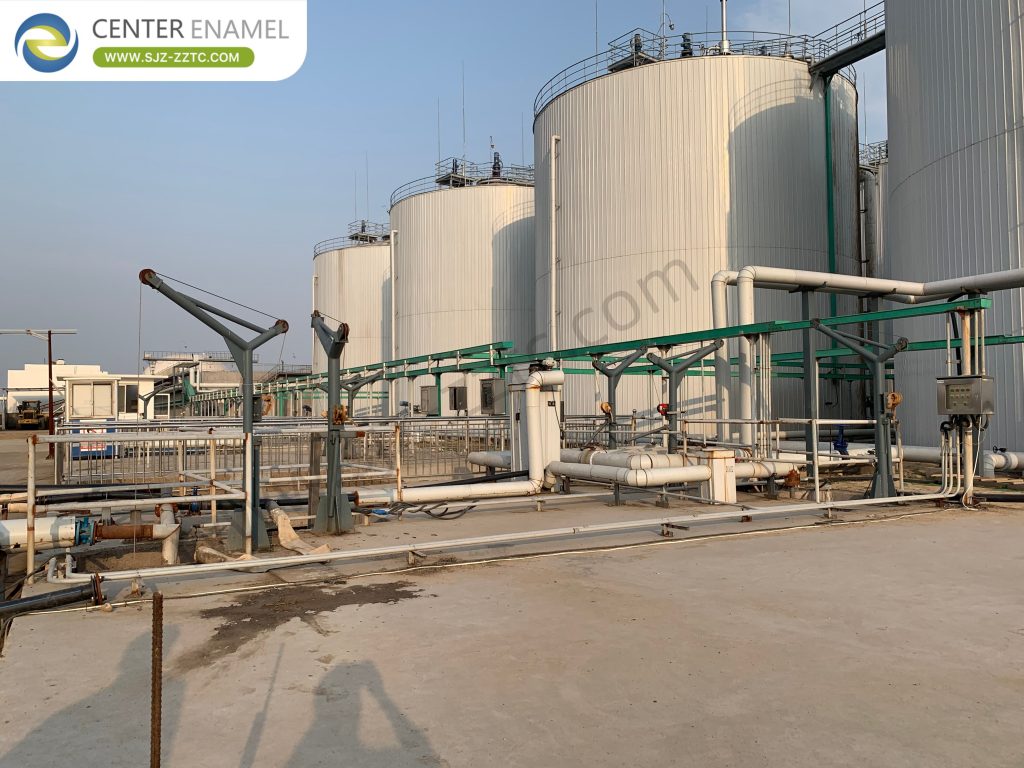
Global industrial wastewater treatment policies are escalating from "compliance discharge" to mandatory "resource recovery" and "zero liquid discharge." The EU, through its Circular Economy Action Plan, requires member states to increase industrial wastewater reuse rates and extends carbon footprint accounting to the full life cycle of wastewater treatment. China continuously updates and tightens industrial water pollutant discharge standards, with increasingly stringent limits on total nitrogen, total phosphorus, and characteristic pollutants for industries such as chemicals, pharmaceuticals, and printing and dyeing. Some water-scarce regions and highly polluting industries are mandated to adopt zero or near-zero liquid discharge technologies. Germany has established a differentiated pretreatment technical standard system by industry, requiring industrial wastewater to meet specific quality requirements before discharge into municipal wastewater treatment plants, implementing strict source control.
As regulatory frameworks worldwide grow increasingly stringent, industrial facilities must adapt by implementing robust, highly reliable containment infrastructures. Successfully navigating these rigorous compliance landscapes requires versatile biochemical engineering systems capable of withstanding extreme operational conditions.
What is CSTR Process ?
CSTR, or Continuously Stirred Tank Reactor, is a suspended-growth continuous-flow anaerobic digestion process suitable for high-solids, high-concentration organic pollutant treatment, and is the most widely used classic anaerobic treatment technology. The process relies on a mechanical stirring system to solve the technical challenges of material stratification, sludge sedimentation, and surface crusting in traditional anaerobic reactors, achieving homogeneous mixing of wastewater, anaerobic sludge, functional microorganisms, and organic substrates throughout the reactor, ensuring full contact between microorganisms and pollutants. Unlike attached-growth anaerobic processes, CSTR requires no media carriers, relying on suspended sludge bacterial communities for degradation reactions. It withstands high-suspended-solids and high-viscosity wastewater shocks, making it the mainstream process for food waste, livestock manure, and municipal sludge anaerobic digestion. The process architecture is simple, operation logic straightforward, and it is adaptable to various high-pollution organic solid-liquid mixed systems.
Understanding the fundamental mechanics of biological reactors provides a necessary foundation for evaluating specific waste streams. Analyzing the complex composition of municipal and commercial organic inputs allows engineers to design tailored pretreatment and digestion workflows.
Wastewater Sources of Food Waste
Food waste wastewater originates from the resource recovery process of kitchen waste from catering services, canteens, and food processing/distribution-a typical high-concentration organic wastewater in urban solid waste resource recovery. Major sources include food waste pretreatment sorting wastewater (from bag breaking, crushing, sorting operations), oil separation wastewater (oily wastewater from three-phase oil extraction), anaerobic digestion digestate (residual liquid after food waste anaerobic digestion), and equipment/vehicle wash water. Food waste consists primarily of food residues, rich in animal/vegetable oils, starches, proteins, cellulose, salts, and seasoning residues. After pretreatment crushing and sorting, organics are solubilized forming high-concentration wastewater. Large and medium-sized cities' centralized food waste treatment facilities handle hundreds of tons daily with large continuous wastewater production; smaller facilities produce less volume but with higher concentrations-oil and salt accumulation issues are prominent.
Addressing these challenging wastewater profiles requires strong manufacturing capabilities and an established corporate history of engineering excellence. Partnering with a seasoned industry leader ensures that every component of the facility meets global industrial standards with absolute reliability.
Center Enamel Development History
Center Enamel has been deeply engaged in the environmental bolted storage equipment field for over 30 years. Starting with proprietary enamel anti-corrosion material technology, the company has gradually completed the full-industry-chain upgrade from a single tank manufacturer to a comprehensive environmental EPC service provider. Throughout its 30+ year history, the company has been recognized as a National High-Tech Enterprise, National Specialized and Sophisticated "Little Giant," Manufacturing Single Champion, and Provincial Green Factory. It has successfully delivered over 30,000 environmental projects globally, establishing itself as a leading enterprise in the global GFS tank storage industry. The company has fully integrated the entire chain from enamel frit R&D, intelligent environmental equipment manufacturing, to EPC project contracting-every business breakthrough has been achieved through proprietary core anti-corrosion technology.
Delivering complex environmental engineering solutions globally requires comprehensive logistical management and professional on-site execution capabilities. Strong international delivery networks guarantee structural integrity and professional installation standards across any geographic region or climate challenge.
Center Enamel Professional Construction Team Manpower Reserve
Center Enamel has established its own domestic and international certified construction teams, with regular practical training on GFS tank installation and overseas construction standards for various countries. Domestically, regional construction teams cover multiple zones, capable of simultaneously deploying multiple teams for large tank farm projects. Internationally, cross-border professional installation teams are equipped to various country construction standards-sufficient manpower reserves ensure uninterrupted construction delivery for remote African sites, high-standard European/American facilities, and other projects.
Sustaining high-tier manufacturing excellence and smooth construction execution requires continuous technical backing from a specialized multidisciplinary engineering team. Rigorous research and design customization ensure that equipment structures adapt seamlessly to diverse international geographical and environmental requirements.
Center Enamel R&D Team
Center Enamel has built a full-chain professional team covering R&D, design, marketing, installation, and after-sales. The R&D team is led by national-level materials technology experts, specializing in enamel frit and tank anti-corrosion core technologies. External senior environmental engineering and mechanical structure engineers are retained to strengthen R&D capabilities, focusing on anti-corrosion coating formulations, specialty corrosion-resistant tanks, and anaerobic supporting integrated equipment-continuously breaking through industry technological barriers.
The team operates through proprietary laboratories with external university research collaboration-conducting year-round new material and new process durability pilot testing and long-term corrosion simulation testing. Specialized enamel formulations are iteratively developed for extreme conditions such as high-salinity wastewater, strong acid/alkali POME, and high-organic livestock manure-providing core technical support for the company's annual new invention and utility patents-building a proprietary material technology barrier.
At the core of these comprehensive research and development efforts lies proprietary material engineering that redefines durability standards. Implementing cutting-edge coating formulations guarantees optimal defense against severe chemical degradation in modern environmental plants.
Center Enamel Innovative Material Technology
Center Enamel has independently developed over 200 anti-corrosion enamel formulations, with proprietary double-sided double-layer enameling technology-GFS tank anti-corrosion service life exceeds 30 years-far surpassing concrete and ordinary equipment-suitable for global high-corrosion wastewater and biogas fermentation conditions.