
Biogas Plant Project Design for High-Oil Food Waste Using GFS Tanks
The competitive landscape shows divergence, with leading companies building integrated service capabilities through technical integration and capital operations, and industry concentration gradually increasing. Chinese companies continue to consolidate their advantages in mid-tier equipment exports. International giants target high-end customers and complex industrial wastewater markets, while local players occupy the mid-to-low-end and industrial park centralized treatment markets with service responsiveness and cost advantages.
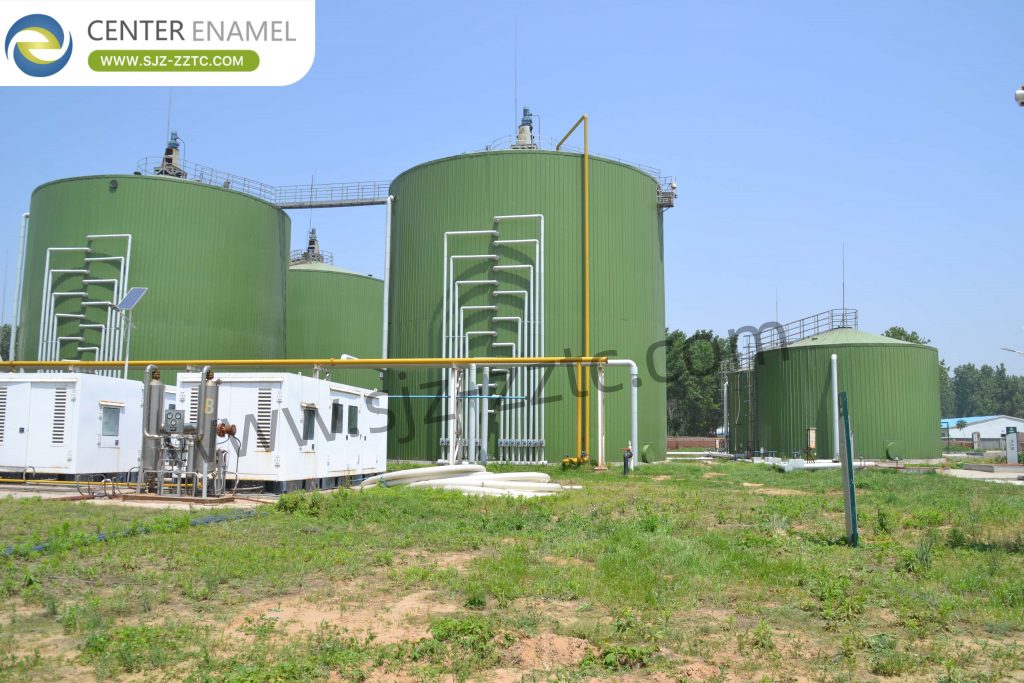
In the anaerobic process segment, UASB, EGSB, and IC anaerobic reactors-with advantages of high loading rates, small footprints, and stable operation-are widely used in high-concentration organic wastewater pretreatment in food processing, pharmaceutical fermentation, alcohol brewing, chemical, and other industries. These reactors use steel tank shells, and their corrosion resistance and gas-tightness directly determine long-term operational stability. The application value of GFS tanks in such scenarios is increasingly prominent, making them a core consideration in any biogas plant project design.
| Reactor Type | Key Advantage | Typical Application |
| UASB | High loading rate, stable operation | Food processing, brewing, chemical wastewater |
| EGSB | Small footprint, high upflow velocity | High-concentration organic wastewater |
| IC | Very high loading rate, compact structure | Industrial pretreatment, limited space sites |
GFS Tanks Adaptable to Extreme Climates
GFS tanks can undergo customized wind and seismic design based on project site climate and geological conditions, with environmental adaptability far superior to concrete tanks. This is a critical factor in biogas plant project design for regions with challenging natural conditions.
Concrete tanks are cast-in-place monolithic structures, with seismic and wind resistance entirely dependent on on-site construction quality. In remote areas, typhoon-prone zones, and earthquake belts, construction quality is difficult to control. Under strong earthquakes or typhoons, concrete tanks are prone to cracking and base settlement damage, with subsequent reinforcement costs equivalent to rebuilding.
GFS tanks undergo collection of local seismic intensity, maximum wind pressure, and foundation bearing capacity data before construction, with customized thickened steel panels, stiffening ribs, and anchored base components-all factory-prefabricated to standardized specifications. The bolted panel structure has excellent stress distribution capability, making it less prone to overall fracture under seismic and typhoon impacts, and minor foundation settlement will not cause through-cracking. Structural parameters can be flexibly adjusted for mountainous, coastal typhoon-zone, and high-seismic-zone projects.
| Design Factor | Concrete Tanks | Center Enamel GFS Tanks |
| Seismic resistance | Dependent on on-site construction quality | Factory-prefabricated, bolted panel stress distribution |
| Wind resistance | Prone to cracking in typhoon zones | Customized thickened panels and stiffening ribs |
| Foundation settlement | Through-cracking risk | Minor settlement does not cause through-cracking |
| Remote area suitability | Difficult quality control | Factory-controlled, standardized assembly |
| Reinforcement cost after damage | Equivalent to rebuilding | Minimal, modular panel replacement |
USR Reaction Process: How Biogas Plant Project Design Handles High-Solids Wastewater
Within biogas plant project design, the USR reaction process is specifically engineered for high-solids organic wastewater. After simple pretreatment to remove large debris, wastewater is uniformly fed into the reactor through the bottom distribution system.
The upward flow drives solid substrates and anaerobic sludge to slowly rise and thoroughly mix. In the sealed anaerobic environment, microorganisms sequentially hydrolyze/acidify and then methanogenically ferment, degrading macromolecular organic pollutants and generating biogas and treated water. Without complex separation structures, gentle hydraulic disturbance prevents clogging.
The mixed liquor rises to the upper portion of the reactor where natural gas-liquid-solid separation occurs. Biogas is collected, effluent overflows, and solid sludge and unreacted substrate settle back to the lower reaction zone for continued reaction. A small amount of aged sludge is periodically discharged, ensuring continuous stable operation.
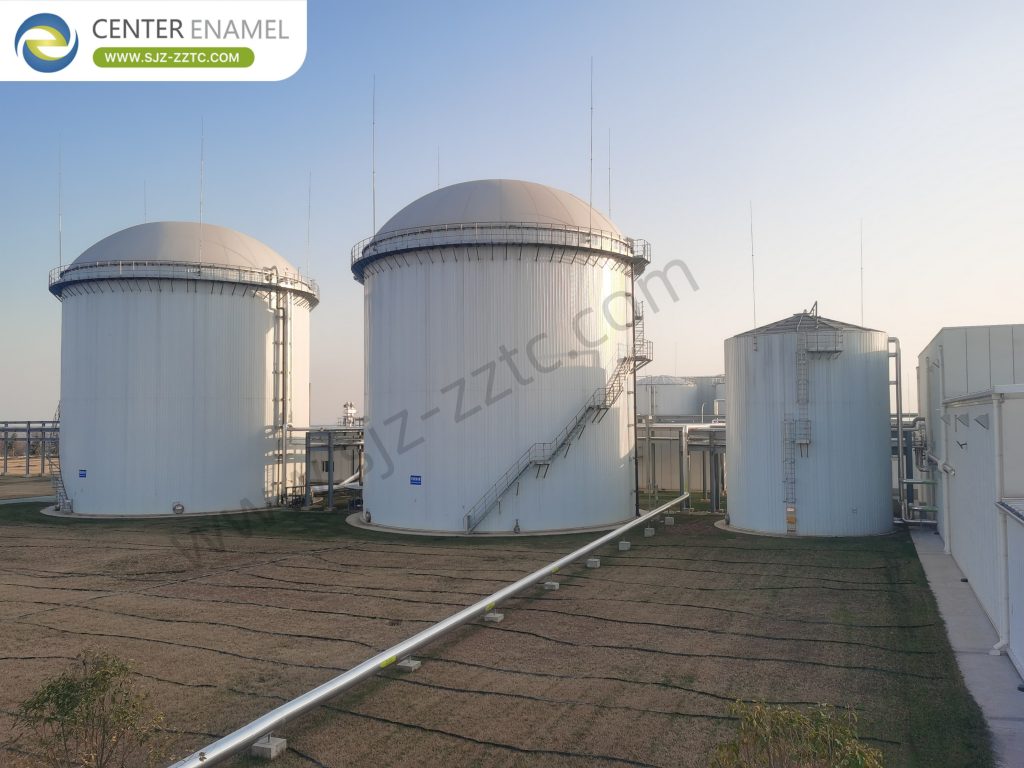
Key Water Quality Characteristics of Food Waste
Understanding food waste characteristics is fundamental to accurate biogas plant project design. Food waste presents a prominent "four highs" profile-high COD, high oil and grease, high salinity, high suspended solids-with extremely high pollution load and complex composition.
| Parameter | Typical Range | Design Implication |
| COD | 15,000–80,000 mg/L (oil separation wastewater exceeding 100,000 mg/L) | High organic loading, requires robust anaerobic capacity |
| Oil and grease | 5,000–20,000 mg/L | Adheres to pipe and equipment walls, causes blockages and membrane fouling |
| Salinity (NaCl) | 5,000–15,000 mg/L | Requires corrosion-resistant tank materials |
| Suspended solids | High, rich in food residue, bone fragments, fibrous impurities | Needs effective pretreatment and high-solids tolerant process |
| pH | Slightly acidic to neutral | Stable anaerobic conditions achievable |
| BOD/COD ratio | Approximately 0.4–0.5 | Good biodegradability, but oils and salts pose microbial inhibition risks |
Water quality varies with collection volume, season, and dietary habits-higher summer volumes with higher oil content. These characteristics directly influence reactor selection, pretreatment design, and the specification of GFS tanks for corrosion resistance and gas-tightness.
Case Study: Bangladesh Large-Scale Poultry Farm Manure Resource Recovery Project
This project demonstrates how biogas plant project design and GFS tanks combine to deliver measurable results. Targeting local poultry farm manure resource recovery with daily treatment of 47 tons:
| Parameter | Influent | Effluent |
| COD | 50,000 mg/L | Below 200 mg/L |
| BOD | 25,000 mg/L | Below 100 mg/L |
| SS | 50,000 mg/L | Below 100 mg/L |
Process: CSTR + UASB anaerobic treatment
Biogas production: Approximately 4,900 m³ daily
Power generation: 9,800 kWh daily (2 kWh per m³ biogas)
Outcome: Full compliance with local environmental discharge standards
This benchmark project for livestock waste recycling in Southeast Asia demonstrates simultaneous pollutant reduction and clean energy recovery.
Smart Manufacturing Base: The Production Backbone for GFS Tanks
Center Enamel's core intelligent manufacturing base is located in Hebei Province, China, covering a total area of over 150,000 m². It includes Phase I mature manufacturing facility and Phase II high-end environmental equipment industrial park-dual-base synergy ensures stable production capacity.
| Facility Feature | Specification |
| Total area | Over 150,000 m² |
| Base structure | Phase I manufacturing + Phase II high-end equipment park |
| Quality systems | ISO, NSF, CE, and other international standards |
| Environmental certification | Provincial Green Factory |
| Marketing centers | 6 across China |
| Staff | Over 500 employees |
| Logistics | Adjacent to expressways and major logistics hubs, complete container shipping capability |
| Production capacity | Multiple parallel automated production lines, global top tier of GFS tank manufacturers |
The base includes dedicated R&D office buildings, proprietary material laboratories, and finished product testing centers, with full-process quality control systems. This manufacturing scale ensures GFS tanks can be delivered on schedule for large international biogas plant project design requirements.
Over a Decade of Global Installation Experience
Center Enamel has unmatched global practical experience among domestic peers-over a decade covering multiple regions and all industry sectors. In 2009, the company completed its first overseas GFS tank installation, sending a team to Niger, Africa for drinking water storage tank installation. In 2015, it broke industry ground with China's first GFS tank export and installation to the US-passing strict US acceptance standards.
All installed projects have operated stably for many years, covering livestock biogas, POME, municipal wastewater, and drinking water storage applications. Construction has covered Southeast Asia, Africa, the Americas, and other regions-accumulating specialized solutions for complex sites including mountainous terrain, coastal salt spray, tropical high temperatures, and high-standard European/American facility conditions.
| Milestone | Year | Significance |
| First overseas GFS tank installation | 2009 | Niger, Africa-drinking water storage |
| First GFS tank export to US | 2015 | Passed strict US acceptance standards |
| Global project coverage | 2009–present | Southeast Asia, Africa, Americas, Europe |
| Industry applications | Multi-sector | Livestock biogas, POME, municipal wastewater, drinking water |
This track record directly benefits clients seeking proven biogas plant project design and reliable GFS tanks rather than untested solutions.
Frequently Asked Questions
What makes food waste challenging for biogas plant project design?
Food waste has "four highs"-high COD, high oil and grease, high salinity, and high suspended solids. Oils clog pipes and foul membranes, salts cause corrosion, and quality varies by season. Design must combine effective pretreatment with corrosion-resistant GFS tanks.
Why choose GFS tanks over concrete for biogas projects?
GFS tanks are factory-prefabricated with customized wind and seismic design, resisting typhoons and earthquakes better than cast-in-place concrete. They are corrosion-resistant, gas-tight, and suitable for remote sites where on-site concrete quality is hard to control.
Can Center Enamel handle complete biogas plant project design?
Yes. We integrate enamel R&D, GFS tank manufacturing, and EPC contracting in-house. With 30,000+ projects in 100+ countries and over a decade of overseas installation experience, we deliver design, equipment, construction, and O&M support.
Ready to Start Your Food Waste Biogas Plant Project?
Center Enamel combines 30+ years of engineering expertise with proven biogas plant project design, USR reactors, and durable GFS tanks to deliver complete food waste treatment solutions. Contact our team to discuss your feedstock characteristics, treatment targets, and site conditions-and receive a customized proposal.
Get your tailored biogas solution today-our engineers are ready to help.