
Comprehensive Biogas Plant Project Design: High-Efficiency Solutions with GFS Tanks
Global livestock inventories such as swine remain stable. The US has developed technical models represented by integrated crop-livestock systems with on-field application and Comprehensive Nutrient Management Plans; Denmark, the Netherlands, and others have developed centralized biogas projects with digestate application systems. China's large-scale farms still have considerable room for improvement in supporting biogas project coverage, and digestate resource utilization rates lag behind advanced European levels. Greenhouse gas emissions from livestock account for a significant proportion of total global anthropogenic emissions, making manure management a critical battleground for agricultural carbon reduction. Latin American countries started later in manure management but are accelerating relevant infrastructure development.
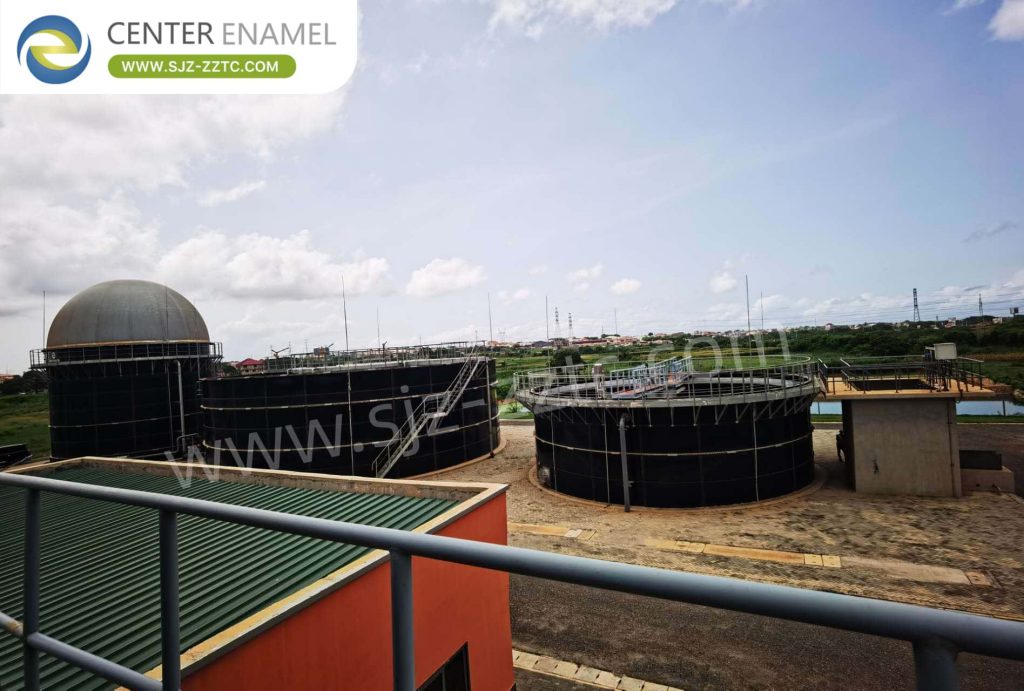
As global awareness of carbon reduction grows, the demand for sophisticated energy-recovery infrastructure has intensified. Implementing a professional Biogas Plant Project Design is the essential first step for any facility aiming to achieve both regulatory compliance and energy independence. By planning with precision, operators can effectively transform agricultural waste into a valuable renewable resource.
What is the UASB Process?
UASB, or Upflow Anaerobic Sludge Blanket Reactor, is the benchmark mainstream technology for medium-to-high concentration soluble organic wastewater treatment. It requires no mechanical mixing or media carriers, relying on the upward flow of wastewater to suspend and expand granular sludge within the reactor, forming a stable sludge bed layer. Highly active anaerobic granular sludge efficiently degrades pollutants, with excellent settleability and high microbial concentration. UASB innovatively integrates reaction, sedimentation, and gas-liquid-solid separation functions, simplifying the anaerobic treatment process with advantages of high efficiency, energy savings, and compactness. It is widely used in various medium-to-high concentration soluble organic wastewater treatment applications.
To ensure the success of these treatment reactors, the physical containment must be as reliable as the biological process itself. High-performance GFS Tanks provide the structural durability needed to support UASB reactors while resisting the corrosive nature of organic waste streams. This synergy ensures that the biological activity remains stable and productive over long-term operations.
Livestock Wastewater Sources
Livestock wastewater is the core agricultural pollution wastewater from large-scale poultry, livestock, and aquaculture operations, generated primarily during farming operations and facility cleaning. Poultry and livestock wastewater is the main component, including wash water from pig, cattle, and poultry housing, manure and urine seepage, and facility washdown-rich in livestock metabolic residues. Aquaculture wastewater comes from periodic pond water exchange and pond cleaning, with feed residues and metabolic waste as pollutants. Wastewater is primarily generated in peri-urban and rural farming areas. Small-scale farmers lack adequate collection facilities, with wastewater discharged directly to land and water. Large-scale farms have collection systems for centralized treatment, with water production varying with production cycles and cleaning frequency.
Understanding the diversity and intensity of these wastewater sources is vital for designing systems that can handle significant fluctuations in pollutant loads. Reliable containment and efficient processing are the pillars that allow facilities to manage such complex waste streams effectively. When these elements are perfectly balanced, the result is an optimized environment for sustainable waste treatment.
Indonesia Palm Oil Biogas Project
Specifically designed for high-concentration palm oil wastewater treatment with 3 GFS fermentation tanks, each 19.86 m diameter × 8.4 m height. Installation began November 2009 with only 7 construction personnel, completing all tank assembly in 40 days-highly efficient and time-saving. Tanks are fitted with dual-membrane gas storage covers for POME anaerobic digestion-degrading organics and recovering biogas energy while eliminating palm industry pollution. This is an early benchmark POME biogas treatment project in Southeast Asia.
Historical project successes demonstrate the practical benefits of using specialized materials in challenging field conditions. Such benchmarks highlight how innovative structural design can shorten construction timelines while significantly boosting energy recovery efficiency. These real-world applications continue to define best practices for modern environmental engineering.
Center Enamel Professional Construction Team Manpower Reserve
Center Enamel has established its own domestic and international certified construction teams, with regular practical training on GFS tank installation and overseas construction standards for various countries. Domestically, regional construction teams cover multiple zones, capable of simultaneously deploying multiple teams for large tank farm projects. Internationally, cross-border professional installation teams are equipped to various country construction standards-sufficient manpower reserves ensure uninterrupted construction delivery for remote African sites, high-standard European/American facilities, and other projects.
Technical expertise must be supported by an experienced workforce to ensure that the design vision is realized with perfect precision. Having a dedicated construction team allows for seamless project execution, minimizing risks during site assembly and infrastructure integration. This professional commitment is what keeps large-scale environmental projects moving forward on schedule.
Center Enamel R&D Team
Center Enamel has built a full-chain professional team covering R&D, design, marketing, installation, and after-sales. The R&D team is led by national-level materials technology experts, specializing in enamel frit and tank anti-corrosion core technologies. External senior environmental engineering and mechanical structure engineers are retained to strengthen R&D capabilities, focusing on anti-corrosion coating formulations, specialty corrosion-resistant tanks, and anaerobic supporting integrated equipment-continuously breaking through industry technological barriers.
The team operates through proprietary laboratories with external university research collaboration-conducting year-round new material and new process durability pilot testing and long-term corrosion simulation testing. Specialized enamel formulations are iteratively developed for extreme conditions such as high-salinity wastewater, strong acid/alkali POME, and high-organic livestock manure-providing core technical support for the company's annual new invention and utility patents-building a proprietary material technology barrier.
Continuous innovation in material science is the engine driving the development of more resilient storage and treatment equipment. By staying at the forefront of chemical and structural engineering, a specialized team can develop solutions that anticipate future industry challenges. This focus on research ensures that clients benefit from the most advanced technological standards available today.
FRP Roof Cover Solution
FRP Roof is a general-purpose economical roof for atmospheric pressure storage tanks without air-tightness requirements, suitable for drinking water storage, agricultural irrigation water, firewater reserve, and general production wastewater temporary storage. It is available in two styles: flat and dome, allowing flexible selection based on tank specifications and site aesthetic requirements. The roof is integrally molded from resin and fiberglass, lightweight, with natural water resistance and mild acid/alkali corrosion resistance. It will not rust or rot in long-term humid environments, eliminating the frequent anti-corrosion maintenance required for metal roofs. The dome style features excellent drainage performance due to its curved structure, resisting water accumulation, dust buildup, snow load, and strong winds.
The flat style facilitates the installation of maintenance walkways, level gauges, and vents on top, making inspection and operation convenient. The product is fully integrated with no risk of galvanic corrosion, will not contaminate drinking water quality, and meets environmental standards for domestic water storage. The modular design with low individual component weight allows for simple on-site hoisting and assembly, offering high construction efficiency and affordable procurement and installation costs. It is only suitable for atmospheric pressure water storage tanks without biogas collection or pressurization requirements, and is not recommended for anaerobic fermentation gas-producing conditions. It is widely used in rural agricultural water storage tanks, industrial park firewater tanks, waterworks buffer tanks, and small to medium-sized domestic wastewater temporary storage facilities, making it a cost-effective general-purpose roof choice for conventional water storage applications.
Frequently Asked Questions (FAQ)
How does Center Enamel approach Biogas Plant Project Design?
Center Enamel integrates proprietary GFS tank technology with professional engineering to create customized designs. We prioritize site-specific needs, regulatory compliance, and budget efficiency, ensuring the plant balances high biogas energy yields with durable infrastructure that withstands corrosive industrial and agricultural waste environments for long-term stability.
Why are GFS Tanks preferred for biogas and wastewater projects?
GFS tanks feature specialized enamel coatings fused to steel, offering unmatched corrosion resistance against acidic slurry and biogas. Their modular design allows for rapid assembly, reduced labor costs, and long-term durability in harsh environments, making them the superior choice for modern, sustainable wastewater and fermentation storage.
What role does the UASB process play in wastewater treatment?
The UASB process is a highly efficient anaerobic technology that utilizes an upward flow to maintain a dense sludge bed, maximizing pollutant degradation without needing energy-intensive mechanical mixing. Its compact design, low sludge production, and excellent shock load resistance make it the preferred choice for scaling large industrial treatment projects.