
Biogas Plants at Industrial Scale: Types, Costs, and Selection Criteria
Biogas plants have moved from farm-scale demonstration to industrial-scale infrastructure. Today they process hundreds of tonnes of organic waste per day, generate megawatts of renewable power, and supply pipeline-grade biomethane to national gas grids - yet the range of available configurations makes technology selection a genuine engineering challenge.
The most expensive mistake in the biogas industry is choosing the wrong plant type for the feedstock. A wet digestion plant designed for liquid manure cannot handle the 30 percent solids content of a food-waste line, and a dry batch plant will underperform on slurry. Matching plant architecture to substrate is the single most important decision an investor makes.
This guide compares the main types of industrial biogas plants, breaks down their cost structure, and sets out the selection criteria that separate profitable projects from stranded assets.
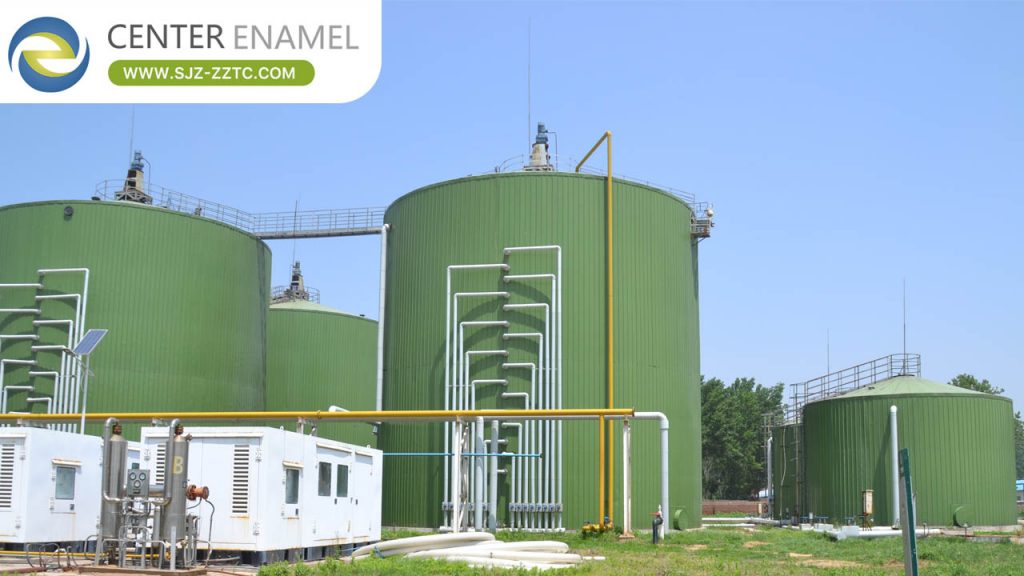
Understanding the Main Types of Biogas Plants
Industrial biogas plants are classified along three axes: feedstock solids content (wet or dry), feeding mode (continuous or batch), and operating temperature (mesophilic or thermophilic). Most commercial plants are wet, continuous, mesophilic systems, but every combination has its niche.
- Wet digestion: feedstock with less than 12-15% total solids is pumped through a continuously mixed, heated digester; the industry standard for manure, food waste, and sewage sludge.
- Dry digestion: high-solids feedstocks (20-45% TS) such as municipal organic waste and crop residues are processed in garage-style batch or plug-flow systems with minimal water addition.
- Batch systems: multiple digesters are loaded, sealed, and emptied in sequence, giving operational flexibility and resilience for seasonal feedstocks.
Comparative Data Table: Wet vs Dry Digestion
For a co-digestion plant handling both manure and food waste, wet CSTR digestion is the proven default. Dry digestion earns its place where feedstock is consistently dry or contaminated and water is scarce or expensive.
| Criterion | Wet Digestion (CSTR) | Dry Digestion (Batch/Plug-Flow) |
| Feedstock solids | <12-15% TS | 20-45% TS |
| Typical feedstocks | Manure, food waste, sewage sludge | Municipal organic waste, crop residues |
| Digester volume | Large; dilute input | Smaller per tonne of solids |
| Water consumption | High (mixing water) | Low |
| Mixing | Continuous mechanical/gas mixing | None or slow percolate recirculation |
| Capital cost per tonne | Moderate | Lower for high-solids waste |
| Best fit | High-volume liquid streams | Dry, fibrous, or contaminated streams |
Understanding the Cost Structure of Biogas Plants
Capital expenditure for industrial biogas plants typically splits into four blocks: the digestion and storage tanks, the feedstock and gas-handling equipment, the energy utilization unit, and civil works and engineering. Knowing where the money goes is the first step to controlling it.
- Digester and storage tanks: 25-40% of CAPEX - glass-fused-to-steel tanks dominate due to corrosion resistance, speed of erection, and 25-30 year lifespans.
- Feedstock and gas handling: 20-30% - pumps, macerators, mixers, gas holders, and safety systems.
- Energy utilization: 15-25% - CHP engines, upgrading units, or boilers depending on the gas route.
- Civil works and engineering: 15-25% - foundations, roads, piping, electrical, and project management.
- Operating costs: typically 3-6% of CAPEX per year, dominated by labor, maintenance, and energy for heating and mixing.
Selection Criteria for Industrial Biogas Plants
Investors who follow these criteria select plants that match their feedstock for the long term - and that is what turns an industrial biogas plant into a 20-year income-generating asset rather than a maintenance burden.
- Audit the feedstock: quantify tonnage, solids, methane potential, seasonality, and contamination for at least 12 months of data.
- Fix the energy route: electricity, biomethane, or vehicle fuel determines gas treatment and affects every sizing decision.
- Check site constraints: space, grid connection, heat offtake, and digestate disposal distance.
- Compare capital and operating cost over 20 years: the lowest CAPEX is rarely the lowest life-cycle cost.
- Verify supplier track record: ask for reference plants with the same feedstock and scale, not just any biogas plant.
Frequently Asked Questions (FAQ)
Q1: What size is considered an industrial biogas plant?
A: Industrial plants typically process more than 50 tonnes of feedstock per day or produce more than 500 Nm³/h of biogas, corresponding to CHP capacity above 500 kWₑ or an upgrading unit feeding a gas grid. Below this scale, systems are usually classed as farm-scale or small commercial.
Q2: What is the capital cost per tonne of feedstock?
A: As a rough benchmark, wet digestion plants cost USD 300-800 per tonne of annual feedstock capacity, and dry digestion systems USD 250-600, depending on scope, country, and gas route. Detailed feasibility studies are essential because local costs vary widely.
Q3: How long does it take to build an industrial biogas plant?
A: From financial close to commissioning, a typical industrial plant takes 12 to 18 months. Tank-based designs with prefabricated glass-fused-to-steel digesters can compress the tank erection phase to 4-8 weeks on site, which is one reason they dominate the market.