
How We Help Biogas Plants Efficiently Treat Organic Wastewater
The global biogas industry is experiencing a significant transformation. Leading enterprises now dominate major project markets through integrated “EPC + Operation” models, while small and medium-sized companies focus on distributed county-level projects and specialized equipment segments.
A critical trend shaping the industry is the accelerating adoption of anaerobic digestion technology as the core process for biogas engineering. Business model innovation is equally notable-carbon asset development has become standard practice for large-scale projects, converting methane emission reductions into tradable carbon credits. Some countries have even piloted digestate fertilizer carbon credit trading, linking agricultural application with carbon accounting systems.
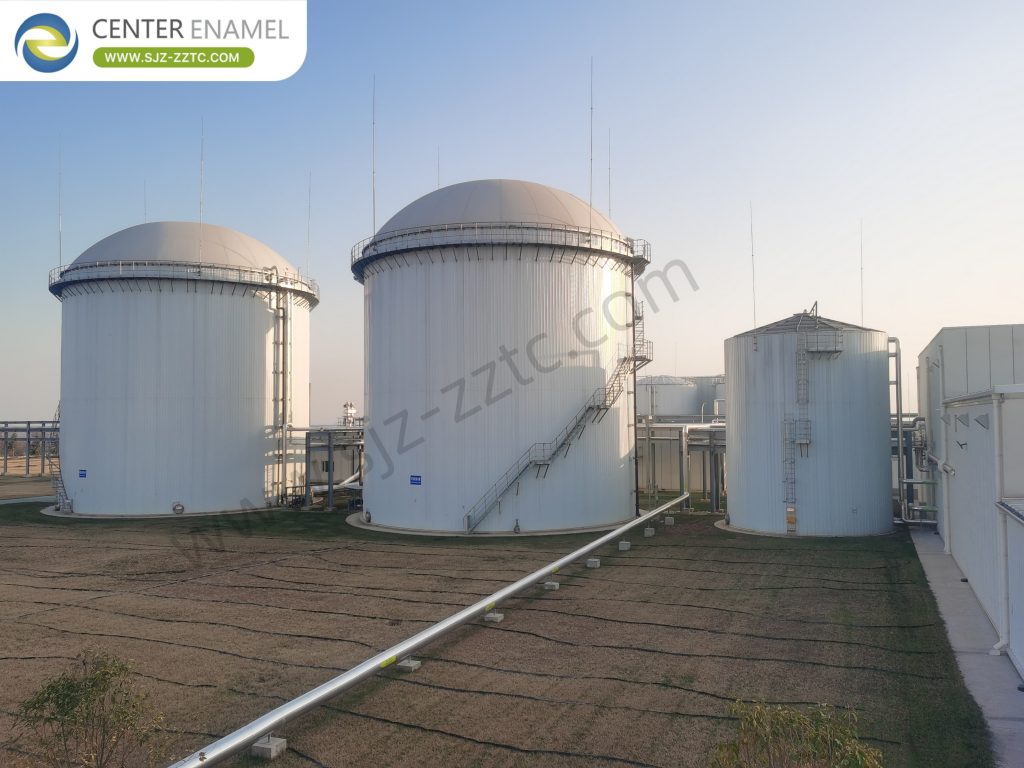
Within this evolving landscape, GFS tanks have emerged as the mainstream choice for large anaerobic digestion tanks. Their exceptional sealing performance, corrosion resistance, and construction convenience make them ideal for biogas fermentation applications. The modular design enables integration with membrane gas holders, forming complete “fermentation + gas storage” solutions that see rising adoption rates in new biogas industry cluster projects.
Why GFS Tanks Outperform Traditional Concrete in Anaerobic Digestion
Traditional concrete tanks present significant limitations for anaerobic digestion technology applications. Their single-material construction is only suitable for neutral clean water storage. When handling corrosive materials-livestock manure, palm oil mill effluent, chemical wastewater, food waste digestate, or high-salinity wastewater-concrete tanks require additional anti-corrosion linings. These linings are prone to failure, preventing long-term stable operation and failing to adapt to alternating high/low concentration conditions.
GFS tanks solve these challenges through specialized enamel formulations developed by Center Enamel. With over 200 proprietary enamel frit recipes and supporting patents, GFS tanks can be custom-engineered to resist strong acids, strong alkalis, high organic content, and high salinity. A single tank can switch between multiple wastewater and fermentation feedstock storage requirements.
The following comparison illustrates the fundamental differences:
| Comparison Factor | Traditional Concrete Tanks | Center Enamel GFS Tanks |
| Anti-corrosion service life | 5–8 years before major degradation | Exceeding 30 years |
| Surface structure | Highly porous; prone to penetration | Dense, non-porous enamel finish |
| Maintenance requirement | Frequent lining repairs | No internal lining repairs needed |
| Chemical resistance | Limited; degrades with acids/alkalis | Resists acids, alkalis, salts, microbial corrosion |
| Leakage risk | High after 5–8 years | Negligible |
| Adaptability | Poor for high-salinity/high-corrosion media | Excellent for POME, manure, chemical wastewater |
GFS tanks are universally applicable across biogas anaerobic digestion, municipal wastewater, livestock farming, food processing, and industrial water treatment scenarios-eliminating the need to rebuild tanks for media changes and perfectly meeting the needs of diversified environmental protection projects.
USR Process: A Specialized Anaerobic Digestion Technology for High-Solids Wastewater
Within the anaerobic digestion technology toolkit, the USR (Upflow Solids Reactor) process represents a significant innovation for challenging waste streams.
USR is an upflow anaerobic process modified specifically for high-suspended-solids, high-solids organic wastewater. It was developed to solve clogging, sludge washout, and uneven reaction problems common in traditional anaerobic processes when treating high-solids wastewater.
The process eliminates complex three-phase separators, simplifying internal structure. It relies on upflow hydraulics to promote thorough mixing of solid materials and anaerobic sludge. No strict granular sludge formation conditions are required-flocculent sludge can operate stably. The key feature is high solids tolerance and impurity resistance, with very high influent suspended solids tolerance.
USR is a dedicated high-efficiency anaerobic process for livestock manure, agricultural organic waste, and high-solids livestock wastewater-specifically developed for agricultural and environmental applications.
Key Water Quality Characteristics in Biogas Plant Operations
Understanding water quality is essential for optimizing anaerobic digestion technology performance. Biogas plant influent typically exhibits:
Stable composition with moderate biodegradability
High ammonia nitrogen and high total phosphorus-prominent eutrophication concerns
Moderate to high salinity with strong acid/base buffering capacity
Low COD after thorough anaerobic digestion, as most macromolecular organics convert to methane and carbon dioxide
Nitrogen, phosphorus, and potassium nutrients concentrate during fermentation, with ammonia nitrogen and total phosphorus far exceeding conventional discharge standards. These parameters are the key control indicators for biogas plant operations.
Case Study: Bangladesh Poultry Farm Manure Resource Recovery Project
This project demonstrates how GFS tanks and anaerobic digestion technology combine to deliver measurable results. Targeting local poultry farm manure resource recovery with daily treatment of 47 tons:
| Parameter | Influent | Effluent |
| COD | 50,000 mg/L | Below 200 mg/L |
| BOD | 25,000 mg/L | Below 100 mg/L |
| SS | 50,000 mg/L | Below 100 mg/L |
Process: CSTR + UASB anaerobic treatment
Biogas production: Approximately 4,900 m³ daily
Power generation: 9,800 kWh daily (2 kWh per m³ biogas)
Outcome: Full compliance with local environmental discharge standards
This benchmark project for livestock waste recycling in Southeast Asia demonstrates simultaneous pollutant reduction and clean energy recovery.
Center Enamel: Three Decades of Excellence in Environmental Equipment
Center Enamel has been deeply engaged in the environmental bolted storage equipment field for over 30 years. Starting with proprietary enamel anti-corrosion material technology, the company has completed a full-industry-chain upgrade from single tank manufacturer to comprehensive environmental EPC service provider.
Throughout its 30+ year history, the company has earned recognition as:
National High-Tech Enterprise
National Specialized and Sophisticated “Little Giant”
Manufacturing Single Champion
Provincial Green Factory
With over 30,000 environmental projects delivered globally, Center Enamel stands as a leading enterprise in the global GFS tank storage industry. The company has integrated the entire chain from enamel frit R&D through intelligent environmental equipment manufacturing to EPC project contracting-every business breakthrough achieved through proprietary core anti-corrosion technology.
Professional Construction Team: Global Deployment Capability
Center Enamel maintains certified construction teams for both domestic and international projects, with regular practical training on GFS tank installation and overseas construction standards.
Domestic capacity: Regional construction teams cover multiple zones, capable of simultaneous deployment for large tank farm projects.
International capacity: Cross-border professional installation teams are equipped to various country construction standards-sufficient manpower reserves ensure uninterrupted construction delivery for remote African sites, high-standard European/American facilities, and projects across diverse regulatory environments.
Frequently Asked Questions
What makes GFS tanks ideal for anaerobic digestion projects?
GFS tanks feature a dense, non-porous enamel coating that resists acids, alkalis, salts, and microbial corrosion. With a service life exceeding 30 years and modular design compatible with membrane gas holders, they provide reliable sealing and structural integrity essential for biogas fermentation applications.
How does anaerobic digestion technology benefit biogas plants?
Anaerobic digestion converts organic waste into biogas (methane) while reducing pollutant loads. Modern anaerobic digestion technology enables high COD removal rates-often exceeding 95%-while producing renewable energy. Combined with GFS tanks, plants achieve both environmental compliance and economic returns through biogas power generation.
Can GFS tanks handle high-salinity and high-organic wastewater?
Yes. Center Enamel GFS tanks are engineered with specialized enamel formulations resistant to high salinity, high organic content, and extreme pH conditions. Unlike concrete tanks that require additional linings prone to failure, GFS tanks maintain structural integrity and corrosion resistance throughout their 30+ year service life.
Ready to Optimize Your Biogas Project?
Center Enamel combines 30+ years of engineering expertise with proven anaerobic digestion technology and durable GFS tanks to deliver complete biogas solutions. Contact our team to discuss your project requirements and receive a customized proposal.
Get your tailored biogas solution today-our engineers are ready to help.