
Professional Biogas Power Plant Solutions with Durable GFS Tanks for Textile Wastewater Treatment
The global industrial wastewater sector is witnessing a paradigm shift, propelled by regional development dynamics, tightening environmental regulations, and the escalating demand for sustainable energy recovery. At the heart of this transformation lies the recognition that high-strength organic effluents, particularly from industries like textiles, are not just pollutants but valuable resources waiting to be harnessed. The anaerobic digestion process, central to modern Biogas Power Plant operations, offers a dual benefit: it treats complex wastewater while generating renewable energy in the form of biogas. This synergy between wastewater management and power generation is driving investment and innovation across the globe.
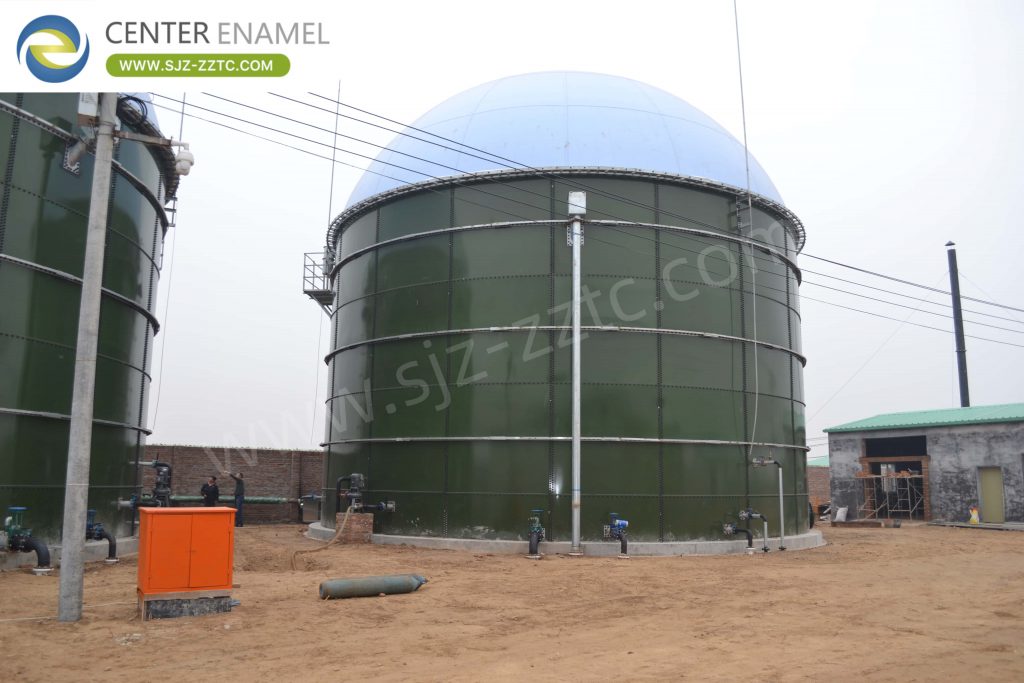
Central to the success of these integrated systems are robust and reliable GFS Tanks, which provide the durable, corrosion-resistant, and gas-tight containment essential for anaerobic reactors. Furthermore, industries such as textile manufacturing, with their highly variable and challenging effluents, require specialized treatment trains that combine advanced biological processes with durable infrastructure. This article explores the regional market landscapes, core technologies, and practical solutions that define modern industrial wastewater management, highlighting how expert providers deliver turnkey systems for Biogas Power Plants and effective Textile Wastewater Treatment.
Industrial Wastewater Regional Development Status
Understanding the global landscape is crucial for tailoring effective and market-responsive wastewater solutions. The Asia-Pacific region, particularly China, has become the world's largest industrial wastewater treatment market, with the operation and maintenance service segment's contribution continuing to rise, marking a shift from project construction to long-term operational management. This growth is fueled by rapid industrialization and significant government investment in environmental infrastructure. Meanwhile, the North American market focuses on upgrading existing facilities, while Europe emphasizes high-value-added resource recovery technologies, aligning with the EU's Circular Economy Action Plan.
Wastewater from the new energy industry chain (lithium batteries, photovoltaics, hydrogen) has become the most notable emerging growth area due to its complex composition and high treatment difficulty, generating significant demand for customized solutions. The maturity of third-party treatment models in industrial parks continues to improve, driving consolidation in the professional operation market. The Middle East has strong demand for advanced treatment and reuse of industrial wastewater due to water scarcity; manufacturing transfer in Southeast Asia drives local industrial wastewater treatment facility construction demand. These diverse regional needs underscore the importance of a versatile Biogas Power Plant and Textile Wastewater Treatment solutions provider that can adapt to local conditions while maintaining global quality standards, leveraging durable GFS Tanks as the foundational infrastructure.
UASB Supporting Equipment for Anaerobic Digestion
The efficiency of a Biogas Power Plant hinges on the performance of its core biological process and the quality of its supporting equipment. Core equipment includes the GFS anaerobic reactor tank, with the internal three-phase separator being the key component for gas-liquid-solid separation and sludge retention. The bottom high-precision distribution system (distribution pipes, distributors, pressure regulators) ensures uniform influent distribution, preventing short-circuiting and sludge accumulation.
Supporting equipment includes influent lift pumps, equalization tanks, and flow meters to stabilize influent conditions. The top biogas collection system includes gas collection hoods, gas piping, desulfurization/dehydration equipment, and gas storage. Online temperature, pH, and COD monitoring instruments are integrated. Bottom sludge discharge pipes and pumps periodically remove excess sludge. The complete equipment package is compact, with no rotating wear parts, low equipment loss, and high operational stability. For a Biogas Power Plant, the integration of these components with premium GFS Tanks ensures maximum biogas yield and operational reliability.
Textile Wastewater Standardized Treatment Solutions
The textile industry presents one of the most complex wastewater challenges, requiring a robust and multi-staged approach to achieve compliance and enable resource recovery. Effective Textile Wastewater Treatment uses a combined treatment train of "pretreatment + anaerobic digestion + aerobic treatment + advanced decolorization," primarily addressing high color, high alkalinity, and recalcitrant dye pollution. Pretreatment uses screens and equalization tanks to balance quality and flow, with acid addition to neutralize pH to neutral. Coagulation/sedimentation and DAF remove suspended solids, some dyes, and colloidal impurities-reducing color.
The main stage uses UASB/IC anaerobic processes for high-concentration organic degradation-the anaerobic environment can break down some dye molecular structures to improve biodegradability. Subsequent A/O, contact oxidation, or SBR aerobic processes deeply degrade residual organics and remove nitrogen and phosphorus. Final advanced decolorization uses coagulation decolorization, chemical oxidation (ozone, Fenton), or activated carbon adsorption to ensure color compliance. Membrane treatment is added where water reuse is required. Anaerobic digesters use Center Enamel GFS Tanks resistant to high alkalinity and dye auxiliaries. High-temperature wastewater requires heat exchange cooling to control biological system temperatures. This integrated solution not only treats the effluent but also produces biogas, which can be utilized in a Biogas Power Plant to offset energy costs.
Indonesia Palm Oil Biogas Upgrade Project
Real-world applications demonstrate the tangible benefits of combining expert design with premium equipment in challenging industrial environments. This project, commissioned in 2013 as the core anaerobic digestion reactor for the POME treatment station, features 3 GFS Tanks in two sizes: 17.58 m diameter × 8.4 m height and 16.82 m diameter × 7.2 m height. The tanks serve as the core anaerobic reaction equipment specifically for high-organic palm oil production wastewater-anaerobic digestion degrades pollutants and recovers biogas.
The GFS Tanks are adapted to local palm industry wastewater needs. Their assembly is convenient with corrosion resistance for Southeast Asia's hot humid high-corrosion environment-a mature biomass energy environmental benchmark project. This project exemplifies how effective Textile Wastewater Treatment principles, applied to other high-strength industrial effluents, can simultaneously address environmental pollution and generate sustainable energy for a Biogas Power Plant, reinforcing the role of GFS Tanks as the preferred containment solution for anaerobic digestion in tropical and challenging climates.
Full-Category Complete Product Matrix of Center Enamel
A comprehensive product portfolio is essential for delivering tailored solutions across diverse applications. Center Enamel has built a complete product matrix of "core storage tanks + supporting covers + specialty pressure vessels + complete environmental engineering services"-the only company globally to achieve integrated enamel frit R&D, self-manufacturing, and GFS Tank application. The core offering includes proprietary GFS Tanks using double-sided hot-rolled double-layer enamel anti-corrosion technology-resistant to strong acids/alkalis, high salinity, and microbial corrosion-modular quick assembly-suitable for all strong-corrosion conditions in wastewater, biogas, and chemical applications.
Supporting products include Fusion Bonded Epoxy Tanks for drinking water and fire water, Aluminum Dome Covers for tank sealing and biogas collection, and various Carbon Steel, Stainless Steel, and Composting Tanks. The engineering services encompass Environmental EPC General Contracting and Anaerobic Process Section Subcontracting-one-stop coverage across food waste, leachate, municipal wastewater, livestock biogas, petrochemical/metallurgical, and seawater desalination industries. This extensive matrix ensures that whether for a Biogas Power Plant or Textile Wastewater Treatment, the optimal combination of GFS Tanks and auxiliary equipment is available.
Comprehensive International Authoritative Certifications
Global project delivery requires adherence to the highest international standards and certifications. Center Enamel holds CE, NSF, WRAS, ISO9001, BSCI, ASME, and other global certifications-fully clearing EU, North American, Southeast Asian, and African project tendering barriers-providing critical hard credential advantages for large overseas project bidding. These certifications are a testament to the quality and reliability of their GFS Tanks and complete systems, giving clients confidence in their investment for Biogas Power Plant and Textile Wastewater Treatment projects.
FRP Roof Cover Solution for Storage Tanks
Beyond the primary tank structure, auxiliary components like roofing systems play a vital role in overall system functionality and cost-effectiveness. The FRP Roof is a general-purpose economical roof for atmospheric pressure storage tanks without air-tightness requirements, suitable for drinking water storage, agricultural irrigation water, firewater reserve, and general production wastewater temporary storage. It is available in two styles: flat and dome, allowing flexible selection based on tank specifications and site aesthetic requirements. The roof is integrally molded from resin and fiberglass, lightweight, with natural water resistance and mild acid/alkali corrosion resistance. It will not rust or rot in long-term humid environments, eliminating the frequent anti-corrosion maintenance required for metal roofs.
The dome style features excellent drainage performance due to its curved structure, resisting water accumulation, dust buildup, snow load, and strong winds. The flat style facilitates the installation of maintenance walkways, level gauges, and vents on top, making inspection and operation convenient. The product is fully insulated with no risk of galvanic corrosion, will not contaminate drinking water quality, and meets environmental standards for domestic water storage. The modular design with low individual component weight allows for simple on-site hoisting and assembly, offering high construction efficiency and affordable procurement and installation costs. It is only suitable for atmospheric pressure water storage tanks without biogas collection or pressurization requirements, and is not recommended for anaerobic fermentation gas-producing conditions. This makes it an excellent complement to other tanks within a Textile Wastewater Treatment plant, while the gas-tight GFS Tanks with appropriate covers handle the anaerobic digestion for the Biogas Power Plant.
Frequently Asked Questions
Q: How does a Biogas Power Plant integrate with industrial wastewater treatment?
A: A Biogas Power Plant is integrated by using anaerobic digestion as the core treatment step for high-strength organic wastewater. The GFS Tanks serve as reactors where microorganisms break down pollutants, producing biogas. This biogas is then captured and used to generate electricity or heat, offsetting the plant's energy consumption and turning a waste stream into a valuable resource, particularly effective in Textile Wastewater Treatment and food processing.
Q: Why are GFS Tanks the preferred choice for anaerobic digestion and biogas applications?
A: GFS Tanks offer superior corrosion resistance to the harsh chemical environment within anaerobic digesters. Their glass-fused-to-steel coating provides a durable, impermeable barrier that prevents chemical attack and ensures a long service life. The modular, bolted design allows for rapid installation, future expansion, and excellent gas-tightness, which is critical for capturing biogas safely for use in a Biogas Power Plant.
Q: What are the key components of an effective Textile Wastewater Treatment system?
A: An effective Textile Wastewater Treatment system typically follows a multi-stage process: pretreatment (screening, equalization, pH adjustment), primary treatment (coagulation/flocculation), secondary treatment (anaerobic UASB/IC using GFS Tanks to reduce organic load and improve biodegradability, followed by aerobic processes), and tertiary treatment (advanced decolorization like chemical oxidation or adsorption). The anaerobic stage not only treats the waste but also produces biogas for energy recovery.