
Professional Biogas Project Contractor: Durable GFS Tanks for Efficient Industrial Wastewater Treatment
The industrial wastewater treatment landscape is undergoing a significant transformation, driven by tightening environmental regulations, the urgent need for sustainable resource recovery, and the increasing complexity of effluent streams. At the heart of this evolution lies the anaerobic digestion process, a proven technology that not only treats high-strength organic wastewater but also generates valuable biogas as a renewable energy source. For industries ranging from food processing to textile manufacturing, the choice of treatment infrastructure and project delivery partner is critical to long-term success.
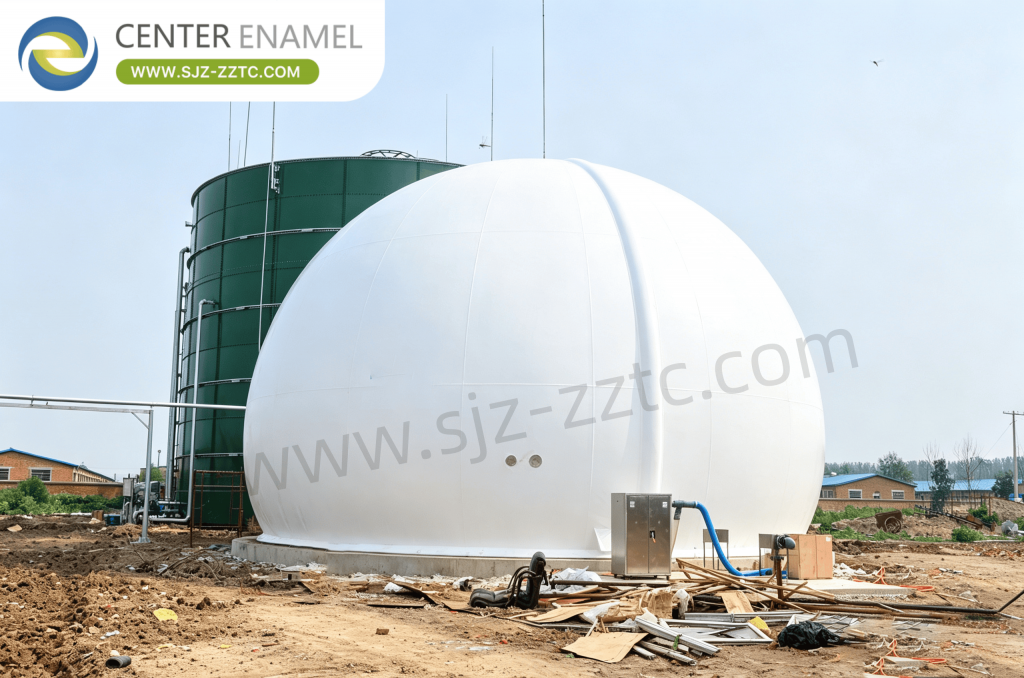
A reliable Biogas Project Contractor brings together expert process design, robust equipment supply, and turnkey project execution to ensure that treatment plants achieve optimal performance, compliance, and economic viability. Central to these systems are high-quality GFS Tanks, which provide the durable, corrosion-resistant, and gas-tight containment essential for anaerobic reactors. This article explores the market dynamics, technological solutions, and industry applications that define modern Industrial Wastewater Treatment, highlighting the indispensable role of professional contracting and premium storage infrastructure.
Market and Industry Landscape for Industrial Wastewater Treatment
Understanding the current competitive dynamics is essential for any stakeholder looking to invest in or upgrade treatment infrastructure. The competitive landscape shows divergence, with leading companies building integrated service capabilities through technical integration and capital operations, and industry concentration gradually increasing. Chinese companies continue to consolidate their advantages in mid-tier equipment exports. International giants target high-end customers and complex Industrial Wastewater Treatment markets, while local players occupy the mid-to-low-end and industrial park centralized treatment markets with service responsiveness and cost advantages.
In the anaerobic process segment, UASB, EGSB, and IC anaerobic reactors, with advantages of high loading rates, small footprints, and stable operation, are widely used in high-concentration organic wastewater pretreatment in food processing, pharmaceutical fermentation, alcohol brewing, chemical, and other industries. These reactors use steel tank shells, and their corrosion resistance and gas-tightness directly determine long-term operational stability. The application value of glass-fused-to-steel tanks in such scenarios is increasingly prominent. For a Biogas Project Contractor, selecting the right reactor technology and containment solution is paramount to delivering projects that meet performance targets and withstand the test of time.
GFS Tanks Adaptable to Extreme Climates
The physical environment where treatment plants are located presents unique challenges that demand robust and adaptable infrastructure. GFS Tanks can undergo customized wind and seismic design based on project site climate and geological conditions, with environmental adaptability far superior to concrete tanks. Concrete tanks are cast-in-place monolithic structures, with seismic and wind resistance entirely dependent on on-site construction quality. In remote areas, typhoon-prone zones, and earthquake belts, construction quality is difficult to control. Under strong earthquakes or typhoons, concrete tanks are prone to cracking and base settlement damage, with subsequent reinforcement costs equivalent to rebuilding.
GFS Tanks undergo collection of local seismic intensity, maximum wind pressure, and foundation bearing capacity data before construction, with customized thickened steel panels, stiffening ribs, and anchored base components-all factory-prefabricated to standardized specifications. The bolted panel structure has excellent stress distribution capability, making it less prone to overall fracture under seismic and typhoon impacts, and minor foundation settlement will not cause through-cracking. Structural parameters can be flexibly adjusted for mountainous, coastal typhoon-zone, and high-seismic-zone projects, providing long-term protection against extreme natural climate damage. For any Industrial Wastewater Treatment project, especially those executed by a Biogas Project Contractor in challenging environments, this adaptability ensures operational continuity and asset protection over decades of service.
UASB Process Definition for Industrial Wastewater Treatment
With the infrastructure in place, the choice of biological treatment process determines the system's efficiency and energy recovery potential. UASB, or Upflow Anaerobic Sludge Blanket Reactor, is the benchmark mainstream technology for medium-to-high concentration soluble organic wastewater treatment. It requires no mechanical mixing or media carriers, relying on the upward flow of wastewater to suspend and expand granular sludge within the reactor, forming a stable sludge bed layer. Highly active anaerobic granular sludge efficiently degrades pollutants, with excellent settleability and high microbial concentration.
The UASB innovatively integrates reaction, sedimentation, and gas-liquid-solid separation functions, simplifying the anaerobic treatment process with advantages of high efficiency, energy savings, and compactness. It is widely used in various medium-to-high concentration soluble organic wastewater treatment applications. When a Biogas Project Contractor integrates UASB reactors constructed from high-quality GFS Tanks into an Industrial Wastewater Treatment system, the result is a powerful, energy-positive solution that maximizes biogas yield while minimizing operational complexity and footprint.
Textile Wastewater Sources and Treatment Challenges
Different industries present unique wastewater characteristics that require tailored treatment approaches. Textile wastewater originates from the entire production chain of textile printing and dyeing, covering spinning/weaving, pretreatment, dyeing/printing, and finishing for cotton, chemical fibers, wool, hemp, and silk-a typical high-color, high-alkalinity industrial wastewater in the light industry sector. Key pollution stages include desizing (removing warp sizing agents), scouring (removing fiber impurities and oils), bleaching (oxidative color removal), mercerizing (alkali treatment to improve fiber properties), dyeing (color fixation), printing (paste printing and washing), and finishing (softening, waterproofing, flame retardancy).
Water quality varies greatly between stages: desizing/scouring wastewater has high COD and strong alkalinity; dyeing wastewater has extremely high color with residual dyes; bleaching wastewater contains oxidant residues. Discharge is intermittent, alternating between different processes and dye types, with severe water quality and quantity fluctuations. Effective Industrial Wastewater Treatment for textile effluents requires robust anaerobic pretreatment, often using UASB reactors, to reduce organic loads before downstream polishing. As a specialized Biogas Project Contractor, we design systems that handle these fluctuations while recovering biogas, turning a pollution challenge into an energy opportunity.
Center Enamel Development History and Expertise
The credibility and capability of a Biogas Project Contractor are built on a foundation of experience, innovation, and proven performance. Center Enamel has been deeply engaged in the environmental bolted storage equipment field for over 30 years. Starting with proprietary enamel anti-corrosion material technology, the company has gradually completed the full-industry-chain upgrade from a single tank manufacturer to a comprehensive environmental EPC service provider. Throughout its 30+ year history, the company has been recognized as a National High-Tech Enterprise, National Specialized and Sophisticated "Little Giant," Manufacturing Single Champion, and Provincial Green Factory.
It has successfully delivered over 30,000 environmental projects globally, establishing itself as a leading enterprise in the global GFS Tank storage industry. The company has fully integrated the entire chain from enamel frit R&D, intelligent environmental equipment manufacturing, to EPC project contracting-every business breakthrough has been achieved through proprietary core anti-corrosion technology. This deep expertise makes Center Enamel the ideal partner for complex Industrial Wastewater Treatment and biogas projects, providing clients with the assurance of quality and long-term reliability.
Center Enamel R&D Team and Technological Innovation
Continuous innovation is the engine that drives improved performance and cost-effectiveness in wastewater treatment. Center Enamel has built a full-chain professional team covering R&D, design, marketing, installation, and after-sales. The R&D team is led by national-level materials technology experts, specializing in enamel frit and tank anti-corrosion core technologies. External senior environmental engineering and mechanical structure engineers are retained to strengthen R&D capabilities, focusing on anti-corrosion coating formulations, specialty corrosion-resistant tanks, and anaerobic supporting integrated equipment-continuously breaking through industry technological barriers.
The team operates through proprietary laboratories with external university research collaboration-conducting year-round new material and new process durability pilot testing and long-term corrosion simulation testing. Specialized enamel formulations are iteratively developed for extreme conditions such as high-salinity wastewater, strong acid/alkali POME, and high-organic livestock manure-providing core technical support for the company's annual new invention and utility patents-building a proprietary material technology barrier. For a Biogas Project Contractor, leveraging such advanced R&D capabilities ensures that GFS Tanks and entire Industrial Wastewater Treatment systems are optimized for the specific challenges of each project, delivering superior durability and performance.
Aluminum Alloy Trough Deck Roof for Tank Applications
Beyond the primary tank structure, auxiliary components like roofing systems play a vital role in overall system integrity and functionality. The Aluminum Alloy Trough Deck Roof is a cost-effective economical tank cover solution for clean water and wastewater storage scenarios, primarily designed for drinking water, production wastewater, and firewater reserve tanks, balancing practicality and cost advantages. The main body is integrally formed from anti-corrosion aluminum alloy plates, paired with aluminum support trusses. Its lightweight design imposes less load on the tank foundation, reducing civil construction investment.
A naturally formed dense oxide protective layer on the surface resists rain and mild wastewater corrosion, withstands outdoor sun and rain exposure, and effectively blocks wind, rain, insects, fallen leaves, and odor volatilization, protecting water quality by preventing dust and debris from falling in and causing secondary contamination. The flat roof structure is neat and orderly, allowing installation of maintenance walkways, guardrails, vents, and level monitoring ports on top, facilitating daily inspection and equipment maintenance. The simple sealing structure enables straightforward installation with short construction timelines, and virtually eliminates the need for anti-corrosion painting maintenance, resulting in extremely low operational costs. It is suitable for various small, medium, and large atmospheric pressure water storage tanks, and has been widely implemented in waterworks clear water tanks, industrial circulating water tanks, park firewater tanks, and domestic wastewater temporary storage facilities. It is highly compatible with water storage applications that do not require biogas collection or high-pressure sealing. While not for biogas-containing vessels, this roofing solution is an excellent choice for other tanks within an Industrial Wastewater Treatment plant, complementing the anaerobic reactors provided by a Biogas Project Contractor.
Frequently Asked Questions
Q: What are the key benefits of hiring a professional Biogas Project Contractor for industrial wastewater treatment?
A: A professional Biogas Project Contractor provides end-to-end services including feasibility studies, process design, equipment supply (like GFS Tanks), construction, and commissioning. This integrated approach ensures the system is optimized for your specific wastewater, maximizes biogas recovery, and adheres to all regulatory requirements, reducing project risks and long-term operational costs.
Q: Why are GFS Tanks preferred over concrete tanks for anaerobic digestion and industrial wastewater applications?
A: GFS Tanks offer superior corrosion resistance, durability, and gas-tightness compared to concrete. Their factory-applied glass coating prevents chemical attack and cracking. They are also modular and prefabricated, enabling faster installation, easier transport to remote sites, and adaptability to extreme climates with customized wind and seismic design. This ensures a longer service life and lower maintenance.
Q: How does the UASB process contribute to sustainable industrial wastewater treatment?
A: The UASB process is a highly efficient anaerobic technology that treats medium-to-high concentration organic wastewater while producing biogas-a renewable energy source. It requires no mechanical mixing, has a small footprint, produces less sludge, and significantly reduces energy consumption compared to aerobic processes. This makes it a cornerstone of sustainable Industrial Wastewater Treatment and a key technology offered by expert Biogas Project Contractors.