
How a Biogas Project Contractor Treats Food Waste with the USR Process
Global industrial wastewater treatment policies are escalating from "compliance discharge" to mandatory "resource recovery" and "zero liquid discharge." For any biogas project contractor, these regulatory shifts directly shape project design, process selection, and equipment specification.
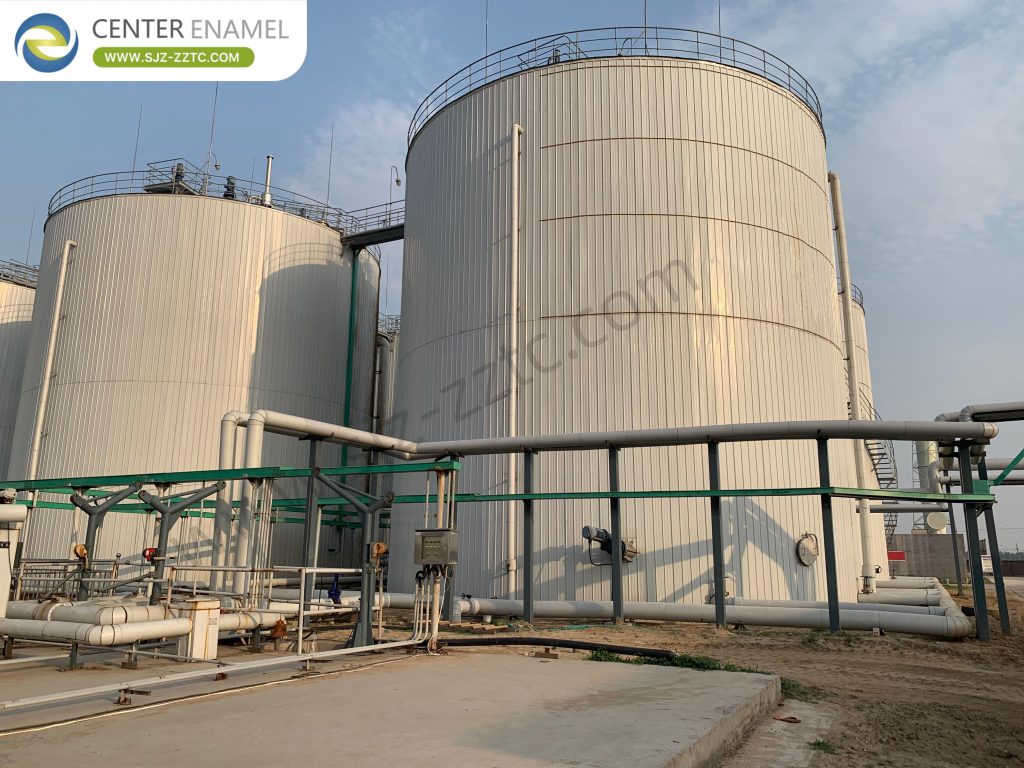
The EU, through its Circular Economy Action Plan, requires member states to increase industrial wastewater reuse rates and extends carbon footprint accounting to the full life cycle of wastewater treatment. China continuously updates and tightens industrial water pollutant discharge standards, with increasingly stringent limits on total nitrogen, total phosphorus, and characteristic pollutants for industries such as chemicals, pharmaceuticals, and printing and dyeing. Some water-scarce regions and highly polluting industries are mandated to adopt zero or near-zero liquid discharge technologies. Germany has established a differentiated pretreatment technical standard system by industry, requiring industrial wastewater to meet specific quality requirements before discharge into municipal wastewater treatment plants, implementing strict source control.
| Region | Policy Direction | Impact on Food Waste Biogas Projects |
| EU | Circular Economy Action Plan, full life-cycle carbon accounting | Higher reuse rates, carbon footprint reporting required |
| China | Tightened discharge standards for TN, TP, characteristic pollutants | Advanced treatment and nutrient removal mandatory |
| Water-scarce regions | Zero or near-zero liquid discharge mandates | Closed-loop water management, membrane polishing |
| Germany | Industry-specific pretreatment standards | Source control, pre-discharge quality requirements |
These policies mean food waste projects must be designed for resource recovery from the outset-not just pollution control. A capable biogas project contractor must build compliance into every stage of the process chain.
GFS Tanks Adaptable to Extreme Climates
GFS tanks can undergo customized wind and seismic design based on project site climate and geological conditions, with environmental adaptability far superior to concrete tanks. This matters greatly for food waste projects, which are often located in coastal, tropical, or remote regions.
Concrete tanks are cast-in-place monolithic structures, with seismic and wind resistance entirely dependent on on-site construction quality. In remote areas, typhoon-prone zones, and earthquake belts, construction quality is difficult to control. Under strong earthquakes or typhoons, concrete tanks are prone to cracking and base settlement damage, with subsequent reinforcement costs equivalent to rebuilding.
GFS tanks undergo collection of local seismic intensity, maximum wind pressure, and foundation bearing capacity data before construction, with customized thickened steel panels, stiffening ribs, and anchored base components-all factory-prefabricated to standardized specifications. The bolted panel structure has excellent stress distribution capability, making it less prone to overall fracture under seismic and typhoon impacts, and minor foundation settlement will not cause through-cracking.
| Design Factor | Concrete Tanks | Center Enamel GFS Tanks |
| Seismic resistance | Dependent on on-site construction quality | Factory-prefabricated, bolted panel stress distribution |
| Wind resistance | Prone to cracking in typhoon zones | Customized thickened panels and stiffening ribs |
| Foundation settlement | Through-cracking risk | Minor settlement does not cause through-cracking |
| Remote area suitability | Difficult quality control | Factory-controlled, standardized assembly |
| Reinforcement cost after damage | Equivalent to rebuilding | Minimal, modular panel replacement |
USR Supporting Equipment: Purpose-Built for High-Solids Food Waste
As a biogas project contractor, Center Enamel pairs the USR Process with purpose-built supporting equipment. The core equipment is the GFS tank-with no complex media or precision three-phase separators, featuring a rugged clog-resistant structure.
Key supporting components include:
| Equipment Component | Function | Benefit for Food Waste Treatment |
| Bottom large-diameter anti-clogging distribution system | Uniform feed distribution | Handles high-solids wastewater, prevents pipe clogging |
| Influent lift pumps, pretreatment screens, equalization tanks | Impurity removal and water quality balancing | Stabilizes variable food waste characteristics |
| Simple top gas collection devices | Biogas capture | Enables biogas resource recovery |
| Biogas conveying/desulfurization equipment | Biogas purification | Protects downstream engines and boilers |
| Temperature, level, and pH online monitoring | Process control | Maintains stable anaerobic conditions |
| Bottom large-diameter sludge discharge pipes and pumps | Rapid residual sludge removal | Suitable for high-solids conditions |
The complete system has extremely low failure rates, outstanding wear and clog resistance, and is far easier to maintain than conventional anaerobic processes.
Food Waste Standardized Treatment Solutions
Core treatment uses a combination process of "pretreatment oil/grease/solids removal + anaerobic digestion + aerobic treatment + advanced treatment," specifically addressing high oil, high salt, and high organic load characteristics of food waste.
| Treatment Stage | Process | Purpose |
| Pretreatment | Mechanical sorting, crushing/screening | Remove inorganic impurities like plastics and bone fragments |
| Oil recovery | Three-phase separators | Recover oil for sale, significantly reduce wastewater oil content |
| Emulsified oil removal | DAF (dissolved air flotation) | Prevent oil entry into biological systems |
| Main anaerobic stage | CSTR anaerobic process | Suitable for high-solids, high-oil organic fermentation with strong shock resistance; produces biogas for energy recovery |
| Aerobic stage | A/O or A²O processes | Nitrogen and phosphorus removal |
| Salinity control | Dilution or halophilic bacteria acclimation | Manage high-salinity wastewater load |
| Polishing | Membrane treatment or constructed wetlands | Final compliance polishing |
Digester tanks use Center Enamel GFS tanks, resistant to oil and high-salt corrosion with excellent sealing to prevent odor escape. For a biogas project contractor, this integrated approach ensures both environmental compliance and energy recovery from a single process train.
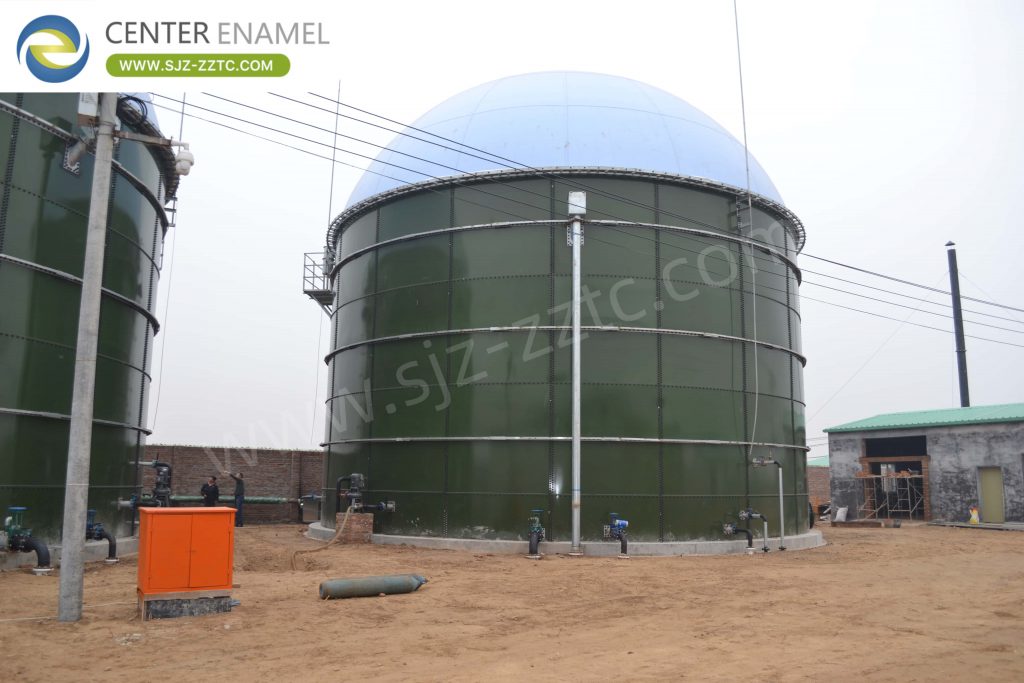
Case Study: Bangladesh Large-Scale Poultry Farm Manure Resource Recovery Project
This project demonstrates how a biogas project contractor applies the USR Process and anaerobic treatment to deliver measurable results. Targeting local poultry farm manure resource recovery with daily treatment of 47 tons:
| Parameter | Influent | Effluent |
| COD | 50,000 mg/L | Below 200 mg/L |
| BOD | 25,000 mg/L | Below 100 mg/L |
| SS | 50,000 mg/L | Below 100 mg/L |
Process: CSTR + UASB anaerobic treatment
Biogas production: Approximately 4,900 m³ daily
Power generation: 9,800 kWh daily (2 kWh per m³ biogas)
Outcome: Full compliance with local environmental discharge standards
This benchmark project for livestock waste recycling in Southeast Asia demonstrates simultaneous pollutant reduction and clean energy recovery-directly transferable experience for food waste projects with similar high-solids characteristics.
Marketing Team: Global Reach with Local Expertise
The marketing team brings together environmental industry multi-skilled professionals and multilingual foreign trade specialists, with deep expertise in global biogas, wastewater treatment, and biomass new energy markets-accumulating extensive practical project experience in Southeast Asia, Africa, Europe, and the Americas.
The team is proficient in various countries' wastewater discharge regulations, biogas subsidy policies, and carbon trading rules-providing one-stop preliminary site survey, solution planning, and investment return analysis consulting services. With multilingual capabilities (English, French, Spanish, Arabic), the team effectively communicates with clients worldwide-precisely matching regional industrial resources, project budgets, and environmental requirements.
Leveraging extensive overseas project experience, the team proactively helps clients avoid risks in overseas approvals, equipment import, and construction implementation-building a globally adaptable integrated environmental equipment business service system. This front-end capability is what allows a biogas project contractor to move from inquiry to signed contract with minimal client coordination burden.
Comprehensive International Authoritative Certifications
Center Enamel holds CE, NSF, WRAS, ISO9001, BSCI, ASME, and other global certifications-fully clearing EU, North American, Southeast Asian, and African project tendering barriers-providing critical hard credential advantages for large overseas project bidding.
| Certification | Region / Scope | Project Benefit |
| CE | European Union | Mandatory for EU market access |
| NSF | North America | Recognized for water and environmental equipment |
| WRAS | United Kingdom | Water regulation compliance |
| ISO9001 | Global | Quality management system |
| BSCI | Global | Social compliance for supply chains |
| ASME | North America | Pressure vessel manufacturing standards |
For clients selecting a biogas project contractor, these certifications reduce procurement risk and simplify tender qualification.
Frequently Asked Questions
How does a biogas project contractor handle high-oil food waste?
We use a combination train: mechanical sorting and three-phase separation to recover oil, DAF to remove emulsified oil, then CSTR anaerobic digestion for high-solids fermentation. GFS tanks resist oil and salt corrosion while preventing odor escape.
What is the USR Process best suited for in food waste treatment?
USR handles high-suspended-solids, high-impurity wastewater with clog-resistant structure and no granular sludge requirement. It works well as primary anaerobic treatment for food waste streams with high solids and variable composition.
Which certifications support overseas biogas project tendering?
Center Enamel holds CE, NSF, WRAS, ISO9001, BSCI, and ASME certifications, clearing tendering barriers in the EU, North America, Southeast Asia, and Africa-reducing qualification risk for international projects.
Ready to Work with a Reliable Biogas Project Contractor?
Center Enamel combines 30+ years of engineering expertise with the proven USR Process, GFS tanks, and complete anaerobic system integration to deliver food waste biogas projects that meet the strictest discharge and resource recovery standards. Contact our team to discuss your feedstock characteristics, treatment targets, and local regulations-and receive a customized proposal.
Get your tailored biogas solution today-our engineers are ready to help.