
How Our GFS Tanks and Biogas Project Contractor Model Turn Livestock Manure into Value
Livestock manure has shifted from a disposal problem to a resource opportunity-but only for operations equipped to capture that value. The market is transitioning from environmental compliance-driven treatment to dual-value-driven recovery of energy and fertilizer. Making that transition work requires two things: containment that survives the aggressive chemistry of manure, and a delivery partner accountable for the whole system. As a Biogas Project Contractor, Center Enamel supplies both, pairing corrosion-resistant GFS Tanks with CSTR and USR anaerobic processes to produce biogas for power generation and digestate for organic fertilizer.
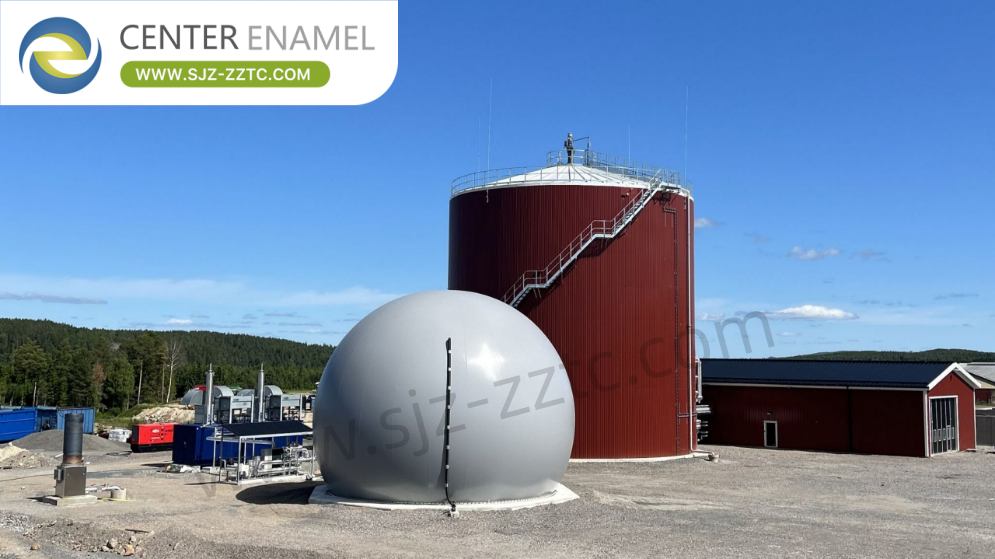
Business Model Innovation Reshaping the Manure Treatment Market
Market structure determines which solutions are commercially viable. The livestock manure treatment market is transitioning from environmental compliance-driven to dual-value-driven by energy and fertilizer valorization. The European digestate concentration fertilizer market is mature, and large-scale biogas projects in North America commonly include digestate processing centers. In terms of business model innovation, the asset-light model of farmers paying per volume treated has been piloted successfully in some countries. China's "biogas operation outsourcing" model is beginning to penetrate county-level projects. Digital technology-driven precision nutrient management platforms are emerging as new industry links connecting farms, treatment centers, and agricultural end-users.
In terms of process equipment, CSTR is the mainstream anaerobic digestion process for treating livestock manure. After anaerobic digestion, manure produces biogas for power generation or grid-injection purification, while digestate is processed into organic fertilizer for farmland application. GFS Tanks, with strong corrosion resistance and low maintenance costs, are widely used in manure treatment projects on large-scale farms in North America, Europe, and China, particularly suited to the corrosive environments of high ammonia-nitrogen and high hydrogen sulfide in manure. This combination of proven process and durable containment is what a Biogas Project Contractor can standardize across diverse project sites.
GFS Tanks Built for the Chemistry of Manure
Manure is among the most corrosive feedstocks in agricultural biogas, and containment failure is the most common cause of project underperformance. Center Enamel has independently developed over 200 specialized enamel frit formulations and supporting patents, capable of customizing anti-corrosion enamel based on customer storage media, with adaptability comprehensively superior to concrete tanks. Concrete tanks use a single material and are only suitable for neutral clean water storage. When storing corrosive materials such as livestock manure, palm oil mill effluent, chemical wastewater, food waste digestate, or high-salinity wastewater, additional anti-corrosion linings must be applied. These linings are prone to failure, preventing long-term stable operation and cannot adapt to alternating high and low concentration storage conditions.
GFS Tanks resolve this through formulation rather than added protection. They can be specifically formulated with specialized enamels resistant to strong acids, strong alkalis, high organic content, and high salinity. A single tank can switch between multiple wastewater and fermentation feedstock storage requirements. They are universally applicable across biogas anaerobic digestion, municipal wastewater, livestock farming, food processing, and industrial water treatment scenarios, eliminating the need to rebuild tanks for media changes and perfectly meeting the needs of diversified, multi-condition environmental protection projects. For a Biogas Project Contractor, this formulation flexibility means the same containment platform can serve manure storage, anaerobic digestion, and digestate holding without requalification.
Where the USR Process Fits in Agricultural Wastewater Treatment
Process selection should follow feedstock characteristics, and the USR Process occupies a specific and important niche. It is a dedicated process for agricultural high-solids wastewater, primarily suitable for large-scale livestock manure, livestock soaking water, agricultural straw leachate, and livestock slaughterhouse high-solids wastewater. For high-suspended-solids, high-organics, high-impurity wastewater conditions, it is the core process for rural livestock pollution treatment and agricultural organic waste resource utilization.
The USR Process is also suitable for township decentralized wastewater treatment and small to medium-sized agricultural enterprise wastewater treatment, and can serve as the primary process for large livestock base manure resource recovery, combining wastewater treatment with biogas recovery. It is further applicable to various high-solids, easily clogged, difficult-to-treat organic wastewater pretreatment, with superior suitability in agricultural environmental applications compared to other anaerobic processes. Where CSTR handles the mainstream digestion role, the USR Process extends treatment capability to the most difficult solids-heavy streams that would otherwise clog conventional reactors.
O&M Economics: Why Livestock Manure Offers the Best Cost-Effectiveness
Economics ultimately decide whether a biogas project proceeds, and livestock manure compares favorably against other wastewater types. O&M costs are relatively low with an excellent input-output ratio-the highest cost-effectiveness among the five wastewater types. Core treatment units are primarily physical separation, anaerobic digestion, and ecological polishing-no high-end precision equipment or expensive chemicals. Equipment is simple with low failure rates and low maintenance costs.
Anaerobic digestion produces stable biogas for plant heating and power generation, offsetting energy costs. Ecological treatment units have virtually no ongoing O&M costs. Only periodic cleaning of sedimentation tanks and polishing ponds is required, with low labor costs. Manure solids, sludge, and digestate can be sold as resources, further reducing net treatment costs. This combination of low operating expense and multiple revenue streams is what makes livestock manure attractive to a Biogas Project Contractor and to farm owners evaluating return on investment.
Global Delivery Coverage and Installation Capability
Execution across geographies is what separates a regional supplier from a global Biogas Project Contractor. Center Enamel is the pioneer of Chinese GFS equipment exports, with installation service coverage across over 100 countries and regions-possessing full delivery capability across climates, regulations, and geographies.
Global Installation Coverage by Region
| Region | Countries and Conditions Served |
| Southeast Asia | Vietnam, Thailand, Malaysia, Indonesia, Cambodia, Bangladesh, Nepal |
| Africa | Ghana, South Africa, Mali, Guinea, Zambia, Kenya, Pakistan |
| Europe and Americas | Sweden, USA, Russia |
| Middle East and Latin America | Regional project coverage |
| Climate adaptability | Tropical rainy high-salt spray, high-altitude mountainous, Nordic severe cold, high-standard European/American facilities |
The company uses a dual-service model combining its own cross-border construction teams with a global localized agent network. Modular GFS Tanks assembly enables short construction periods with dismantlable and reusable capability-suitable for overseas short-term projects, phased expansions, and relocation needs-with full-lifecycle after-sales O&M support ensuring long-term stable client operations.
Aluminum Alloy Trough Deck Roof for Water Storage Applications
Cover selection should match the service conditions of each tank. Aluminum Alloy Trough Deck Roof is a cost-effective economical tank cover solution for clean water and wastewater storage scenarios, primarily designed for drinking water, production wastewater, and firewater reserve tanks, balancing practicality and cost advantages. The main body is integrally formed from anti-corrosion aluminum alloy plates, paired with aluminum support trusses. Its lightweight design imposes less load on the tank foundation, reducing civil construction investment.
A naturally formed dense oxide protective layer on the surface resists rain and mild wastewater corrosion, withstands outdoor sun and rain exposure, and effectively blocks wind, rain, insects, fallen leaves, and odor volatilization-protecting water quality by preventing dust and debris from falling in and causing secondary contamination. The flat roof structure is neat and orderly, allowing installation of maintenance walkways, guardrails, vents, and level monitoring ports on top, facilitating daily inspection and equipment maintenance. The simple sealing structure enables straightforward installation with short construction timelines, and virtually eliminates the need for anti-corrosion painting maintenance, resulting in extremely low operational costs. It is suitable for various small, medium, and large atmospheric pressure water storage tanks, and has been widely implemented in waterworks clear water tanks, industrial circulating water tanks, park firewater tanks, and domestic wastewater temporary storage facilities. It is highly compatible with water storage applications that do not require biogas collection or high-pressure sealing.
Want to turn your manure liability into biogas and fertilizer revenue? Share your livestock type, herd size, and manure volume with Center Enamel for a feasibility study and system design. Contact our team to schedule a consultation and receive a project-specific proposal.
Frequently Asked Questions
Q: How does a Biogas Project Contractor handle high-ammonia manure?
Manure's high ammonia and hydrogen sulfide corrode conventional tanks. GFS Tanks use specialized enamels resistant to these conditions, while CSTR and USR processes produce biogas and digestate-delivering both energy and fertilizer value.
Q: Which livestock operations suit the USR Process?
Large-scale manure, soaking water, straw leachate, and slaughterhouse high-solids wastewater. It also serves decentralized township treatment and medium agricultural enterprises, tolerating solids that clog other anaerobic reactors.
Q: Why is livestock manure cost-effective to treat?
Simple physical, anaerobic, and ecological units keep O&M low. Biogas offsets energy costs, and manure solids, sludge, and digestate can be sold-making manure the highest cost-effectiveness among wastewater types.