
Why a Biogas Project Contractor Turns Waste into Biogas
The global biogas industry is in a phase of large-scale expansion, with China contributing the major share of new capacity and becoming the fastest-growing single market. Europe's mainstream model focuses on combined heat and power (CHP) and biomethane grid injection, with active biomethane certificate trading and application scenarios covering power generation, heating, and transportation fuel. China, in contrast, emphasizes vehicle fuel and industrial heating while actively promoting the fertilizer utilization of digestate, showing significant differentiation in application scenarios. Southeast Asian emerging markets show rapidly growing food waste treatment demand, becoming key areas for global companies, while African and Latin American markets remain in the early stages, primarily relying on low-cost direct application models. Countries show differentiated development paths in biogas resource utilization: Europe focuses on energy output, China emphasizes comprehensive utilization, and emerging markets prioritize pollution control.
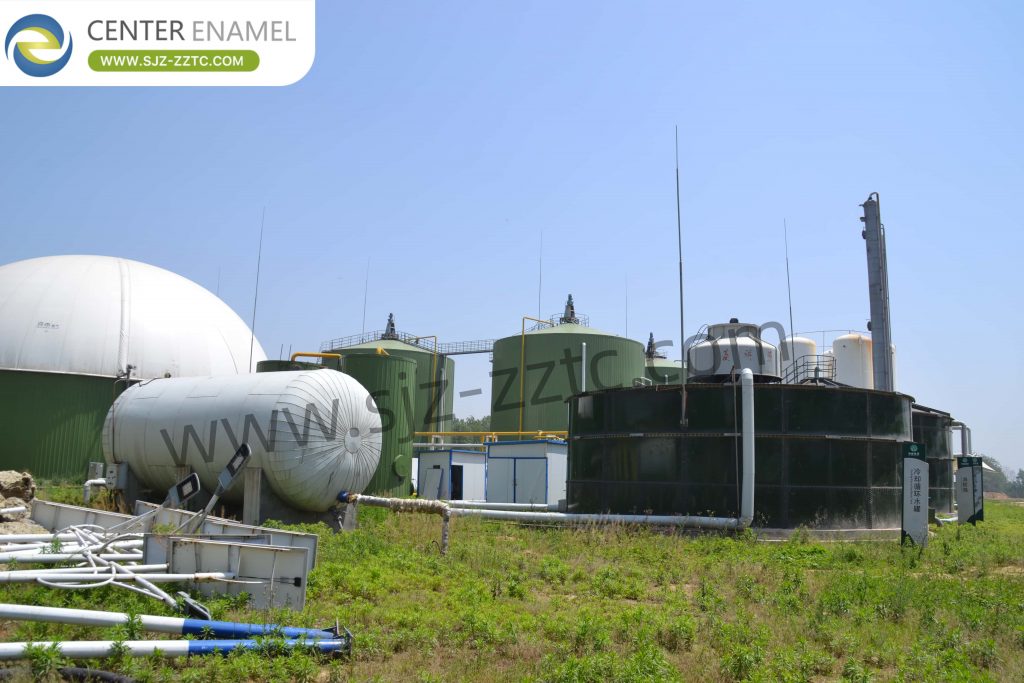
Behind every one of these pathways lies the same technical foundation: Anaerobic Digestion. Converting organic waste into biogas, electricity, heat, and fertilizer requires a partner who controls both the biological process and the tank infrastructure. That is the role of an experienced Biogas Project Contractor-and the focus of the sections below.
USR Process Definition: Anaerobic Digestion for High-Solids Wastewater
USR, or Upflow Solids Reactor, is an upflow anaerobic process modified for high-suspended-solids, high-solids organic wastewater, specifically designed to solve problems of clogging, sludge washout, and uneven reaction common in traditional anaerobic processes for high-solids wastewater. The process eliminates complex three-phase separators, simplifies internal structure, and relies on upflow hydraulics to promote thorough mixing of solid materials and anaerobic sludge. No strict granular sludge formation conditions are required-flocculent sludge can operate stably. The key feature is high solids tolerance and impurity resistance, with very high influent suspended solids tolerance. It is a dedicated high-efficiency anaerobic process for livestock manure, agricultural organic waste, and high-solids livestock wastewater, specifically developed for agricultural and environmental applications.
| USR Process Feature | Technical Detail |
| Reactor type | Upflow Solids Reactor (upflow anaerobic) |
| Designed for | High suspended solids, high solids organic wastewater |
| Problems solved | Clogging, sludge washout, uneven reaction |
| Internal structure | No complex three-phase separators |
| Mixing mechanism | Upflow hydraulics |
| Sludge requirement | Flocculent sludge; no granular sludge needed |
| Key strength | High solids and impurity tolerance |
Biogas Application Benefits: Four Value Pathways
After desulfurization, dehydration, and upgrading, biogas can be utilized in multiple high-efficiency applications, achieving closed-loop value conversion of organic waste to energy and resources.
Biogas CHP: Biogas is fed into gas engines/turbines for power generation-electricity can be grid-sold or self-consumed, with waste heat recovered for digester heating and plant heating-overall energy efficiency exceeding 80%, the most mainstream biogas utilization method.
Biogas upgrading to biomethane: After carbon dioxide removal to >95% methane purity, it is equivalent to pipeline natural gas and can be injected into city gas networks or compressed as CNG/LNG for vehicles-significant economic benefits.
Direct combustion for heating: Biogas can be burned directly for boiler heating, sludge drying, agricultural product drying, greenhouse heating, and other industrial/agricultural heating applications-replacing coal/natural gas and reducing fossil fuel consumption.
Flare combustion for emergency disposal: When biogas production exceeds utilization capacity, it is flared to reduce direct methane greenhouse gas emissions, meeting environmental compliance requirements.
Each cubic meter of biogas has a calorific value of approximately 21–25 MJ, can generate 1.5–2.0 kWh of electricity, or replace 0.7–0.8 cubic meters of natural gas. Large-scale biogas plants produce thousands to tens of thousands of cubic meters of biogas daily, with annual power generation reaching millions to tens of millions of kWh-carbon reductions can be developed as CCER carbon credits for trading income, delivering triple value in environmental management, clean energy, and carbon assets.
| Biogas Utilization Pathway | Output / Efficiency | Typical Application |
| Biogas CHP | >80% overall energy efficiency | Grid-sold or self-consumed power; waste heat for digester heating |
| Upgrading to biomethane | >95% methane purity | City gas network injection; CNG/LNG vehicle fuel |
| Direct combustion | 21–25 MJ per m³ biogas | Boiler heating, sludge drying, greenhouse heating |
| Flare combustion | Emergency disposal | Methane emission reduction, environmental compliance |
Center Enamel Development History: 30+ Years in Environmental Equipment
Center Enamel has been deeply engaged in the environmental bolted storage equipment field for over 30 years. Starting with proprietary enamel anti-corrosion material technology, the company has gradually completed the full-industry-chain upgrade from a single tank manufacturer to a comprehensive environmental EPC service provider. Throughout its 30+ year history, the company has been recognized as a National High-Tech Enterprise, National Specialized and Sophisticated "Little Giant," Manufacturing Single Champion, and Provincial Green Factory. It has successfully delivered over 30,000 environmental projects globally, establishing itself as a leading enterprise in the global GFS tank storage industry. The company has fully integrated the entire chain from enamel frit R&D, intelligent environmental equipment manufacturing, to EPC project contracting-every business breakthrough has been achieved through proprietary core anti-corrosion technology.
| Milestone / Recognition | Status |
| Years in environmental equipment | 30+ years |
| Global environmental projects delivered | Over 30,000 |
| National High-Tech Enterprise | Recognized |
| National Specialized and Sophisticated "Little Giant" | Recognized |
| Manufacturing Single Champion | Recognized |
| Provincial Green Factory | Recognized |
| Business scope | Enamel frit R&D → equipment manufacturing → EPC contracting |
Professional Construction Team Manpower Reserve
Center Enamel has established its own domestic and international certified construction teams, with regular practical training on GFS tank installation and overseas construction standards for various countries. Domestically, regional construction teams cover multiple zones, capable of simultaneously deploying multiple teams for large tank farm projects. Internationally, cross-border professional installation teams are equipped to various country construction standards-sufficient manpower reserves ensure uninterrupted construction delivery for remote African sites, high-standard European/American facilities, and other projects.
R&D Team: Driving Innovation in Anaerobic Digestion Equipment
Center Enamel has built a full-chain professional team covering R&D, design, marketing, installation, and after-sales. The R&D team is led by national-level materials technology experts, specializing in enamel frit and tank anti-corrosion core technologies. External senior environmental engineering and mechanical structure engineers are retained to strengthen R&D capabilities, focusing on anti-corrosion coating formulations, specialty corrosion-resistant tanks, and anaerobic supporting integrated equipment-continuously breaking through industry technological barriers.
The team operates through proprietary laboratories with external university research collaboration-conducting year-round new material and new process durability pilot testing and long-term corrosion simulation testing. Specialized enamel formulations are iteratively developed for extreme conditions such as high-salinity wastewater, strong acid/alkali POME, and high-organic livestock manure-providing core technical support for the company's annual new invention and utility patents-building a proprietary material technology barrier.
Innovative Material Technology for Demanding Biogas Conditions
Center Enamel has independently developed over 200 anti-corrosion enamel formulations, with proprietary double-sided double-layer enameling technology-GFS tank anti-corrosion service life exceeds 30 years-far surpassing concrete and ordinary equipment-suitable for global high-corrosion wastewater and biogas fermentation conditions.
| Material Technology | Specification |
| Anti-corrosion enamel formulations | Over 200 independently developed |
| Enameling technology | Proprietary double-sided double-layer |
| GFS tank anti-corrosion service life | Exceeding 30 years |
| Target conditions | High-salinity wastewater, POME, high-organic livestock manure |
| Performance benchmark | Far surpassing concrete and ordinary equipment |
Frequently Asked Questions
What does a Biogas Project Contractor deliver?
A Biogas Project Contractor manages design, equipment manufacturing, installation, commissioning, and after-sales support. Center Enamel integrates Anaerobic Digestion processes, GFS tanks, and biogas utilization systems under one accountable contract.
How is biogas used after Anaerobic Digestion?
Biogas can fuel CHP engines for power and heat, be upgraded to biomethane for grid injection or vehicle fuel, burned directly for industrial heating, or flared for emergency disposal. Each pathway offers distinct revenue and compliance benefits.
Why is the USR Process suited to high-solids feedstocks?
The USR Process tolerates high suspended solids without clogging, requires no granular sludge, and operates with simple internal structures. This makes it reliable for livestock manure, straw leachate, and similar agricultural waste streams.
Ready to turn your organic waste into biogas with a proven Biogas Project Contractor? Contact Center Enamel today-our team will design an Anaerobic Digestion solution matched to your feedstock and energy goals.