
Biogas Project in Kenya: GFS Tanks + Double Membrane Roof for Cattle Farms
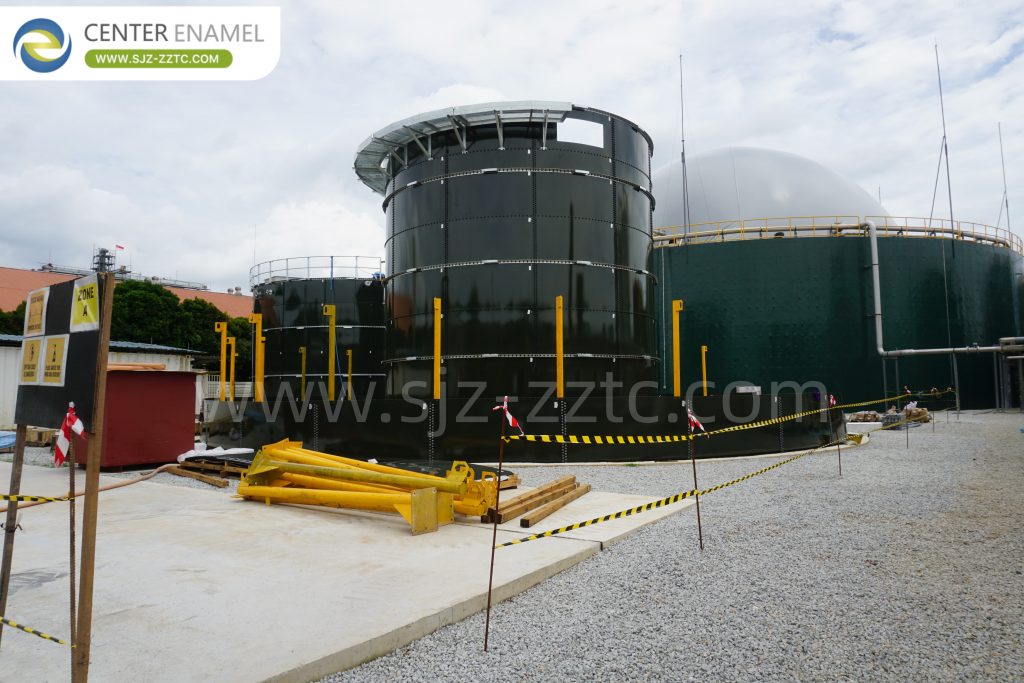
Kenya‘s livestock sector is a cornerstone of the national economy, with over 20 million cattle spread across dairy-rich regions such as Kiambu, Murang’a, Nyeri, Nakuru, and Laikipia, as well as extensive beef production areas in Kajiado, Narok, and Tana River. From smallholder zero-grazing units to large commercial ranches, cattle farming supports millions of livelihoods. However, this success brings a persistent environmental and operational challenge: manure management.
On most Kenyan cattle farms, manure accumulates in collection yards, around water troughs, or in unlined pits. The pre-treatment stage is particularly difficult. Farmers struggle to remove sand, soil, stones, and coarse bedding material from the slurry. Without effective screening and sand removal, organic waste clogs drainage channels, contaminates shallow wells and streams, and releases strong odors that attract flies and create nuisance for neighboring properties. During the rainy seasons, runoff from manure storage areas carries nutrients and pathogens into rivers and lakes—including sensitive water bodies like Lake Naivasha and the Tana River—contributing to eutrophication and waterborne diseases. What could be a valuable resource becomes an environmental and public health liability.
The Advantages of Converting Cow Manure to Biogas
For Kenyan cattle farmers facing rising electricity tariffs, expensive diesel, declining forest cover, and the high cost of imported fertilizers, converting manure into biogas offers transformative advantages.
First, affordable and reliable energy. Biogas can be used for cooking, lighting, water heating, and running generators. In rural and peri-urban Kenya, where grid electricity is often unreliable or unavailable, a biogas plant provides a stable, on-farm energy source that reduces dependence on expensive diesel generators and smoky firewood or charcoal. This is especially valuable for dairy farmers who need hot water for cleaning milking equipment.
Second, high-quality organic fertilizer. The digestate produced after biogas generation is a stable, nutrient-rich, low-odor fertilizer. Unlike raw manure, digestate does not burn crops or introduce weed seeds. It allows farmers to reduce their reliance on expensive imported synthetic fertilizers, improving soil health, crop yields, and farm profitability over time.
Third, climate and environmental benefits. Open manure storage releases methane—a greenhouse gas 28 times more potent than carbon dioxide over a 100-year period. Capturing this methane through anaerobic digestion reduces the farm‘s carbon footprint and helps Kenya meet its nationally determined contributions (NDCs) under the Paris Agreement. Additionally, proper manure management reduces groundwater contamination and improves sanitation around cattle housing areas.
Center Enamel: Professional Design for Biogas Projects
Shijiazhuang Zhengzhong Technology Co., Ltd (Center Enamel) has been a global leader in environmental engineering . With a 150,000㎡ R&D and production base, over 500 employees, and an annual output of 250,000 GFS tank sheets, Center Enamel is the largest manufacturer of Glass-Fused-to-Steel tanks in Asia.
For Kenyan cattle farmers, cooperatives, and development projects, Center Enamel provides more than just equipment. They offer professional EPC (Engineering, Procurement, and Construction) services tailored to local conditions—highland and lowland climates, distinct wet and dry seasons, and the need for durable, low-maintenance systems. Certified to ISO 9001, AWWA D103, and NSF61, their Biogas Project solutions are engineered to handle the high-solids, high-strength manure typical of Kenyan cattle operations, whether on the slopes of Mount Kenya, the hills of Kericho, or the plains of Laikipia.
Biogas Generation Principles and Pre-Treatment
Biogas is produced through anaerobic digestion (AD)—a natural biological process in which microorganisms break down organic matter in the complete absence of oxygen. This occurs in four stages: hydrolysis, acidogenesis, acetogenesis, and methanogenesis.
However, successful AD begins before the manure enters the digester. Raw cattle manure in Kenya often contains soil, sand, stones, and coarse plant material from grazing areas or zero-grazing bedding. The pre-treatment stage therefore includes:
Screening and crushing to remove large solids and debris such as straw, plastic, or rope.
Sand settling to eliminate heavy particles that would otherwise damage agitators, pumps, and pipes.
Homogenization in a mixing tank to balance flow, temperature, and solids concentration.
This initial cleaning simplifies the waste, protects downstream equipment, and ensures that the biological process runs stably without blockages or grit accumulation—a critical requirement for farms where technical support may be limited or distant.
The CSTR Process: Core Technology for High-Yield Biogas
At the heart of a successful Biogas Project lies the CSTR Process (Continuous Stirred-Tank Reactor). Unlike simple covered lagoons or small fixed-dome digesters common in Kenya, a CSTR is an engineered anaerobic treatment system designed for higher efficiency and consistent gas production at commercial or cooperative scale.
The CSTR reactor is equipped with a mechanical stirring device (mixer, agitator shaft, and specially designed paddles) that continuously mixes high-concentration organic waste with anaerobic microorganisms. This constant agitation ensures maximum contact between bacteria and substrate, accelerating degradation and increasing biogas yield.
Key features of the CSTR process include:
Continuous or semi-continuous feeding for stable, predictable gas output—ideal for daily farm operations.
Constant temperature control (mesophilic range) that works efficiently in Kenya‘s moderate highland climate with minimal added heating.
Shell-breaking devices to prevent crust formation on the liquid surface, a common problem with cattle manure.
For Kenyan cattle farms and dairy cooperatives, the CSTR process is ideal because it handles high suspended solids and provides reliable gas production even with variations in manure quality between the dry and wet seasons.
GFS Tanks + Double Membrane Roof: The Ideal Combination for Biogas Projects
In anaerobic digestion, corrosion is a constant threat. Hydrogen sulfide, ammonia, and organic acids attack conventional materials. Center Enamel’s GFS Tanks (Glass-Fused-to-Steel) are specifically designed to resist this aggressive environment. The glass coating is fused to steel at over 800°C, creating an inert, hard, and chemically resistant surface (pH range 1–14) that withstands years of exposure to corrosive biogas liquids.
When combined with a Double Membrane Roof, the system becomes a complete biogas capture and storage solution.
Why choose a Double Membrane Roof for your Biogas Project in Kenya?
Cost optimization: Significantly lower capital cost than rigid steel roofs—critical for projects with budget constraints.
Space efficiency: The gas holder is integrated into the roof, eliminating the need for a separate ground-mounted gas holder. This is especially valuable on land-constrained smallholder dairy farms.
Insulation: The double membrane provides thermal insulation, helping maintain stable digester temperatures in Kenya‘s cooler highland regions (e.g., around Limuru, Kinangop, or Timau at over 2,000 meters elevation).
While a rigid GFS roof is available for extreme wind or hail conditions, the double membrane roof is the preferred standard solution for most Kenyan cattle farms.
Supporting Equipment Overview
A complete Biogas Project requires more than just a reactor and roof. Center Enamel supplies a full range of auxiliary equipment to ensure smooth, safe operation:
Gas Holder & Torch System: Stores the produced biogas and safely combusts excess gas during maintenance or emergencies.
Dehydration and Desulfurization Tank: Removes corrosive hydrogen sulfide (H₂S) and water vapor from raw biogas, protecting generators, engines, and household cooking appliances.
Solid-Liquid Separator & Screw Sludge Dewatering Machine: Separates digestate into solid and liquid fractions. The solid fraction can be used as cattle bedding, soil conditioner, or sold as organic fertilizer.
Black Membrane: Used for secondary storage of liquid effluent before land application—ideal for irrigating fodder crops such as napier grass during Kenya‘s dry season.
Efficient Installation and Manufacturing Capacity
For Kenyan farmers, cooperatives, and investors, project speed and reliability matter. Center Enamel’s manufacturing capacity—250,000 GFS tank sheets per year—ensures rapid delivery, even for multiple biogas projects across different counties.
The bolted, modular design of GFS tanks offers major advantages over on-site concrete construction, which is slow, weather-dependent, and requires skilled local labor:
No curing time: Tanks are erected in days or weeks, not months.
All-weather installation: Work can continue during both the long and short rainy seasons.
Quality control: Panels are factory-engineered to exact tolerances, reducing on-site errors and the need for specialized local contractors.
With a global logistics network and experienced field crews, Center Enamel can deliver tanks to remote Kenyan locations—from the shores of Lake Victoria to the highlands of Meru—quickly and efficiently. The modular design also allows for future expansion. If a cooperative adds members or a farm increases its herd, the biogas plant can expand with it.
Center Enamel: One-Stop EPC Solutions for Kenyan Cattle Farms
Many Kenyan cattle farmers, cooperative managers, and agribusiness owners are experts in livestock, not in anaerobic digestion. Center Enamel removes the complexity through their One-Stop EPC Solution (Engineering, Procurement, Construction).
As a single-point contractor, Center Enamel takes full responsibility for:
Custom design: Matching the system to herd size, manure composition, and local climate—from the warm lowlands around Malindi to the cool highlands of Nyandarua.
Equipment supply: All tanks, mixers, piping, roofs, and auxiliary units.
Construction and commissioning: Ensuring the biology is active and the gas flows from day one.
Training: Teaching farm staff and local operators how to operate and maintain the system safely and efficiently.
By choosing Center Enamel, a Kenyan cattle farm or cooperative can modernize waste management, achieve energy independence, reduce fertilizer costs, and improve local sanitation—all with a single point of contact. This is particularly valuable for dairy cooperatives, commercial ranches, and agricultural development projects supported by organizations such as the Kenya Dairy Board, GIZ, or the World Bank.
Converting cattle manure into biogas is not a futuristic technology—it is a practical, proven solution for Kenyan farms facing rising energy costs, deforestation, and expensive fertilizers. By implementing a well-designed Biogas Project using the efficient CSTR Process, durable GFS Tanks, and a cost-effective Double Membrane Roof, farmers and cooperatives can turn a waste problem into a reliable source of cooking fuel, electricity, and organic fertilizer. Center Enamel provides the engineering, equipment, and EPC expertise to make this transition smooth and profitable. It is time for Kenya‘s livestock sector to harvest the energy that is already being produced every day.
Frequently Asked Questions (FAQ)
Q1: Can a CSTR biogas plant work at the high altitudes common in Kenya’s dairy regions (2,000–2,500 meters above sea level)?
A: Yes, with appropriate design considerations. Lower atmospheric pressure at high altitudes slightly affects gas production rates, but the CSTR process remains highly effective. Center Enamel adjusts the reactor sizing, hydraulic retention time, and temperature control parameters based on site elevation to ensure optimal biogas yield, even in highland areas like Limuru, Timau, or the Aberdares.
Q2: What happens if a dairy cooperative has varying numbers of cattle due to seasonal factors?
A: The CSTR system is designed for flexibility. The continuous feeding mechanism allows operators to adjust the daily manure input based on actual availability. The reactor’s mechanical mixing and stable microbial population can handle fluctuations in feed volume without significant loss of gas production efficiency. Center Enamel provides operational guidelines for managing seasonal variations.
Q3: Is the liquid digestate safe to use on fodder crops such as napier grass and maize that are fed back to dairy cattle?
A: Yes. The anaerobic digestion process significantly reduces pathogens and weed seeds compared to raw manure. The liquid digestate can be safely applied to fodder crops as a liquid fertilizer. In fact, because the digestate is more predictable, lower in pathogens, and higher in plant-available nitrogen than raw manure, it is considered a superior input for forage production, supporting a healthier closed-loop system where cattle feed is grown using nutrients recycled from their own waste.