
Biogas Project in Thailand: GFS Tanks + Double Membrane Roof for Slaughterhouse Wastewater Treatment
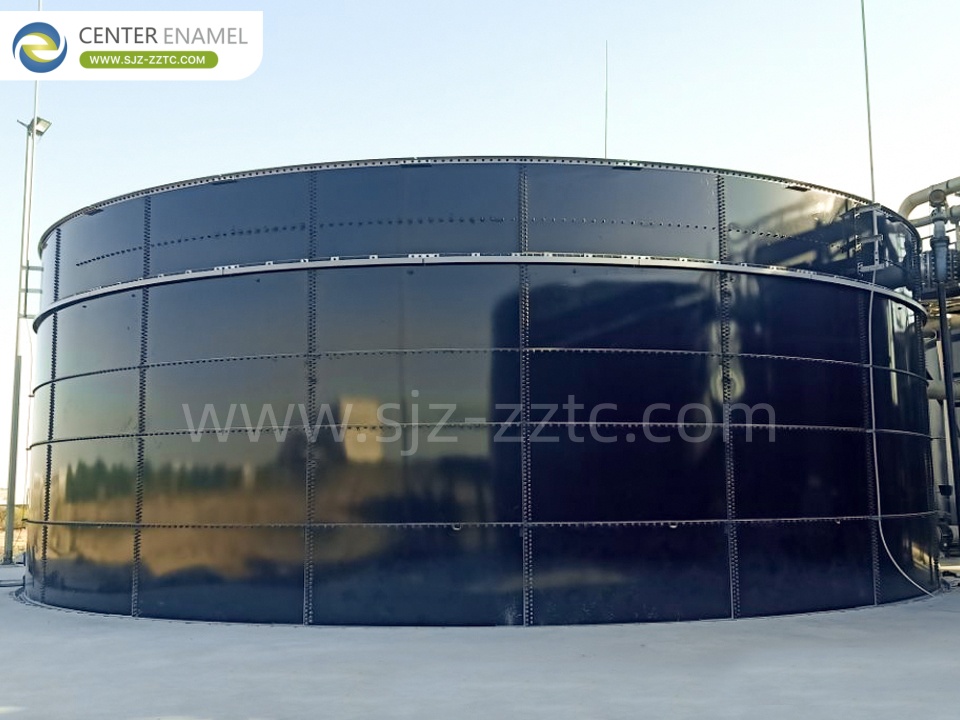
Thailand is a major hub for meat processing and export, housing numerous slaughterhouses that generate a significant volume of high-strength wastewater daily. This effluent is characterized by high levels of organic matter, including blood, fat, undigested food, and suspended solids.
The primary challenge for plant operators is the high Chemical Oxygen Demand (COD) and Biological Oxygen Demand (BOD), which, if discharged untreated, can lead to severe eutrophication of local water bodies, soil contamination, and strict regulatory penalties. Traditional treatment methods often struggle with the high fat and solid content, leading to clogging, high energy costs, and inefficient processing. There is a pressing need for a sustainable, cost-effective solution that can handle this tough organic load while meeting Thailand’s growing environmental compliance standards.
Advantages of Converting Slaughterhouse Wastewater into Biogas
Converting slaughterhouse wastewater into biogas offers a paradigm shift from costly disposal to profitable energy generation. The primary advantage is the reduction of greenhouse gas emissions; instead of releasing methane into the atmosphere, the system captures it as fuel. For slaughterhouses in Thailand, where energy prices fluctuate, the produced biogas can be used to generate heat for scalding tanks or electricity for refrigeration and processing equipment, significantly lowering operational costs.
Furthermore, the process naturally stabilizes the waste, eliminating odors associated with putrefaction. The remaining digestate serves as a nutrient-rich liquid fertilizer, providing an additional revenue stream or reducing costs for agricultural operations. This circular economy model not only solves a treatment headache but also enhances the corporate sustainability profile of meat processors in the competitive Thai market.
Center Enamel’s Professional Design Solutions for Biogas Projects
Center Enamel, with over 36 years of history and a 150,000㎡ R&D production base, is Asia’s largest manufacturer of Glass-Fused-to-Steel (GFS) tanks. Committed to water, wastewater, and biogas projects , the company provides professional design solutions for challenging environments like slaughterhouses. For a Biogas Project in Thailand, Center Enamel offers complete process packages and EPC services.
Their engineers calculate specific organic loading rates, hydraulic retention times, and gas production volumes to ensure the system matches the client’s waste output exactly. By utilizing advanced design standards such as AWWA D103 and EuroCode, Center Enamel guarantees that every tank and roof structure is robust enough to handle Thailand’s tropical climate, including high wind speeds and monsoon rains.
Biogas Generation Principle and Pre-treatment Process Introduction
The principle of biogas generation relies on anaerobic digestion, where microorganisms break down organic matter in an oxygen-free environment. However, raw slaughterhouse waste requires thorough pre-treatment. The initial stage involves a screen to remove large solids like hair, feathers, and bone fragments. Subsequently, a crushing device reduces particle size to increase surface area for bacterial action. Following crushing, a sand settling or homogenization tank removes heavy inorganic particles (grit and sand) that could wear down mechanical equipment. This pre-treatment stage is crucial for initially cleaning and simplifying the waste, thereby reducing the burden on the subsequent core treatment equipment. The wastewater is then pumped to a collection and mixing tank to ensure a uniform flow and load, stabilizing the overall process.
Introduction to the CSTR Process
The core of an efficient Biogas Project is the CSTR (Continuous Stirred-Tank Reactor). This anaerobic treatment technology ensures that fermentation raw materials and microorganisms are fully mixed in a sealed tank to produce biogas. The CSTR reactor is equipped with a mechanical stirring device—including mixers, paddles, and agitator shafts—to prevent settling of solids and scum formation. By feeding continuously or semi-continuously at a constant temperature (mesophilic or thermophilic), the CSTR handles high suspended solids and high-concentration organic wastewater effectively.
The reactor also features a shell-breaking device to disrupt floating layers, a sludge discharge port for digestate removal, and a biogas pipeline connected to a positive and negative pressure protector for safety. This complete mix state ensures maximum degradation of organic matter, resulting in higher biogas yields per ton of slaughterhouse waste.
GFS Tanks and Double Membrane Roof for Biogas Projects
For the storage and gas collection components of a Biogas Project in Thailand, Center Enamel supplies two primary products: GFS Tanks and the Double Membrane Roof.
GFS Tanks (Glass-Fused-to-Steel) are the preferred bolted tank solution due to their exceptional corrosion resistance. The enamel is fused to steel at high temperatures (over 800°C), creating a hard, inert, and smooth surface that resists the acidic environment of slaughterhouse digester contents. The tank panels are bolted on-site, allowing for rapid assembly even in remote locations.
Double Membrane Roof is the standard recommendation for the gas holder under normal working conditions. Its main advantages for Thai projects include significant cost optimization compared to steel structures, directly lowering the roof budget. Furthermore, it offers space efficiency by eliminating the need for a separate ground-mounted gas holder; the biogas is stored directly within the double membrane on top of the GFS tank. This design reduces the foundation construction cost and overall footprint. (Note: GFS roof is only recommended for very harsh conditions with extreme wind or snow loads, or tank diameters below 23 meters).
Supporting Equipment for a Complete Biogas System
A fully functional Biogas Project requires more than just the reactor and tank. The following supporting equipment ensures smooth operation:
Gas Holder: Stores the biogas produced to balance supply and demand.
Black Membrane: Used for lined lagoons or secondary digesters if additional storage is needed.
Solid-liquid Separator: Separates the digested effluent into solid fertilizer (cake) and liquid fertilizer.
Torch System: A safety flare that burns excess biogas when production exceeds usage or maintenance is required.
Lifting Pump: Transfers wastewater from the collection tank to the CSTR and recirculates digestate.
Dehydration and Desulfurization Tank: Removes corrosive hydrogen sulfide (H2S) and water vapor from raw biogas to protect generators and piping.
Screw Sludge Dewatering Machine: Reduces the volume of waste sludge before disposal or composting, minimizing hauling costs.
Center Enamel’s Efficient Equipment Installation Capability
Time is money, especially for slaughterhouses needing to comply with environmental regulations quickly. Center Enamel boasts a highly efficient installation capability, supported by a production ability of 250,000 glass-fused-to-steel sheets per year and a team of over 500 employees. Their modular bolted tank design allows for rapid on-site assembly without the need for heavy welding equipment or extended construction timelines.
For a Biogas Project in Thailand, Center Enamel can dispatch technical supervisors to guide local crews, ensuring that a standard 5,000m³ GFS tank with a Double Membrane Roof is erected in a fraction of the time required for concrete or welded carbon steel alternatives. This speed of installation reduces labor costs and allows the biogas system to become operational sooner, generating ROI faster.
Center Enamel: A One-Stop Solution Provider for Thai Biogas Projects
Beyond individual components, Center Enamel acts as a one-stop EPC (Engineering, Procurement, and Construction) provider for the Thai market. They deliver a complete turnkey biogas project package, from initial site assessment and civil design to equipment manufacturing, installation, and commissioning. For a slaughterhouse in Thailand, this means the client deals with a single, accountable contractor for the entire scope—pre-treatment, CSTR reactor, GFS Tanks, Double Membrane Roof, and all auxiliary equipment like the torch and desulfurization units. Center Enamel’s certifications (CE/EN1090, ISO9001, NSF61) and adherence to international design standards ensure that the Thai customer receives a bankable, high-quality facility that meets local pollution control department requirements, providing a hassle-free solution for converting waste to wealth.
Implementing a Biogas Project in Thailand for slaughterhouse wastewater is a strategic move toward sustainability and energy independence. By utilizing Center Enamel’s durable GFS Tanks and a cost-effective Double Membrane Roof, combined with efficient CSTR technology, operators can overcome traditional treatment hurdles. The system not only reduces environmental impact and complies with Thai regulations but also generates valuable biogas and fertilizer. With Center Enamel’s one-stop EPC service and rapid installation capabilities, slaughterhouses can efficiently transform waste into a renewable energy asset.
Frequently Asked Questions (FAQs)
1.How long does it take to install a GFS tank with a Double Membrane Roof for a biogas project in Thailand?
Installation time varies by size, but typically a standard digester tank (approx. 10m height, 20m diameter) can be erected by a skilled crew in 2-3 weeks. The bolted design of GFS tanks eliminates curing time associated with concrete, allowing faster project completion.
2. Can the Double Membrane Roof handle the heavy rain and high humidity in Thailand?
Yes. The double membrane roof is designed with a stable internal pressure and a rainwater drainage system. The outer membrane is weather-resistant, while the inner membrane stores the gas, ensuring that humidity and rain do not affect biogas storage or pressure stability.
3. Does the CSTR process require constant electricity to operate the mixer in a slaughterhouse biogas system?
While the mechanical stirrer does require electricity, the energy generated from the captured biogas typically far exceeds the power needed to run the mixer and pumps. A small portion of the biogas can be used to power a generator or engine to supply the on-site electricity demand, ensuring net energy positivity.