
Biogas Purification: A Complete Guide to Technologies, Equipment, and Why It Matters
Raw biogas produced from anaerobic digestion is not a drop-in replacement for natural gas. While it contains valuable methane, it also carries a cocktail of impurities-carbon dioxide, hydrogen sulfide, water vapor, and trace contaminants-that dilute its energy content, corrode equipment, and limit its end uses. Biogas purification, often used interchangeably with biogas upgrading, is the essential bridge between a raw waste-derived gas and a specification-grade fuel. This article explains what biogas purification involves, the dominant technologies and equipment used, and why skipping this step is rarely an option for anyone serious about energy recovery.
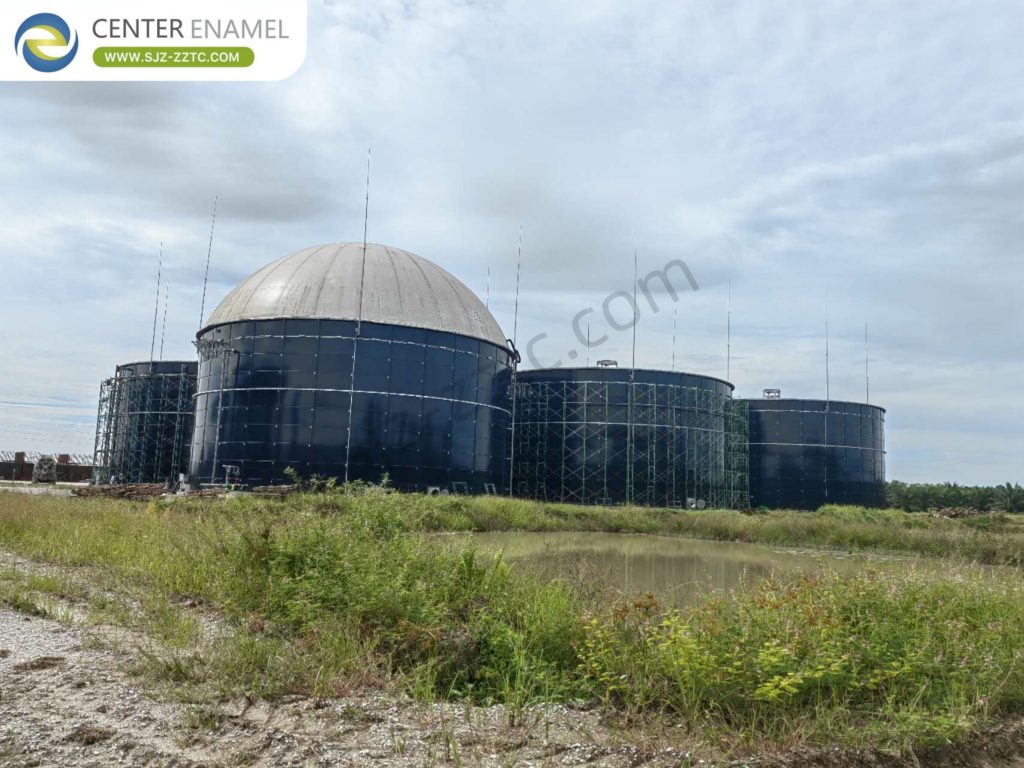
What Is Biogas Purification and Why Does It Matter?
Biogas purification refers to the series of processes that remove non-methane components from raw biogas to increase methane concentration and meet downstream requirements. Raw biogas typically contains 50–70% methane (CH₄) and 30–50% carbon dioxide (CO₂), along with smaller amounts of hydrogen sulfide (H₂S), moisture, ammonia, and siloxanes . The goal of purification is not merely to “clean” the gas but to upgrade it to biomethane, a product that can exceed 90% methane and function as a renewable substitute for compressed natural gas (CNG) or pipeline-quality gas .
The importance of purification becomes clear when considering what happens without it. CO₂ lowers the calorific value of the gas, meaning more volume is needed for the same energy output. H₂S is highly toxic and corrosive even at low concentrations-levels as low as 20 ppm can cause respiratory irritation, while concentrations above 300 ppm may be fatal . Moisture can condense in pipelines, causing blockages and corrosion. Together, these impurities degrade engines, compressors, and storage systems, driving up maintenance costs and shortening equipment life .
The Core Impurities That Biogas Purification Targets
Effective purification begins with understanding what needs to be removed. The composition of raw biogas varies by feedstock and digester conditions, but four categories of impurities dominate purification design.
Carbon dioxide is the most abundant impurity by volume. It is non-combustible, reduces energy density, and makes compression and storage less efficient. Hydrogen sulfide is the most problematic trace component. It is produced by sulfate-reducing bacteria during digestion and causes rapid corrosion of metals, particularly in the presence of moisture. Water vapor saturates raw biogas and must be removed to prevent condensation and to protect downstream desiccant or membrane systems. Siloxanes and volatile organic compounds, though present in smaller quantities, can form abrasive deposits in engines and turbines, making their removal critical for combustion applications .
Biogas Purification Technologies: How Methane Is Separated
Several mature and emerging technologies compete for the task of separating methane from impurities. Each operates on a different physical or chemical principle, and the choice depends on scale, gas composition, desired methane purity, and available utilities.
Water scrubbing exploits the fact that CO₂ is roughly thirty times more soluble in water than methane under pressure. Pressurized biogas contacts water in a packed column, and dissolved CO₂ and H₂S exit with the water stream while methane passes through . It is simple, robust, and widely used, though it requires cooling water and generates a wastewater stream that must be managed.
Chemical scrubbing uses reactive solvents, typically amine solutions, to absorb CO₂ and H₂S. Chemical scrubbing achieves high methane purity and is often selected for grid injection projects, but solvent regeneration demands significant thermal energy .
Membrane separation relies on polymeric or mixed-matrix membranes that allow CO₂ and smaller molecules to permeate faster than methane. Membrane systems are compact, modular, and energy-efficient, making them attractive for decentralized applications. Recent advances have improved selectivity and durability, though membrane fouling and pretreatment requirements remain operational considerations .
Pressure swing adsorption (PSA) uses porous adsorbents such as activated carbon or zeolites that selectively capture CO₂ and other impurities under pressure. When pressure is released, the adsorbent regenerates. PSA systems are well-suited to medium-scale plants but can suffer from methane loss during the purge cycle.
Cryogenic separation cools biogas to temperatures at which CO₂ liquefies or solidifies while methane remains gaseous. The process can deliver very high methane purity, but the energy required for refrigeration makes it economically favorable primarily for large-scale operations .
| Technology | Separation Principle | Typical Methane Purity | Key Advantage | Key Limitation |
| Water Scrubbing | Physical absorption under pressure | 95–98% | Simple, low chemical use | High water demand, wastewater |
| Chemical Scrubbing | Reactive absorption (amines) | >99% | High purity, proven at scale | High regeneration energy |
| Membrane Separation | Selective permeation | 90–98% | Compact, modular, low energy | Pretreatment sensitivity, fouling |
| PSA | Pressure-dependent adsorption | 95–98% | No liquid waste | Methane loss during purge |
| Cryogenic | Low-temperature condensation | >99% | Very high purity | High capital and energy cost |
Biogas Purification Equipment: From Pretreatment to Final Polishing
A complete purification system is not a single unit but a train of interconnected equipment, each targeting specific contaminants. The equipment train typically begins with pretreatment, which includes a knockout drum or cyclone to remove bulk moisture and particulates, followed by a biological or chemical desulfurization unit if H₂S levels are high. Iron sponge or iron oxide media are common for H₂S polishing, converting hydrogen sulfide into solid iron sulfides that are periodically replaced .
The main upgrading unit-whether a scrubbing column, membrane skid, or PSA vessel-performs the bulk of CO₂ removal. Downstream of this unit, a drying system using silica gel, activated alumina, or glycol ensures the gas meets dew point specifications. Activated carbon filters are often installed as a final polishing step to capture trace siloxanes and VOCs that could otherwise damage engines or membranes . For projects injecting into natural gas grids, gas compression and metering equipment complete the train, bringing biomethane to pipeline pressure and verifying quality.
For small-scale or decentralized operations, equipment designers have focused on compact, portable filtration units that combine H₂S removal, CO₂ reduction, and moisture elimination into a single skid-mounted assembly. These “plug-and-play” systems reduce capital barriers and make purification accessible to farm-scale digesters that cannot justify large industrial upgrading plants .
Why Biogas Purification Is Non-Negotiable for Energy Recovery
The economic and operational case for purification rests on three pillars: energy value, equipment protection, and market access.
Purification directly increases the calorific value of the gas. Raw biogas with 60% methane has a heating value roughly 60% that of natural gas; upgrading to 96–97% methane raises the heating value to approximately 35 MJ/Nm³, comparable to conventional natural gas . This means the same volume of gas delivers significantly more energy, improving the economics of every downstream application, from cooking to power generation.
Equipment protection is equally critical. H₂S corrodes compressors, engines, and pipelines. Moisture accelerates that corrosion and can freeze in cold conditions. Siloxanes abrade engine components. Purification removes these threats, extending equipment life and reducing unplanned downtime. For engine-based combined heat and power (CHP) systems, clean gas is not a luxury-it is a warranty requirement in many cases.
Market access depends on meeting specifications. Vehicle fuel standards, such as those for bio-CNG, set strict limits on CO₂, H₂S, and moisture. Pipeline injection requires even tighter control. Without purification, biogas remains a low-value, site-specific fuel; with purification, it becomes a tradable, transportable commodity.
Choosing the Right Purification Approach: Scale and Application Matter
No single purification technology dominates across all applications. For small farm digesters producing gas for on-site heating or electricity, a combination of biological desulfurization and simple moisture removal may suffice. For medium-scale projects targeting vehicle fuel, water scrubbing or membrane systems offer a balance of cost and performance. For large centralized plants feeding gas grids, chemical scrubbing or cryogenic systems provide the high purity and reliability that utilities demand.
A useful decision framework considers three variables: feed gas composition, required product specification, and available infrastructure. High H₂S feeds require robust pretreatment regardless of the CO₂ removal technology chosen. Sites with limited water availability should avoid water scrubbing. Locations with high electricity costs may favor membrane systems with lower parasitic loads. And projects without nearby gas grids must factor in compression and transport costs when selecting a purification train.
| Application | Typical Methane Requirement | Recommended Purification Approach |
| On-site cooking / boiler | 60–70% (minimal upgrading) | H₂S removal + moisture knockout |
| CHP engine | >90% | Water scrubbing or PSA + drying |
| Vehicle fuel (bio-CNG) | >96% | Membrane or chemical scrubbing + drying + polishing |
| Grid injection | >97% | Chemical scrubbing or cryogenic + thorough polishing |
FAQ
What is the difference between biogas purification and biogas upgrading?
The terms are often used interchangeably. Strictly speaking, purification emphasizes removal of harmful contaminants such as H₂S and moisture, while upgrading emphasizes the removal of CO₂ to increase methane concentration and calorific value. A complete system typically performs both functions in sequence.
Can biogas be purified without removing CO₂ first?
No practical purification train ignores CO₂, because it is the largest impurity by volume and the primary determinant of energy density. However, the order of operations may vary: many systems remove H₂S first to protect downstream equipment from corrosion, then remove CO₂ in the main upgrading unit.
What is the most cost-effective biogas purification method for small farms?
For small-scale operations, water scrubbing and compact membrane systems are generally the most accessible. Biological desulfurization followed by simple moisture removal is often sufficient for on-site thermal use, while membrane skids offer a reasonable path to vehicle-fuel quality without the chemical handling requirements of amine scrubbing .