
Leading Biogas Solution Provider: Advanced GFS Tanks for Industrial Wastewater Treatment
Industrial wastewater treatment is undergoing a profound transformation worldwide, shifting from a compliance-driven necessity to a strategic opportunity for resource recovery and energy generation. As industries face increasingly stringent environmental regulations and mounting pressure to achieve sustainability goals, the demand for reliable, durable, and efficient treatment infrastructure has never been higher. At the heart of this evolution lies the integration of advanced anaerobic digestion technologies with premium containment solutions.
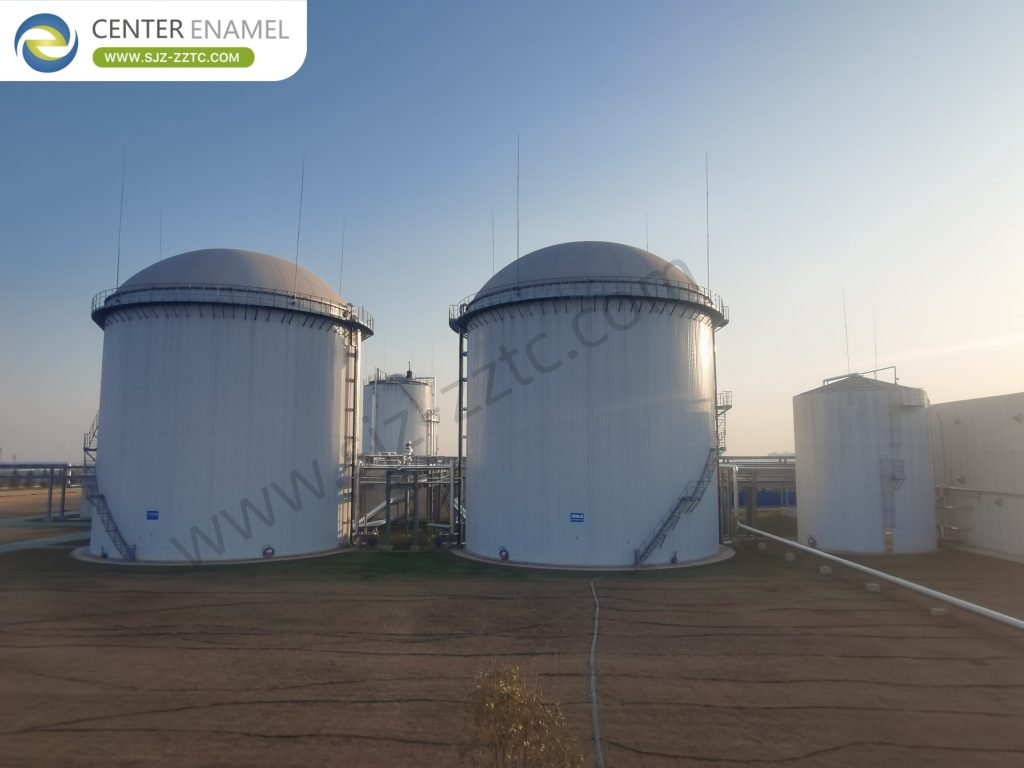
Whether addressing the complex effluent from textile mills or the high-organic loads from palm oil production, a comprehensive strategy requires both robust process design and dependable storage systems. As a leading Biogas Solution Provider, we recognize that success depends on delivering not just equipment, but complete, long-term solutions that transform wastewater challenges into sustainable energy opportunities.
Industrial Wastewater Treatment Regional Development Status
The Asia-Pacific region, particularly China, has become the world's largest industrial wastewater treatment market, with the operation and maintenance service segment's contribution continuing to rise, marking a shift from project construction to long-term operational management. This growth trajectory reflects the region's rapid industrialization and increasing governmental investments in wastewater infrastructure. Meanwhile, the North American market focuses on upgrading existing facilities, while Europe emphasizes high-value-added resource recovery technologies, aligning with the EU's Circular Economy Action Plan that mandates increased industrial wastewater reuse rates.
Wastewater from the new energy industry chain-including lithium batteries, photovoltaics, and hydrogen production-has become the most notable emerging growth area due to its complex composition and high treatment difficulty, generating significant demand for customized solutions. The maturity of third-party treatment models in industrial parks continues to improve, driving consolidation in the professional operation market. Industrial wastewater treatment challenges are particularly acute in regions with extreme conditions; the Middle East demonstrates strong demand for advanced treatment and reuse due to water scarcity, while manufacturing transfer in Southeast Asia drives local industrial wastewater treatment facility construction demand. Understanding these regional dynamics is essential for any Biogas Solution Provider seeking to deliver effective, context-appropriate solutions.
GFS Tanks Adaptable to Extreme Climates
As industrial wastewater treatment projects are deployed in increasingly diverse and challenging environments, the selection of storage and reactor infrastructure becomes critical to long-term operational success. GFS tanks can undergo customized wind and seismic design based on project site climate and geological conditions, with environmental adaptability far superior to concrete tanks. Concrete tanks are cast-in-place monolithic structures, with seismic and wind resistance entirely dependent on on-site construction quality. In remote areas, typhoon-prone zones, and earthquake belts, construction quality is difficult to control. Under strong earthquakes or typhoons, concrete tanks are prone to cracking and base settlement damage, with subsequent reinforcement costs equivalent to rebuilding.
GFS Tanks undergo collection of local seismic intensity, maximum wind pressure, and foundation bearing capacity data before construction, with customized thickened steel panels, stiffening ribs, and anchored base components-all factory-prefabricated to standardized specifications. The bolted panel structure has excellent stress distribution capability, making it less prone to overall fracture under seismic and typhoon impacts, and minor foundation settlement will not cause through-cracking. Structural parameters can be flexibly adjusted for mountainous, coastal typhoon-zone, and high-seismic-zone projects, providing long-term protection against extreme natural climate damage. This structural resilience makes GFS Tanks the preferred choice for biogas and wastewater projects in regions ranging from the humid tropics of Southeast Asia to the arid extremes of the Middle East.
UASB Process Advantages for Industrial Wastewater Treatment
Selecting the appropriate biological treatment process is fundamental to achieving both pollutant removal and energy recovery goals. The UASB process stands out as a highly effective anaerobic technology for treating a wide range of industrial wastewater streams. No mechanical mixing equipment is required, with sludge suspension achieved through hydraulic action, resulting in very low overall energy consumption. High-concentration anaerobic granular sludge can be cultivated, with high sludge concentration, strong activity, excellent settleability, low sludge washout, and low sludge yield, significantly reducing sludge disposal costs.
The integrated design combines reaction, sedimentation, and separation simultaneously, with small footprint and moderate capital investment. Simple structure with low failure rates and convenient maintenance. High volumetric loading rate with excellent organic pollutant degradation efficiency and good shock load resistance. Stable biogas production with high resource recovery value. The process is mature and widely adopted, with well-established construction, commissioning, and O&M systems, suitable for large-scale industrial wastewater treatment. When combined with high-quality GFS Tanks as the reaction vessels, the UASB process delivers reliable performance in even the most demanding applications, establishing the operator as a trusted Biogas Solution Provider capable of converting waste streams into valuable renewable energy.
Textile Wastewater Environmental Toxicity of Pollutants
The environmental impact of textile wastewater extends far beyond simple organic pollution, requiring careful consideration of its unique toxicological characteristics. Textile wastewater primarily has color and organic pollution with some chemical toxicity. High-color wastewater discharged to natural waters blocks sunlight penetration, inhibiting aquatic plant photosynthesis and disrupting self-purification capacity and aquatic food chains. Some dyes and intermediates have biological toxicity-azo dye reductive cleavage can produce carcinogenic aromatic amines with chronic toxicity risks.
High-alkalinity desizing and scouring wastewater causes elevated pH in receiving waters, directly harming fish and disrupting aquatic acid-base balance. Surfactants and PVA sizing agents are water-soluble polymers difficult to naturally degrade, increasing water viscosity and affecting aquatic organism respiration. Moderate salinity with long-term discharge causing soil salinization. Some dyes contain heavy metal complexes (copper, chromium), with chronic toxicity risks from environmental accumulation. Overall pollution is primarily ecological damage-sustained discharge causes colored water pollution and ecological degradation. Effective industrial wastewater treatment for textile effluents therefore requires comprehensive treatment trains that address color, toxicity, and recalcitrant organics, making advanced anaerobic processes and robust containment solutions essential.
Indonesia Palm Oil Biogas Upgrade Project
The practical application of anaerobic digestion technology in challenging industrial settings demonstrates the value of integrated solutions delivered by an experienced Biogas Solution Provider. Commissioned in 2013 as the core anaerobic digestion reactor for the POME treatment station, with 3 GFS tanks in two sizes: 17.58 m diameter × 8.4 m height and 16.82 m diameter × 7.2 m height. The tanks serve as the core anaerobic reaction equipment specifically for high-organic palm oil production wastewater-anaerobic digestion degrades pollutants and recovers biogas.
Tanks are adapted to local palm industry wastewater needs. GFS Tanks assembly is convenient with corrosion resistance for Southeast Asia's hot humid high-corrosion environment-a mature biomass energy environmental benchmark project. This project exemplifies how effective industrial wastewater treatment can simultaneously address environmental pollution and generate sustainable energy, reinforcing the role of GFS Tanks as the preferred containment solution for anaerobic digestion in tropical and challenging climates.
Center Enamel's Core R&D Capabilities and Global Authoritative Certifications
Behind every successful GFS Tanks and industrial wastewater treatment project lies the technical expertise and quality assurance that only a leading Biogas Solution Provider can deliver. Technology R&D is Center Enamel's core competitive advantage. The company independently masters over 200 differentiated anti-corrosion enamel formulations, with full self-control over the enamel raw material chain, holding nearly 100 invention and utility patents. Products have passed NSF, WRAS, ASME, BSCI, CE, ISO9001, and other global certifications.
Company certifications and honors include: National High-Tech Enterprise, National Specialized and Sophisticated "Little Giant," Hebei Manufacturing Single Champion, Provincial Smart Factory, Provincial Green Factory; complete environmental engineering and special equipment manufacturing compliance qualifications. The company maintains long-term collaborative research with multiple universities through joint materials laboratories-continuously iterating anti-corrosion coatings and large bolted tank structural design technologies. The proprietary material technology barrier creates an irreplaceable competitive advantage, with product performance comparable to high-end imported European and American storage equipment. This commitment to innovation ensures that every tank and treatment system meets the highest standards of durability and performance.
Full-Process Standardized Installation Quality Control
The reliability of any industrial wastewater treatment infrastructure depends not only on design and manufacturing but also on rigorous installation quality control. Demonstrating high-standard installation quality through long-term stable global project performance, Center Enamel has established full-chain quality control standards across four dimensions: factory protection, on-site assembly construction, completion inspection, and long-term warranty-ensuring quality control for every GFS Tank.
At the factory stage, all enameled panels, seals, and structural components receive rust-proof and moisture-proof independent packaging with dedicated protective supports-preventing damage during sea and land transport and avoiding enamel coating damage. On-site construction strictly follows unified assembly process specifications-panel by panel tightening and leak testing in layers, with air-tightness and verticality testing after each tank section completion-dual-membrane covers and anaerobic piping undergo simultaneous pressure testing and acceptance.
Differentiated quality acceptance standards are customized for different regions: EU/US projects follow stringent CE/NSF inspection criteria; Southeast Asian hot humid regions receive enhanced corrosion protection and sealing acceptance; remote African sites have additional foundation settlement re-inspection procedures. Upon project completion, complete construction inspection reports, pressure test records, and anti-corrosion appearance acceptance documents are issued, with full photo and video archives retained. Over 10,000 tanks delivered globally have operated long-term without large-scale leakage or structural deformation-preventing future O&M issues at source.
Frequently Asked Questions
Q: Why are GFS Tanks considered the preferred choice for biogas and industrial wastewater treatment projects?
A: GFS Tanks combine the structural strength of steel with the corrosion resistance of glass through a high-temperature fusion process. This creates a durable, leak-proof containment solution with a service life exceeding 30 years. Their modular bolted design enables rapid installation, easy expansion, and customization for extreme climates-making them ideal for anaerobic digestion and harsh wastewater environments.
Q: What makes a Biogas Solution Provider different from a traditional equipment supplier?
A: A true Biogas Solution Provider offers comprehensive end-to-end services-from site assessment and customized engineering to installation support and long-term maintenance. This holistic approach ensures that anaerobic digestion systems are properly integrated, achieve optimal biogas yields, and maintain regulatory compliance throughout their operational lifecycle.
Q: Which industries benefit most from GFS-based industrial wastewater treatment solutions?
A: Industries generating high-organic or chemically complex wastewater benefit significantly, including palm oil processing, textile manufacturing, food processing, pharmaceuticals, and new energy production (lithium batteries, photovoltaics). These sectors require robust treatment systems capable of handling variable loads, resisting corrosion, and recovering valuable biogas resources.