
Professional Biogas Solution Provider with GFS Tanks for Brewing Wastewater Treatment
The Asia-Pacific region, particularly China, has become the world's largest industrial wastewater treatment market, with the operation and maintenance service segment's contribution continuing to rise, marking a clear shift from project construction to long-term operational management. Meanwhile, the North American market focuses on upgrading existing facilities, while Europe emphasizes high-value-added resource recovery technologies. Wastewater from the new energy industry chain (lithium batteries, photovoltaics, hydrogen) has emerged as the most notable growth area due to its complex composition and high treatment difficulty, generating significant demand for customized solutions.
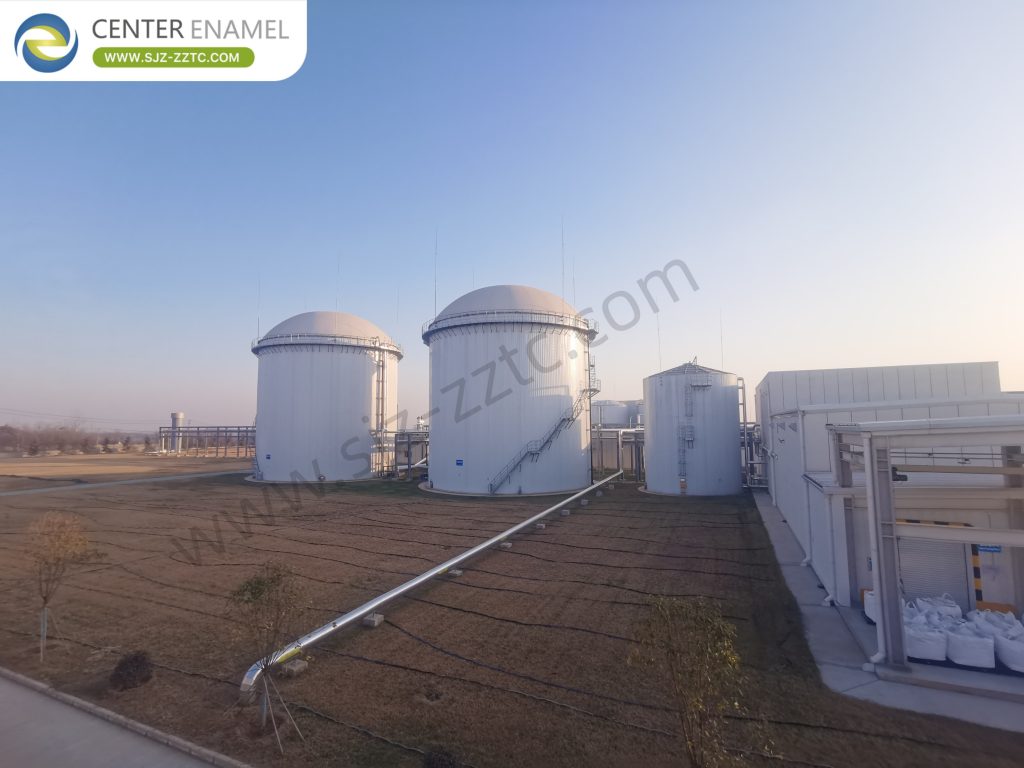
The maturity of third-party treatment models in industrial parks continues to improve, driving consolidation in the professional operation market, while the Middle East shows strong demand for advanced treatment and reuse of industrial wastewater due to water scarcity, and manufacturing transfer in Southeast Asia drives local industrial wastewater treatment facility construction. This diverse global landscape requires treatment solutions that are both adaptable and proven-exactly where the combination of GFS tanks, the UASB process, and comprehensive Biogas Solution Provider capabilities delivers exceptional value, particularly for brewing wastewater treatment applications.
GFS Tanks: The Universal Infrastructure for Diverse Industrial Wastewater Conditions
Across all these regional markets, the common challenge is storing and treating corrosive, high-strength wastewater streams. Center Enamel has independently developed over 200 specialized enamel frit formulations and supporting patents, capable of customizing anti-corrosion enamel based on customer storage media, with adaptability comprehensively superior to concrete tanks. Concrete tanks use a single material, only suitable for neutral clean water storage. When storing corrosive materials such as livestock manure, palm oil mill effluent, chemical wastewater, food waste digestate, or high-salinity wastewater, additional anti-corrosion linings must be applied-linings that are prone to failure, preventing long-term stable operation and failing to adapt to alternating high and low concentration storage conditions.
This limitation becomes particularly critical when treating brewing wastewater, which exhibits significant fluctuations in organic load and pH. GFS tanks can be specifically formulated with specialized enamels resistant to strong acids, strong alkalis, high organic content, and high salinity, allowing a single tank to switch between multiple wastewater and fermentation feedstock storage requirements. The universal applicability across biogas anaerobic digestion, municipal wastewater, livestock farming, food processing, and industrial water treatment scenarios eliminates the need to rebuild tanks for media changes, perfectly meeting the needs of diversified, multi-condition environmental protection projects. For any Biogas Solution Provider, this versatility translates into reduced capital expenditure and faster project deployment across different regions and industries.
The UASB Process: Core Technology for High-Strength Organic Wastewater
While robust GFS tank infrastructure provides the physical containment, the biological treatment process determines overall system efficiency. The UASB (Upflow Anaerobic Sludge Blanket) process is suitable for soluble medium-to-high concentration organic wastewater, covering light industrial wastewater from brewing, sugar refining, starch, papermaking, food processing, printing and dyeing, and similar applications. It is particularly effective for wastewater where organics are predominantly soluble with low suspended solids content, though it is not suitable for high-solids, high-viscosity wastewater.
The UASB process can be used alone as the primary treatment process or as a pretreatment for high-strength wastewater to reduce downstream aerobic load, and it is also suitable for municipal wastewater anaerobic pretreatment and low-solids livestock wastewater treatment. With its low cost and stable operation advantages, it is ideal for long-term continuous, large-flow industrial wastewater treatment projects. This makes the UASB Process a cornerstone technology for brewing wastewater treatment, where high organic loads and excellent biodegradability (BOD/COD typically 0.5-0.6) enable efficient biogas recovery while achieving 90-94% COD removal.
Brewery Wastewater: Operation and Maintenance Cost Analysis
The economic viability of any treatment system is a critical factor for industrial operators. For brewing wastewater treatment, O&M costs are moderate to low, with stable controllable processes and significant resource recovery benefits offsetting expenses-resulting in good overall economics. The treatment system uses simple durable equipment with no high-end precision wear parts, leading to low failure rates and low maintenance costs. The excellent wastewater biodegradability requires no large quantities of oxidants or detoxification agents-only small amounts of flocculants and pH adjusters, keeping chemical costs low.
Stable biogas production from anaerobic digestion can be used directly for plant heating and equipment insulation, significantly reducing energy costs. Only during peak season with high load fluctuations is process parameter adjustment needed, resulting in low labor requirements. Furthermore, spent grain, digestate solids, and liquid fertilizer can be sold, further improving economics. These operational advantages make the combination of GFS tanks and UASB Process particularly attractive for breweries seeking to reduce environmental compliance costs while generating renewable energy-a key value proposition for any Biogas Solution Provider serving the beverage industry.
Global Delivery Capability: Installation Coverage Across 100+ Countries
Supporting these diverse regional requirements demands a truly global delivery infrastructure. Center Enamel is the pioneer of Chinese GFS equipment exports, with installation service coverage across over 100 countries and regions-possessing full delivery capability across climates, regulations, and geographies. Overseas coverage includes Southeast Asia (Vietnam, Thailand, Malaysia, Indonesia, Cambodia, Bangladesh, Nepal, etc.), Africa (Ghana, South Africa, Mali, Guinea, Zambia, Kenya, Pakistan, etc.), Europe and the Americas (Sweden, USA, Russia, etc.), the Middle East, and Latin America-adaptable to tropical rainy high-salt spray, high-altitude mountainous, Nordic severe cold, and high-standard European and American facility conditions.
The company uses a dual-service model of "own cross-border construction teams + overseas local agent coordination"-whether clients are in developed countries or remote developing regions-providing one-stop services including on-site survey, on-site installation, process commissioning, and operator training. Complete coverage spans biogas engineering, municipal wastewater, industrial wastewater, livestock manure, drinking water storage, and other global mainstream environmental engineering projects, with the full delivery capability to undertake large-scale tank farm projects in any country worldwide. This global footprint ensures that brewing wastewater treatment projects, regardless of location, receive the same high-quality support and expertise.
Flexible and Efficient Service Delivery System
Beyond installation, long-term operational success requires ongoing support. Center Enamel's own cross-border construction teams plus global localized agent network-modular GFS tank assembly with short construction periods and dismantlable/reusable capability-makes it suitable for overseas short-term projects, phased expansions, and relocation needs. Full-lifecycle after-sales O&M support ensures long-term stable client operations, providing peace of mind for brewing wastewater treatment facility operators who depend on continuous, reliable performance.
Aluminum Alloy Trough Deck Roof: A Practical Complement
While the UASB process requires sealed gas collection, many water storage applications within a brewery or industrial facility do not. The Aluminum Alloy Trough Deck Roof is a cost-effective economical tank cover solution for clean water and wastewater storage scenarios, primarily designed for drinking water, production wastewater, and firewater reserve tanks, balancing practicality and cost advantages. The main body is integrally formed from anti-corrosion aluminum alloy plates, paired with aluminum support trusses. Its lightweight design imposes less load on the tank foundation, reducing civil construction investment.
A naturally formed dense oxide protective layer on the surface resists rain and mild wastewater corrosion, withstands outdoor sun and rain exposure, and effectively blocks wind, rain, insects, fallen leaves, and odor volatilization, protecting water quality by preventing dust and debris from causing secondary contamination. The flat roof structure is neat and orderly, allowing installation of maintenance walkways, guardrails, vents, and level monitoring ports on top, facilitating daily inspection and equipment maintenance. The simple sealing structure enables straightforward installation with short construction timelines, and virtually eliminates the need for anti-corrosion painting maintenance, resulting in extremely low operational costs. It is suitable for various small, medium, and large atmospheric pressure water storage tanks, and has been widely implemented in waterworks clear water tanks, industrial circulating water tanks, park firewater tanks, and domestic wastewater temporary storage facilities. It is highly compatible with water storage applications that do not require biogas collection or high-pressure sealing, providing a versatile complement to the UASB reactors used in brewing wastewater treatment.
Conclusion
From the diverse regional demands of the Asia-Pacific, North America, Europe, the Middle East, and Southeast Asia to the specific challenges of brewing wastewater treatment, the combination of GFS tanks, the UASB process, and comprehensive Biogas Solution Provider capabilities offers a proven, cost-effective, and globally deployable solution. The corrosion resistance and adaptability of GFS tanks, the high-efficiency organic removal and biogas recovery of the UASB process, and the extensive international installation experience of Center Enamel converge to deliver sustainable, long-term value for industrial wastewater treatment projects worldwide. Whether upgrading existing facilities, expanding into new markets, or developing greenfield projects, this integrated approach ensures environmental compliance, energy recovery, and operational excellence.
Frequently Asked Questions (FAQ)
1. Why is the UASB process particularly suitable for brewing wastewater treatment?
The UASB process excels at treating soluble, high-strength organic wastewater with low suspended solids, which matches the profile of brewery effluent (COD 5,000–25,000 mg/L, BOD/COD 0.5–0.6). It achieves 90–94% COD removal, produces methane-rich biogas for energy recovery, requires no mechanical mixing, and operates with low energy consumption. Its stable sludge bed tolerates the intermittent and seasonal discharge patterns common in breweries, ensuring consistent performance.
2. How do GFS tanks enhance the durability of brewing wastewater treatment systems?
GFS tanks feature a glass-fused-to-steel coating that resists organic acids, variable pH (3–11), and high-salinity conditions typical of brewery effluent. Unlike concrete tanks that require failure-prone linings, GFS tanks offer a 30+ year service life, eliminate repainting needs, and allow a single tank to handle multiple wastewater types. This corrosion resistance ensures long-term structural integrity and reduces lifecycle costs.
3. What makes Center Enamel a reliable Biogas Solution Provider for international projects?
Center Enamel combines over 200 proprietary enamel formulations, ISO/NSF/CE/ASME certifications, and installation experience across 100+ countries with a dual-service model of in-house cross-border construction teams and local agent coordination. The company provides one-stop services from site survey to commissioning, handles complex site conditions (tropical, mountainous, severe cold), and supports full-lifecycle O&M-ensuring successful project execution anywhere in the world.