
Professional Biogas Solution Provider with USR Process for Industrial Wastewater Treatment Applications
The core challenges of industrial wastewater treatment center on the “three highs”-high difficulty, high cost, and high energy consumption. Wastewater from new energy, chemical, and pharmaceutical industries is complex in composition with numerous characteristic pollutants, and traditional treatment processes are difficult to remove effectively. Chinese companies have significant price advantages in the mid- to low-end equipment segment.
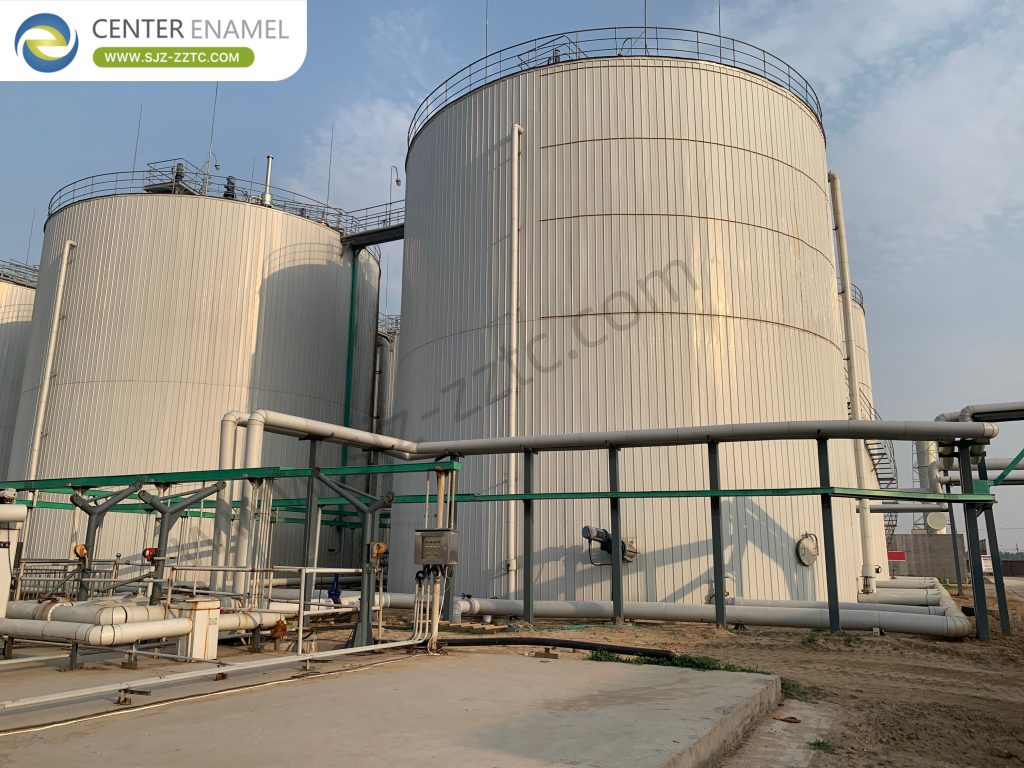
The industry also faces continuous technological upgrade pressure from increasingly stringent emission standards, as well as new requirements for digitalization and low-carbon transformation on operational refinement management capabilities. These mounting pressures are pushing project owners to seek more robust and resource-efficient solutions-particularly for high-strength organic waste streams that conventional systems struggle to handle. This is precisely where a specialized Biogas Solution Provider offering the USR Process can deliver decisive advantages in Industrial Wastewater Treatment.
USR Process Definition and Technical Advantages
USR, or Upflow Solids Reactor, is an upflow anaerobic process modified for high-suspended-solids, high-solids organic wastewater, specifically designed to solve problems of clogging, sludge washout, and uneven reaction common in traditional anaerobic processes for high-solids wastewater. The process eliminates complex three-phase separators, simplifies internal structure, and relies on upflow hydraulics to promote thorough mixing of solid materials and anaerobic sludge.
No strict granular sludge formation conditions are required-flocculent sludge can operate stably. The key feature is high solids tolerance and impurity resistance, with very high influent suspended solids tolerance. It is a dedicated high-efficiency anaerobic process for livestock manure, agricultural organic waste, and high-solids livestock wastewater, specifically developed for agricultural and environmental applications. Beyond agricultural use, the USR Process also proves highly effective in broader Industrial Wastewater Treatment scenarios where high solids and oil content would quickly overwhelm conventional anaerobic systems-making it a versatile tool for any experienced Biogas Solution Provider.
Palm Oil Mill Effluent Wastewater Sources and Characteristics
Palm oil mill effluent (POME) originates from the entire processing chain of fresh fruit bunches (FFB) in palm oil milling-the highest pollution load and largest volume high-concentration organic industrial wastewater in tropical agricultural processing. Palm oil mills typically process 30–120 tons of FFB daily, generating approximately 0.5–1.0 m³ of wastewater per ton of FFB processed-single mills discharging hundreds to thousands of cubic meters daily, representing a core environmental challenge for the palm oil industry. Wastewater comes from three main sources:
- Sterilization: FFB enter sterilization vessels for high-temperature steaming to deactivate lipase and prevent free fatty acid increase-producing sterilization condensate, the largest volume source at 80–90°C, rich in soluble sugars, amino acids, organic acids, COD 15,000–30,000 mg/L;
- Clarification: Pressed crude oil undergoes centrifugal separation and gravity settling to remove water and impurities-producing large volumes of oily wastewater with extremely high oil content and suspended solids, COD 50,000–80,000 mg/L, the highest organic load source;
- Kernel recovery: Palm kernels are separated by hydrocyclones and washed for recovery-producing sandy wash water with high suspended solids but relatively lower organic concentration. Auxiliary discharges include CIP cleaning, floor wash, boiler blowdown, and cooling tower water. POME is acidic (pH 4.0–5.0), high-temperature (60–80°C), brown colloidal, rich in oils, suspended solids, colloidal proteins, and soluble sugars-a typical high-concentration, high-oil, high-suspended-solids organic industrial wastewater.
These extreme characteristics make POME an ideal candidate for USR Process treatment, where high solids tolerance and clog resistance directly address the industry’s most persistent operational challenges-reinforcing the value of partnering with a capable Biogas Solution Provider.
Ghana Municipal Domestic Wastewater Treatment Project Case Study
Completed installation in 2021, treating 1,800 m³/day of municipal wastewater using UBF anaerobic + A²/O nitrogen/phosphorus removal mature processes. Equipped with multiple Center Enamel GFS tanks including 1 UBF anaerobic reactor, 1 secondary clarifier, and 2 internal/external double-layer A²/O biological tanks. Influent has high COD, BOD, suspended solids, and nitrogen/phosphorus concentrations-after full treatment, effluent parameters are significantly reduced with pH stable at 6.5–9.0, fully meeting local environmental discharge standards. Corrosion-resistant, conveniently assembled GFS tanks efficiently solve urban domestic wastewater pollution while balancing treatment effectiveness and O&M economics-a mature municipal wastewater case in Africa. This project demonstrates how an experienced Biogas Solution Provider can adapt proven anaerobic and aerobic process combinations to deliver reliable Industrial Wastewater Treatment results in diverse environments.
Center Enamel Professional Construction Team Manpower Reserve
Center Enamel has established its own domestic and international certified construction teams, with regular practical training on GFS tank installation and overseas construction standards for various countries. Domestically, regional construction teams cover multiple zones, capable of simultaneously deploying multiple teams for large tank farm projects. Internationally, cross-border professional installation teams are equipped to various country construction standards-sufficient manpower reserves ensure uninterrupted construction delivery for remote African sites, high-standard European/American facilities, and other projects. This global deployment capability ensures that every USR Process system and GFS tank solution is installed to consistent, high-quality standards-regardless of location.
Center Enamel R&D Team and Core Technology Development
Center Enamel has built a full-chain professional team covering R&D, design, marketing, installation, and after-sales. The R&D team is led by national-level materials technology experts, specializing in enamel frit and tank anti-corrosion core technologies. External senior environmental engineering and mechanical structure engineers are retained to strengthen R&D capabilities, focusing on anti-corrosion performance, structural optimization, and process integration. This continuous investment in core technology is what enables Center Enamel to function as a truly capable Biogas Solution Provider-delivering USR Process systems that perform reliably over decades of demanding Industrial Wastewater Treatment service.
FRP Roof Cover Solution for Atmospheric Pressure Storage Tanks
FRP Roof is a general-purpose economical roof for atmospheric pressure storage tanks without air-tightness requirements, suitable for drinking water storage, agricultural irrigation water, firewater reserve, and general production wastewater temporary storage. It is available in two styles: flat and dome, allowing flexible selection based on tank specifications and site aesthetic requirements. The roof is integrally molded from resin and fiberglass, lightweight, with natural water resistance and mild acid/alkali corrosion resistance. It will not rust or rot in long-term humid environments, eliminating the frequent anti-corrosion maintenance required for metal roofs.
The dome style features excellent drainage performance due to its curved structure, resisting water accumulation, dust buildup, snow load, and strong winds. The flat style facilitates the installation of maintenance walkways, level gauges, and vents on top, making inspection and operation convenient. The product is fully insulated with no risk of galvanic corrosion, will not contaminate drinking water quality, and meets environmental standards for domestic water storage. The modular design with low individual component weight allows for simple on-site hoisting and assembly, offering high construction efficiency and affordable procurement and installation costs. It is only suitable for atmospheric pressure water storage tanks without biogas collection or pressurization requirements, and is not recommended for anaerobic fermentation gas-producing conditions.
It is widely used in rural agricultural water storage tanks, industrial park firewater tanks, waterworks buffer tanks, and small to medium-sized domestic wastewater temporary storage facilities, making it a cost-effective general-purpose roof choice for conventional water storage applications. For biogas-producing USR Process systems, Center Enamel instead recommends its membrane or aluminum dome roof options-ensuring full gas-tightness and odor control for complete Industrial Wastewater Treatment performance.
Ready to optimize your Industrial Wastewater Treatment project? Contact Center Enamel today-our team will respond within 24 hours with a customized USR Process and biogas solution proposal.
Frequently Asked Questions
1. What makes the USR Process suitable for Industrial Wastewater Treatment?
The USR Process tolerates high suspended solids, oil, and impurities without clogging. It eliminates complex separators, operates stably with flocculent sludge, and excels in high-solids organic wastewater.
2. How does a Biogas Solution Provider add value beyond equipment supply?
A qualified provider integrates process design, tank manufacturing, installation, and O&M support-delivering turnkey systems that maximize biogas recovery and minimize long-term operating costs.
3. Does Center Enamel offer both USR Process systems and storage tanks?
Yes. Center Enamel supplies GFS tanks, USR reactors, membrane and dome roofs, and full EPC services-positioning it as a complete Biogas Solution Provider for global projects.