
Premier Biogas Solution Provider for Integrated Beverage Wastewater Treatment Projects with GFS Tanks
The path to effective industrial wastewater management is often obstructed by significant technical and economic hurdles. The core challenges of industrial wastewater treatment center on the "three highs"-high difficulty, high cost, and high energy consumption. Wastewater from new energy, chemical, and pharmaceutical industries is complex in composition with numerous characteristic pollutants, and traditional treatment processes are difficult to remove effectively, creating a pressing need for advanced, reliable solutions.
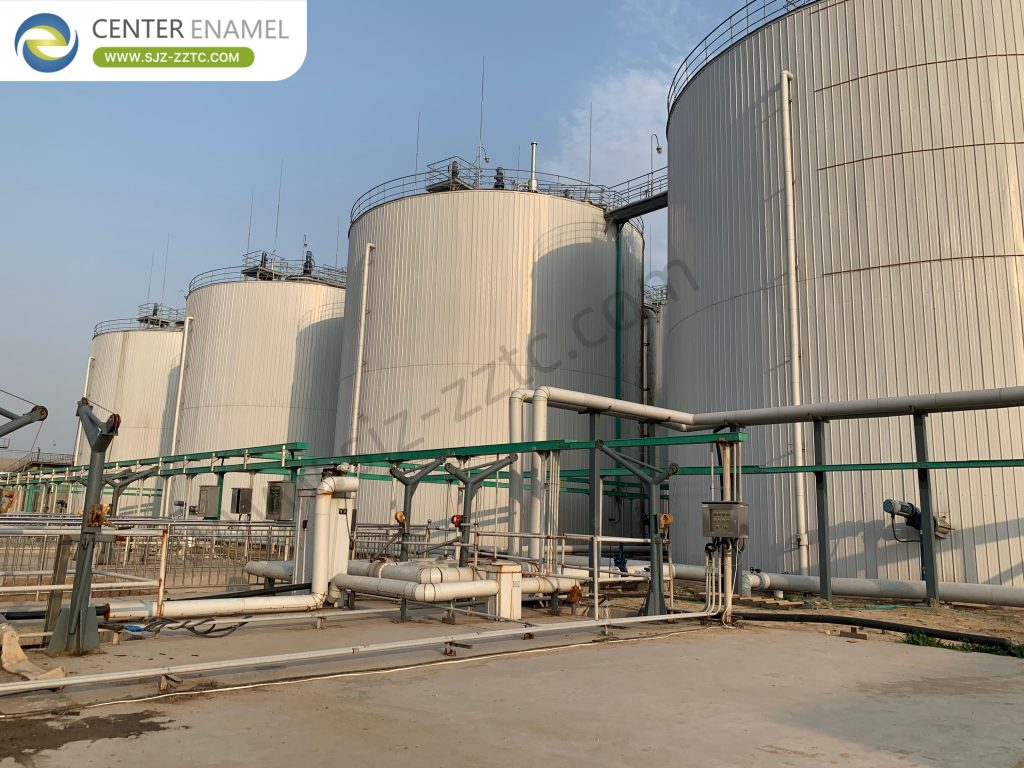
In this demanding landscape, the role of a competent biogas solution provider becomes critical. Chinese companies have significant price advantages in the mid-to-low-end equipment segment, but the industry also faces continuous technological upgrade pressure from increasingly stringent emission standards, as well as new requirements for digitalization and low-carbon transformation on operational refinement management capabilities. For beverage wastewater treatment projects, selecting the right partner and technology, such as robust GFS tanks and efficient anaerobic processes, is essential to overcoming these challenges and achieving sustainable, cost-effective operations.
Why GFS Tanks Offer Superior Adaptability to Extreme Climates
Effective industrial wastewater treatment infrastructure must be resilient to local environmental stresses, especially for global projects. GFS tanks can undergo customized wind and seismic design based on project site climate and geological conditions, with environmental adaptability far superior to concrete tanks. Concrete tanks are cast-in-place monolithic structures, with seismic and wind resistance entirely dependent on on-site construction quality. In remote areas, typhoon-prone zones, and earthquake belts, construction quality is difficult to control. Under strong earthquakes or typhoons, concrete tanks are prone to cracking and base settlement damage, with subsequent reinforcement costs equivalent to rebuilding.
To mitigate these risks, Center Enamel’s GFS tanks undergo a rigorous pre-construction process that includes collecting local seismic intensity, maximum wind pressure, and foundation bearing capacity data. Based on this analysis, the company customizes thickened steel panels, stiffening ribs, and anchored base components-all factory-prefabricated to standardized specifications. The bolted panel structure boasts excellent stress distribution capability, making it less prone to overall fracture under seismic and typhoon impacts, and minor foundation settlement will not cause through-cracking. These structural parameters can be flexibly adjusted for mountainous, coastal typhoon-zone, and high-seismic-zone projects, providing long-term protection against extreme natural climate damage and ensuring the durability of your beverage wastewater treatment investment.
Essential Supporting Equipment for UASB Reactors
To function effectively as a biogas solution provider, the integration of core equipment with reliable supporting components is vital. Core equipment includes the GFS anaerobic reactor tank, with the internal three-phase separator being the key component for gas-liquid-solid separation and sludge retention. The bottom high-precision distribution system (distribution pipes, distributors, pressure regulators) ensures uniform influent distribution, preventing short-circuiting and sludge accumulation.
Supporting equipment includes influent lift pumps, equalization tanks, and flow meters to stabilize influent conditions. The top biogas collection system includes gas collection hoods, gas piping, desulfurization/dehydration equipment, and gas storage. Online temperature, pH, and COD monitoring instruments are integrated. Bottom sludge discharge pipes and pumps periodically remove excess sludge. The complete equipment package is compact, with no rotating wear parts, low equipment loss, and high operational stability. For beverage wastewater treatment projects, this comprehensive system, housed in durable GFS tanks, ensures consistent performance and maximized biogas recovery, solidifying Center Enamel's role as a trusted biogas solution provider.
Standardized Treatment Solutions for Beverage Wastewater
The specific characteristics of beverage wastewater demand a tailored yet standardized treatment approach to ensure efficiency and compliance. The industry uses a mature treatment train of "pretreatment + anaerobic digestion + aerobic treatment + advanced treatment," perfectly suited for high-sugar, easily biodegradable organic wastewater. Pretreatment uses screens and sieves to remove fruit pulp, tea residues, and other suspended impurities to prevent pipeline and equipment clogging. Equalization tanks balance high-concentration CIP and low-concentration wastewater to stabilize influent load. Alkali addition neutralizes acidic wastewater as needed.
The main stage uses UASB/IC anaerobic processes for high-efficiency high-concentration sugar degradation-sugars are readily anaerobically degraded with high biogas production and COD removal exceeding 80%-providing outstanding energy recovery benefits. Subsequent A/O or SBR aerobic processes deeply degrade residual organics and remove nitrogen/phosphorus. Final sedimentation, filtration, and disinfection ensure compliance. Anaerobic digesters use Center Enamel GFS tanks resistant to organic acid and sugar fermentation corrosion. The entire process is simple and stable, suitable for the beverage industry's intermittent and seasonal discharge patterns, with high automation and convenient O&M. As a leading biogas solution provider, Center Enamel delivers these comprehensive systems for beverage wastewater treatment projects worldwide.
Global Integrated Standardized Service System
A global service infrastructure is essential for a biogas solution provider to support beverage wastewater treatment projects across diverse regions. Leveraging regional sales centers in China and overseas local agent networks, Center Enamel has established a complete after-sales service loop covering all markets. The system provides four core service pillars: 24/7 rapid response mechanism, on-site domestic/overseas installation services, full-project-cycle after-sales support, and long-term warranty protection-forming a complete service chain from preliminary site survey, mid-term construction management, to long-term inspection and maintenance.
The entire system is uniformly adapted to both domestic and international project service standards, coordinating personnel scheduling, material support, and on-site coordination for simultaneous projects across multiple regions-significantly reducing customer multi-party coordination costs and ensuring efficient domestic and overseas project delivery. This robust support network reinforces Center Enamel's reputation as a dependable biogas solution provider for beverage wastewater treatment projects, ensuring seamless execution and long-term operational success.
Comprehensive International Authoritative Certifications
Global project execution requires adherence to a wide array of international standards and certifications. Center Enamel holds CE, NSF, WRAS, ISO9001, BSCI, ASME, and other global certifications-fully clearing EU, North American, Southeast Asian, and African project tendering barriers-providing critical hard credential advantages for large overseas project bidding.
These certifications are a testament to the quality and reliability of Center Enamel's GFS tanks and systems. For clients undertaking beverage wastewater treatment projects, partnering with a certified biogas solution provider ensures that all equipment meets stringent safety, quality, and environmental performance criteria, facilitating smoother project approvals and long-term regulatory compliance.
Aluminum Geodesic Dome Roof: Advanced Tank Cover Technology
Complementing the core treatment systems, advanced tank cover solutions like the Aluminum Geodesic Dome Roof play a crucial role in overall plant efficiency, safety, and biogas capture. The Aluminum Geodesic Dome Roof independently developed by Center Enamel is manufactured using high-strength aluminum alloy plates through integral stamping. It features a triangular grid spherical self-supporting structure, enabling large-span full coverage without internal support columns. Made of aluminum alloy, the roof offers excellent weather resistance and corrosion resistance, capable of long-term protection against acid rain, salt spray, and UV radiation, suitable for various extreme outdoor climate conditions.
The structural design complies with international AWWA D108 standards, with aluminum plate thickness, rib cross-sections, and joint connections all verified by finite element stress analysis, ensuring wind and snow load resistance that meets building code requirements across different global regions. The weight of the Aluminum Geodesic Dome Roof is only one-third to one-half of a steel roof with the same span, significantly reducing the load on the tank top and allowing direct installation without tank wall reinforcement. The roof provides superior overall sealing performance, with double sealing between panels using specialized sealant strips and mechanical interlocking, enabling both airtight gas storage and enclosed odor control, suitable for biogas collection and storage, wastewater tank odor control, and drinking water contamination prevention. The support-column-free design does not interfere with the installation and operation of internal equipment such as mixers and water distributors. The aluminum material does not support microbial growth, requiring no anti-corrosion maintenance over long-term use, resulting in low total life-cycle costs. This makes it an ideal component for biogas solution providers implementing comprehensive beverage wastewater treatment projects.
Frequently Asked Questions (FAQ)
1. Why is Center Enamel considered a leading biogas solution provider for beverage wastewater?
Center Enamel offers integrated solutions combining durable GFS tanks, efficient UASB reactors, and a global service network. Their systems are specifically designed to handle high-sugar, easily biodegradable wastewater, maximizing biogas recovery and ensuring compliance with international standards.
2. What makes GFS tanks suitable for beverage wastewater treatment projects?
GFS tanks provide superior corrosion resistance against organic acids and sugars found in beverage wastewater. They are factory-engineered for extreme climates, offering better durability and lower maintenance than concrete, which is prone to cracking and corrosion in these demanding applications.
3. How does the Aluminum Geodesic Dome Roof benefit a biogas project?
The dome roof enables efficient biogas collection and odor control with its airtight sealing. Its lightweight, self-supporting structure reduces tank load and eliminates internal columns, allowing unobstructed operation of mixers while providing long-term corrosion resistance and low lifecycle costs.