
Center Enamel-Professional Biogas Solution Provider with CSTR Process
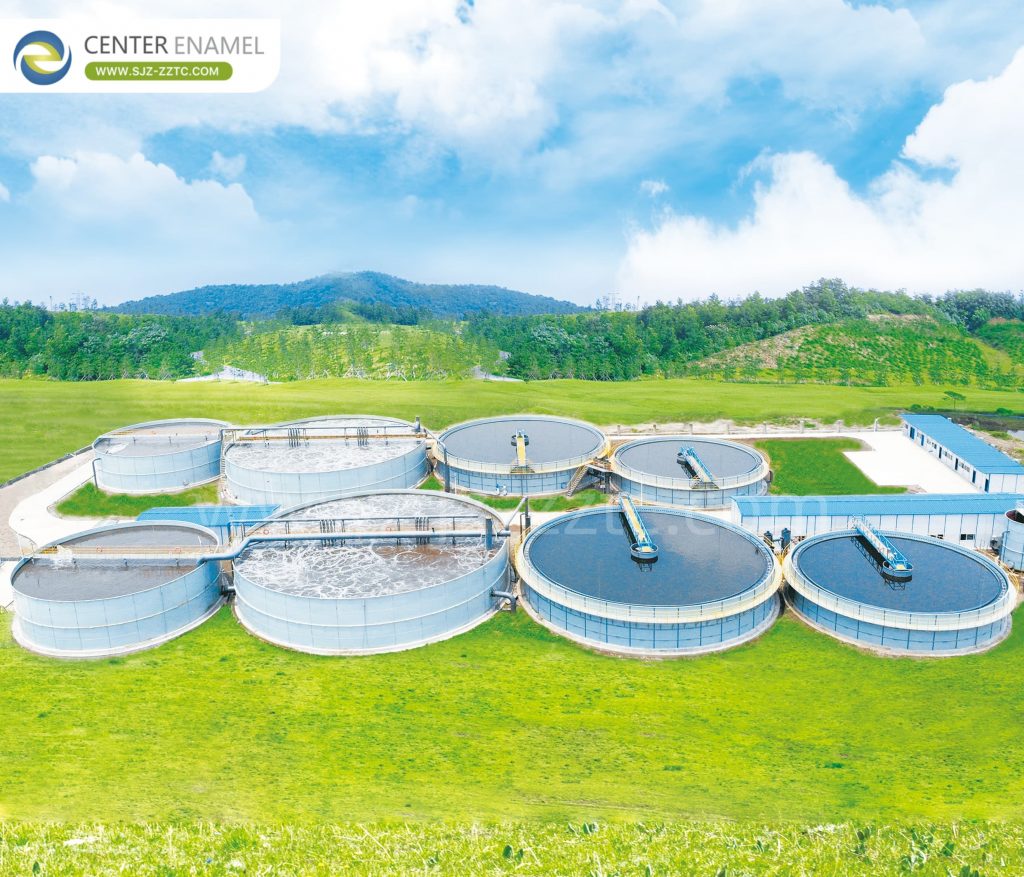
The Asia-Pacific region, particularly China, has become the world's largest industrial wastewater treatment market, with the operation and maintenance service segment's contribution continuing to rise, marking a shift from project construction to long-term operational management. The North American market focuses on upgrading existing facilities, while Europe emphasizes high-value-added resource recovery technologies. Wastewater from the new energy industry chain (lithium batteries, photovoltaics, hydrogen) has become the most notable emerging growth area due to its complex composition and high treatment difficulty, generating significant demand for customized solutions.
The maturity of third-party treatment models in industrial parks continues to improve, driving consolidation in the professional operation market. The Middle East has strong demand for advanced treatment and reuse of industrial wastewater due to water scarcity; manufacturing transfer in Southeast Asia drives local industrial wastewater treatment facility construction demand. To address these regional demands, Center Enamel excels as an expert Biogas Solution Provider.
CSTR Core Advantages
Excellent adaptability, with outstanding treatment results for high-solids, high-viscosity, high-suspended-solids organic wastewater, thoroughly solving the shortcomings of traditional anaerobic processes such as stratification, crusting, and low sludge utilization. The full-mix agitation mode ensures thorough contact between microorganisms and pollutants, with homogeneous and stable reaction conditions and excellent resistance to water quality and hydraulic shock loads-stable compliance even with significant influent fluctuations.
The simple process structure, without complex media or three-phase separators, results in low equipment cost, short construction period, and low maintenance difficulty, with no need for frequent cleaning of clogged components and low O&M costs. The CSTR Process simultaneously achieves wastewater treatment and biogas energy recovery. Sludge acclimation is fast, quickly adapting to various specialty organic wastewaters, with high process error tolerance and strong universal applicability, forming the technical foundation delivered by Center Enamel.
POME Environmental Toxicity
POME pollutants are primarily natural plant organics with no synthetic toxic chemicals, heavy metals, or persistent organics-low acute chemical toxicity, but high-concentration organic and oil pollution have severe ecological impacts. High-concentration organics discharged to natural waters rapidly deplete dissolved oxygen-BOD load far exceeds self-purification capacity, causing severe oxygen depletion, anaerobic production of hydrogen sulfide and ammonia, black-odor conditions, mass mortality of fish and benthic organisms, and complete ecosystem collapse.
High-concentration oil forms surface films blocking atmospheric-water oxygen exchange-exacerbating oxygen depletion; oil adheres to fish gills and aquatic organism surfaces, directly affecting respiration, feeding, and movement; oil degrades slowly, causing persistent ecological damage. Acidic raw water (pH 4-5) acidifies receiving waters, causing pH drops beyond aquatic organism tolerance-leading to fish kills and aquatic vegetation die-off; acidic conditions promote heavy metal mobilization from sediments, creating secondary pollution risks.
High suspended solids settle and cover riverbed sediments, blocking benthic habitats and fish spawning grounds; fruit pulp and fiber decomposition consumes sediment oxygen, causing anaerobic conditions and hydrogen sulfide accumulation. High ammonia nitrogen undergoes nitrification consuming dissolved oxygen-exacerbating eutrophication. Nitrogen and phosphorus nutrient enrichment triggers algal blooms (water blooms, red tides)-further degrading water quality. In Southeast Asian palm oil producing regions with dense mill concentrations, untreated POME discharge can cause severe water quality degradation over tens of kilometers of rivers, with irreversible aquatic ecosystem damage-POME is a core source of water pollution in tropical regions, with increasingly strict environmental regulations.
Malaysia Palm Oil Biogas Project
The project uses Center Enamel GFS tanks as the core anaerobic digestion facility with 5 tanks, each with effective volume of 5,400 m³, total effective volume 27,000 m³. Influent COD ≥ 60,000 mg/L, BOD ≤ 25,000 mg/L. After anaerobic digestion, effluent COD drops to below 12,000 mg/L, BOD ≤ 5,000 mg/L-overall organic removal efficiency approximately 80%. Single tank daily biogas production 4,400 m³, total project daily biogas 22,000 m³-stable biogas yield of 0.45 m³ per kg COD removed-efficient biogas energy recovery while solving palm oil processing wastewater pollution. Seamlessly integrated by Center Enamel as a leading Biogas Solution Provider, this project proves the reliability of the CSTR Process.
Full-Process Quality Control
Demonstrating high-standard installation quality through long-term stable global project performance, Center Enamel has established full-chain quality control standards across four dimensions: factory protection, on-site assembly construction, completion inspection, and long-term warranty-ensuring quality control for every GFS tank. At the factory stage, all enameled panels, seals, and structural components receive rust-proof and moisture-proof independent packaging with dedicated protective supports-preventing damage during sea and land transport and avoiding enamel coating damage.
On-site construction strictly follows unified assembly process specifications-panel by panel tightening and leak testing in layers, with air-tightness and verticality testing after each tank section completion-dual-membrane covers and anaerobic piping undergo simultaneous pressure testing and acceptance. Differentiated quality acceptance standards are customized for different regions: EU/US projects follow stringent CE/NSF inspection criteria; Southeast Asian hot humid regions receive enhanced corrosion protection and sealing acceptance; remote African sites have additional foundation settlement re-inspection procedures. Upon project completion, complete construction inspection reports, pressure test records, and anti-corrosion appearance acceptance documents are issued, with full photo/video archives retained. Over 10,000 tanks delivered globally have operated long-term without large-scale leakage or structural deformation-preventing future O&M issues at source.
Installation and Construction Team
The installation team has practical experience from over 10,000 GFS tank projects globally, strictly following standardized construction procedures-full control over project mobilization, civil coordination, tank assembly, piping, and commissioning schedules and quality. The team is proficient in complete standardized installation processes for GFS tanks, dual-membrane gas storage covers, USR/CSTR/IC anaerobic reactors, and biogas desulfurization/piping systems-adaptable to large-scale farms, industrial parks, remote mountainous sites, coastal high-corrosion sites, and other complex locations-strictly implementing unified global safety construction standards. For large overseas cross-border projects, the team can be deployed as complete units for on-site construction, technical training, and local worker practical instruction-full control over construction details, air-tightness testing, and corrosion protection-ensuring timely and stable commissioning of global environmental projects through standardized delivery capability.
FRP Roof Specifications
FRP Roof is a general-purpose economical roof for atmospheric pressure storage tanks without air-tightness requirements, suitable for drinking water storage, agricultural irrigation water, firewater reserve, and general production wastewater temporary storage. It is available in two styles: flat and dome, allowing flexible selection based on tank specifications and site aesthetic requirements. The roof is integrally molded from resin and fiberglass, lightweight, with natural water resistance and mild acid/alkali corrosion resistance.
It will not rust or rot in long-term humid environments, eliminating the frequent anti-corrosion maintenance required for metal roofs. The dome style features excellent drainage performance due to its curved structure, resisting water accumulation, dust buildup, snow load, and strong winds. The flat style facilitates the installation of maintenance walkways, level gauges, and vents on top, making inspection and operation convenient. The product is fully insulated with no risk of galvanic corrosion, will not contaminate drinking water quality, and meets environmental standards for domestic water storage.
The modular design with low individual component weight allows for simple on-site hoisting and assembly, offering high construction efficiency and affordable procurement and installation costs. It is only suitable for atmospheric pressure water storage tanks without biogas collection or pressurization requirements, and is not recommended for anaerobic fermentation gas-producing conditions. It is widely used in rural agricultural water storage tanks, industrial park firewater tanks, waterworks buffer tanks, and small to medium-sized domestic wastewater temporary storage facilities, making it a cost-effective general-purpose roof choice for conventional water storage applications, backed by Center Enamel.