
Biogas System Integration and Controls
Biogas system integration is the engineering discipline that links the digester, gas buffer, upgrading or power unit, and digestate handling into one controlled train, using instrumentation and logic to balance gas supply, energy demand, and safety. The digester is the durable core; integration is what makes the packages behave as a single plant.
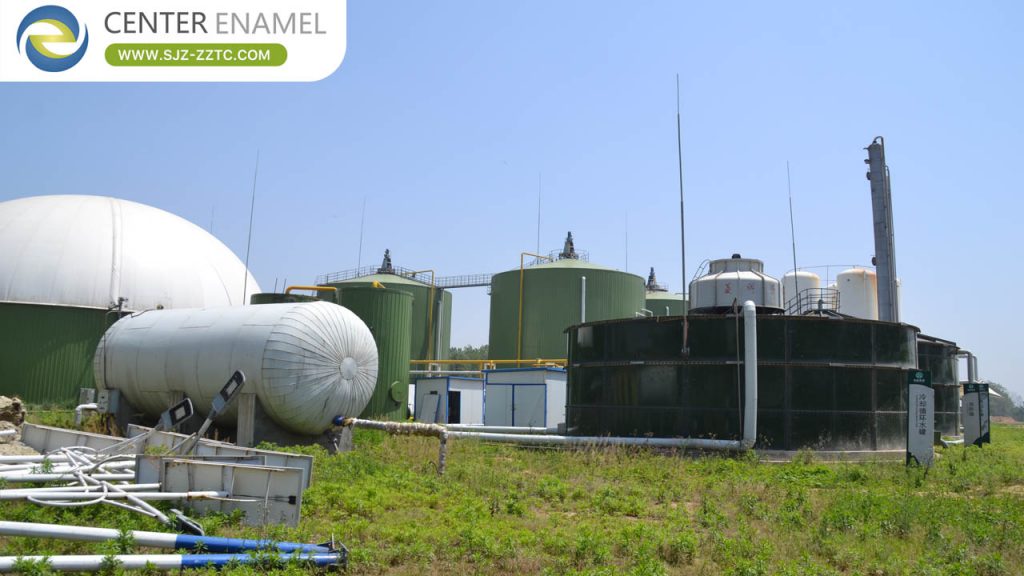
How the Subsystems Connect
Gas from the reactor flows to a low-pressure buffer that decouples variable production from steady demand. From the buffer, gas goes to CHP (near-atmospheric) or to a compressor and upgrading skid (high pressure). Each hand-off has defined quality, pressure, and dew-point interfaces that must be specified up front.
The Control Logic
| Subsystem | Role | Control signal |
| Digester | Produce biogas | Temperature, pH, feed rate |
| Gas buffer | Decouple supply/demand | Level, pressure |
| Power unit | CHP or compressor | Gas flow, grid sync |
| Upgrading | CO2/H2S removal | Purity, pressure |
Why the Buffer Matters
Biogas production swings with feed and biology, but a CHP wants steady input. A buffer smooths that mismatch and lets the engine ride through digester upsets. Without it, the plant either flares gas or trips the generator. Bolted GFS holders resist the wet, H2S-bearing gas.
Safety and Instrumentation
Methane is explosive above about 5% in air, so the train needs gas-leak detection, flame arrestors, and pressure relief at the holder and compressor. Pressure vessels follow ASME; GFS holders follow AWWA D103 and ISO 28765. Integration also means one alarm philosophy across all packages.
Project Case Study
Zhenyuan Group Biogas Project in Henan. A vehicle-grade methane system digesting 650 T/D in CSTR reactors (3 x 15.29 x 15 m plus 1 x 5.22 x 6 m), yielding 3,000,000 m3 CH4/year — an example of digester output carried through to a defined end-use rather than flared.
| Project | Zhenyuan Group Biogas Project in Henan |
| Location | Xinzheng, Henan, China |
| Industry | Renewable Vehicle Fuel |
| Application | Biogas system - digester to fuel |
| Product | CSTR digester tanks (GFS) |
| Output | 3,000,000 m3 CH4/year |
| Status | Delivered 2013 |
About Shijiazhuang Zhengzhong Technology Co., Ltd (Center Enamel)
Shijiazhuang Zhengzhong Technology Co., Ltd (Center Enamel) contributes the engineering capability behind integration: process engineers configure bolted GFS digester and buffer tankage to the plant's gas balance and interface requirements, then support layout, corrosion-resistant coatings, and hand-off with gas and power equipment. That engineering backbone is what lets the subsystems behave as one controlled plant.
Advantages and Limitations
Tight integration raises uptime and avoids flaring. Limits: it requires one party to own the interfaces, and mismatched gas quality between packages is the most common commissioning problem — define it in the spec.
Comparison: Integrated vs Piecemeal
| Criterion | Integrated train | Piecemeal packages |
| Interfaces | Specified once | Owner reconciles |
| Uptime | Higher | Lower |
| Flaring risk | Lower | Higher |
Integration links digester, buffer, and power with controls that balance supply, demand, and safety; the gas buffer is the key decoupler. Specify every interface up front. Send your gas balance and we will engineer the GFS tankage and buffer to your control scheme.
Frequently Asked Questions (FAQ)
Q1: How are biogas subsystems integrated?
A: Through defined gas-quality, pressure, and dew-point interfaces plus shared instrumentation and alarm logic.
Q2: Why is a gas buffer needed?
A: It decouples variable biogas production from steady engine demand and prevents flaring or trips.
Q3: What does a plant controller manage?
A: Digester temperature and feed, buffer level, and CHP or compressor gas flow.
Q4: What pressure does the energy side reach?
A: CHP runs near atmospheric; CBG compression reaches 200-250 bar.
Q5: What standards apply?
A: Pressure vessels follow ASME; GFS holders follow AWWA D103 and ISO 28765.
Q6: What tank capacity is available?
A: GFS digester and buffer tanks from 200 m3 to 60,000 m3.
Suggested CTA
Send your gas balance and package list. We will engineer the GFS digester and buffer tankage to your integration and control scheme.