
Center Enamel’s Biogas Technology and CSTR Process for Global Biogas Projects
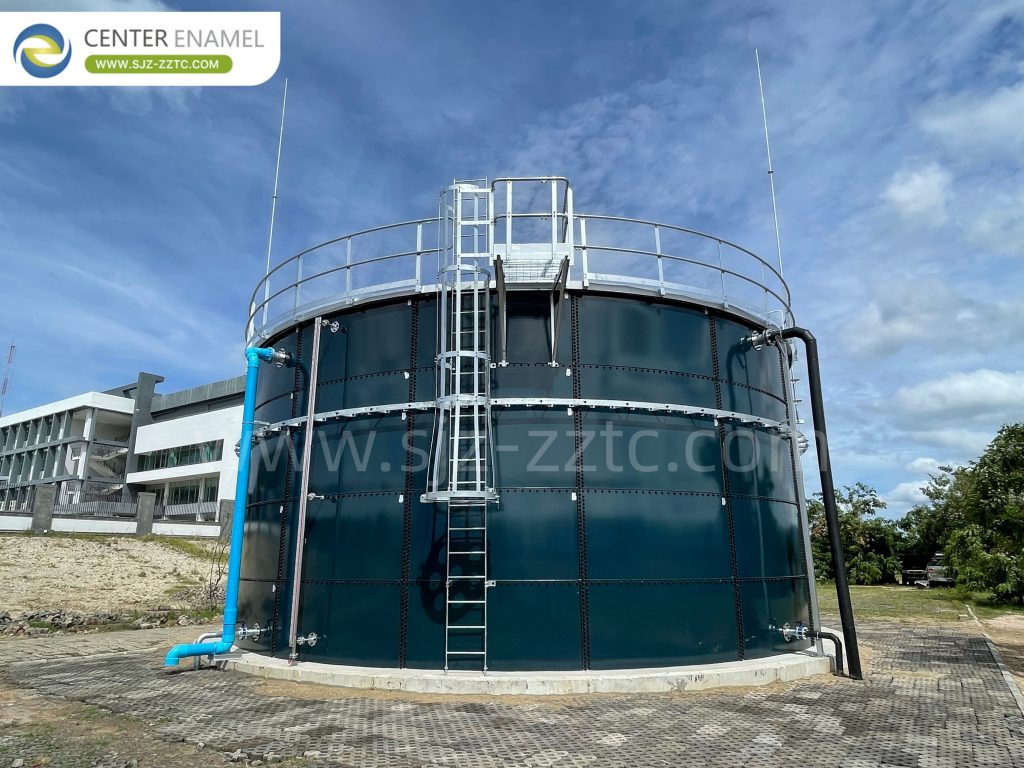
Global biogas policy has evolved from a purely waste treatment orientation to a core component of energy strategy and climate action. The EU, through the Renewable Gas Directive and REPowerEU Plan, has set mandatory targets for biomethane production growth and uses the Carbon Border Adjustment Mechanism to incentivize member states to improve organic waste treatment rates, incorporating biogas into the green hydrogen certification system.
The US, under relevant energy legislation, provides multiple incentives such as production tax credits and investment tax credits for biogas and biomethane projects, and includes biogas in the Renewable Fuel Standard system. China has incorporated biogas into its rural revitalization strategy and the "Rural Energy Revolution" priority development catalog, updated national standards for automotive biomethane, and promotes the integration of biomethane into urban gas pipeline networks. The global policy framework is shifting from fiscal subsidy-driven to carbon market-driven and quota-mandatory approaches, with more countries incorporating advanced Biogas Technology into their Nationally Determined Contributions.
Bolted Assembly Construction and Flexible Infrastructure Solutions
GFS tanks are assembled on-site from prefabricated panels, with short construction periods and support for expansion, relocation, and reuse-advantages distinctly different from immovable concrete tanks. Concrete tank pouring requires formwork, rebar tying, pouring, and long curing periods, with a single tank construction taking months. Rain, snow, and low temperatures force work stoppages and delays. Once poured, they are permanent fixed structures that cannot be dismantled, expanded, or relocated-project relocation means complete abandonment. GFS tank panels are all factory-prefabricated, transported to site, and directly assembled in panels with simple procedures.
Construction can proceed even in low-temperature, light-rain conditions, with installation time only one-third that of concrete tanks-construction schedules are controllable. For expansion, additional steel panels can be installed to increase volume; for plant relocation, tanks can be fully disassembled with panels transported to new sites for reassembly and reuse, significantly reducing material and construction costs for new construction and reconstruction. This is ideally suited for short-term environmental projects, phased expansion projects, and relocated construction projects.
Advanced CSTR Process for Efficient Anaerobic Digestion
The CSTR Process operates in continuous feed, continuous reaction, and intermittent/continuous sludge discharge mode, with a concise and coherent process flow. High-solids organic wastewater, after pretreatment to remove large-particle impurities, is fed at a constant rate into the sealed anaerobic reactor via feed pumps. Continuous mechanical stirring maintains uniform mixing throughout the reactor, creating a stable anaerobic environment.
Within the reactor, acidogenic bacteria and methanogens decompose macromolecular organic matter in stages, first hydrolyzing and acidifying polysaccharides, proteins, and lipids into volatile fatty acids, then further degrading them into methane and carbon dioxide biogas. Throughout the reaction, no material stratification occurs, pollutants are continuously degraded, treated supernatant overflows from the upper portion of the reactor, aged sludge is periodically discharged from the bottom, and biogas is uniformly collected for resource utilization, maintaining stable sludge concentration and reaction equilibrium for consistent treatment performance.
Biogas Application Benefits and Clean Energy Conversion
After desulfurization, dehydration, and upgrading, biogas can be utilized in multiple high-efficiency applications, achieving closed-loop value conversion of organic waste to energy and resources through cutting-edge Biogas Technology.
- Biogas CHP: Biogas is fed into gas engines/turbines for power generation-electricity can be grid-sold or self-consumed, with waste heat recovered for digester heating and plant heating-overall energy efficiency exceeding 80%, the most mainstream biogas utilization method.
- Biogas upgrading to biomethane: After carbon dioxide removal to >95% methane purity, it is equivalent to pipeline natural gas and can be injected into city gas networks or compressed as CNG/LNG for vehicles-significant economic benefits.
- Direct combustion for heating: Biogas can be burned directly for boiler heating, sludge drying, agricultural product drying, greenhouse heating, and other industrial/agricultural heating applications-replacing coal/natural gas and reducing fossil fuel consumption.
- Flare combustion for emergency disposal: When biogas production exceeds utilization capacity, it is flared to reduce direct methane greenhouse gas emissions, meeting environmental compliance requirements.
Each cubic meter of biogas has a calorific value of approximately 21-25 MJ, can generate 1.5-2.0 kWh of electricity, or replace 0.7-0.8 cubic meters of natural gas. Large-scale biogas plants produce thousands to tens of thousands of cubic meters of biogas daily, with annual power generation reaching millions to tens of millions of kWh-carbon reductions can be developed as CCER carbon credits for trading income, delivering triple value in environmental management, clean energy, and carbon assets.
Center Enamel Malaysia Palm Oil Biogas Project Implementation
The project uses Center Enamel GFS tanks as the core anaerobic digestion facility equipped with the CSTR Process across 5 tanks, each with effective volume of 5,400 m³, total effective volume 27,000 m³. Influent COD ≥ 60,000 mg/L, BOD ≤ 25,000 mg/L. After anaerobic digestion, effluent COD drops to below 12,000 mg/L, BOD ≤ 5,000 mg/L-overall organic removal efficiency approximately 80%. Single tank daily biogas production 4,400 m³, total project daily biogas 22,000 m³-stable biogas yield of 0.45 m³ per kg COD removed-efficient biogas energy recovery while solving palm oil processing wastewater pollution.
Center Enamel Smart Manufacturing Base Scale and Global Capacity
Center Enamel's core intelligent manufacturing base is located in Hebei Province, China, covering a total area of over 150,000 m², with Phase I mature manufacturing facility and Phase II high-end environmental equipment industrial park-dual-base synergy ensures stable production capacity. The base includes dedicated R&D office buildings, proprietary material laboratories, and finished product testing centers, with full-process quality control systems meeting ISO, NSF, CE, and other international standards. The facility operates to green manufacturing standards, certified as a Provincial Green Factory-balancing efficient production with energy conservation and emission reduction.
The company has 6 marketing service centers across China, establishing a nationwide production-sales network ensuring stable global order delivery. The base is adjacent to expressway networks and major logistics hubs, with complete container shipping capabilities-supporting simultaneous large-scale tank projects globally. The base employs over 500 staff, with multiple parallel automated production lines-facility scale and production capacity firmly placing it among the global top tier of GFS tank equipment manufacturers.
Over a Decade of Global Installation Experience and Reliability
Unmatched global practical experience among domestic peers-over a decade covering multiple regions and all industry sectors. In 2009, Center Enamel completed the first overseas GFS tank installation-sending a team to Niger, Africa for drinking water storage tank installation. In 2015, it broke industry ground with China's first GFS tank export and installation to the US-passing strict US acceptance standards. All installed projects have operated stably for many years, covering livestock biogas, POME, municipal wastewater, and drinking water storage applications. Construction has covered Southeast Asia, Africa, the Americas, and other regions-accumulating specialized solutions for complex sites including mountainous terrain, coastal salt spray, tropical high temperatures, and high-standard European/American facility conditions-maturely addressing global special construction requirements.