
Biogas Technology for Indonesia Palm Oil Mills: Advanced USR Process and GFS Tanks
Indonesia is the world’s largest producer of palm oil, with millions of hectares of plantations spread across Sumatra, Kalimantan, and Sulawesi. The industry supports millions of livelihoods and contributes significantly to the national economy. However, this massive production scale also creates a substantial environmental challenge: Palm Oil Mill Effluent (POME).
For every ton of fresh fruit bunches (FFBs) processed, a typical Indonesian mill generates 0.7 to 1 cubic meter of POME. Fresh POME is hot (60-80°C), acidic (pH 3.3-4.6), and loaded with high concentrations of solids, oil, grease, and organic matter. If discharged untreated, POME can contaminate rivers, harm aquatic ecosystems, and release methane-a greenhouse gas 25 times more potent than carbon dioxide. With Indonesia committed to reducing its carbon emissions under international agreements, managing POME responsibly has become both an environmental imperative and a business opportunity.
Advantages of Converting POME into Biogas
Converting POME into biogas using modern biogas technology offers a closed-loop solution that benefits the environment, the mill, and local communities. Instead of allowing methane to escape from open lagoons, a well-designed system captures it for productive use. The key advantages include:
Energy Cost Reduction: Biogas can replace diesel or grid electricity for mill boilers, generators, and palm kernel dryers, cutting energy expenses by 30-50%.
Greenhouse Gas Mitigation: Capturing methane prevents its release into the atmosphere, helping Indonesia meet its Nationally Determined Contributions (NDCs) under the Paris Agreement.
Water Quality Protection: Anaerobic digestion significantly reduces the biological oxygen demand (BOD) and chemical oxygen demand (COD) of POME, producing cleaner effluent that is safer for discharge into local waterways.
Valuable Fertilizer: The nutrient-rich digestate (containing nitrogen, phosphorus, potassium, magnesium, and calcium) can be applied directly to palm oil plantations, reducing the need for synthetic fertilizers.
Regulatory Compliance: Indonesian environmental regulations, including government regulations on wastewater standards, are becoming stricter. A proper biogas technology solution ensures compliance and avoids operational penalties.
Center Enamel: Professional Design for Biogas Projects
For over 36 years, Center Enamel has been a global leader in water, wastewater, and biogas projects. As the largest manufacturer of Glass-Fused-to-Steel (GFS) tanks in Asia, the company combines deep research and development expertise with practical engineering experience. Center Enamel provides professional, custom-engineered designs for biogas projects, ensuring optimal performance, durability, and cost-efficiency for every client.
Their team of engineers tailors each solution to the unique characteristics of POME, including its high solid content, acidity, and temperature fluctuations. Whether a mill requires a complete turnkey system or specific process packages, Center Enamel delivers. Their certifications-including ISO9001, NSF61, CE/EN1090, and EN28765-guarantee international quality standards. For Indonesian palm oil mill owners, this means working with a partner who understands both global best practices and local operational realities.
Wastewater Pretreatment Process
Before POME enters the anaerobic reactor, proper pretreatment is essential. This stage removes large solids, sand, and grease, protecting downstream equipment and ensuring stable biological performance. Center Enamel’s pretreatment system includes three main components:
Screen Machine: Mechanical bar screens remove large suspended solids and floating debris such as fibers and fruit residues. This prevents clogging of pumps, pipes, and valves, reducing maintenance requirements and unplanned downtime.
Horizontal Flow Oil Separator: This unit is specifically designed to remove grease and oil from POME. The horizontal flow design, combined with adequate residence time, allows oil to float to the surface for effective skimming. Reducing oil and grease protects the anaerobic bacteria in the USR reactor from inhibition.
Regulating Tanks: POME flow and composition vary significantly depending on milling cycles. Regulating tanks balance these fluctuations by temporarily storing influent, mixing different batches, adjusting pH, and providing physical cooling. They also facilitate hydrolysis and acidification-an initial breakdown of complex organic molecules into simpler volatile fatty acids-preparing the wastewater for efficient anaerobic digestion.
Introduction to the USR Process
The Upflow Solids Reactor (USR) is a highly effective anaerobic digestion technology for treating organic wastewater with solid content (TS) between 3% and 6%-making it an ideal match for raw POME. In the USR Process, wastewater is distributed evenly at the bottom of a vertical, cylindrical, air-tight reactor tank through a specially designed water distribution system. As the liquid flows upward, it passes through a dense bed of anaerobic solids, where microorganisms digest the organic material and produce biogas.
The treated effluent overflows through an outlet at the top, while excess sludge is periodically discharged from the bottom of the tank. Center Enamel determines reactor volume based on volumetric load, typically 3-5 kg COD/(m³·d) for POME under mesophilic digestion conditions (35-37°C). The USR Process offers several advantages: high solids retention without expensive separation equipment, stable biogas production even with fluctuating loads, and low energy consumption. This makes it the core biogas technology for modern palm oil mills in Indonesia.
Core Products: GFS Tanks + Double Membrane Roof
Center Enamel manufactures two primary products that work in perfect synergy for biogas projects:
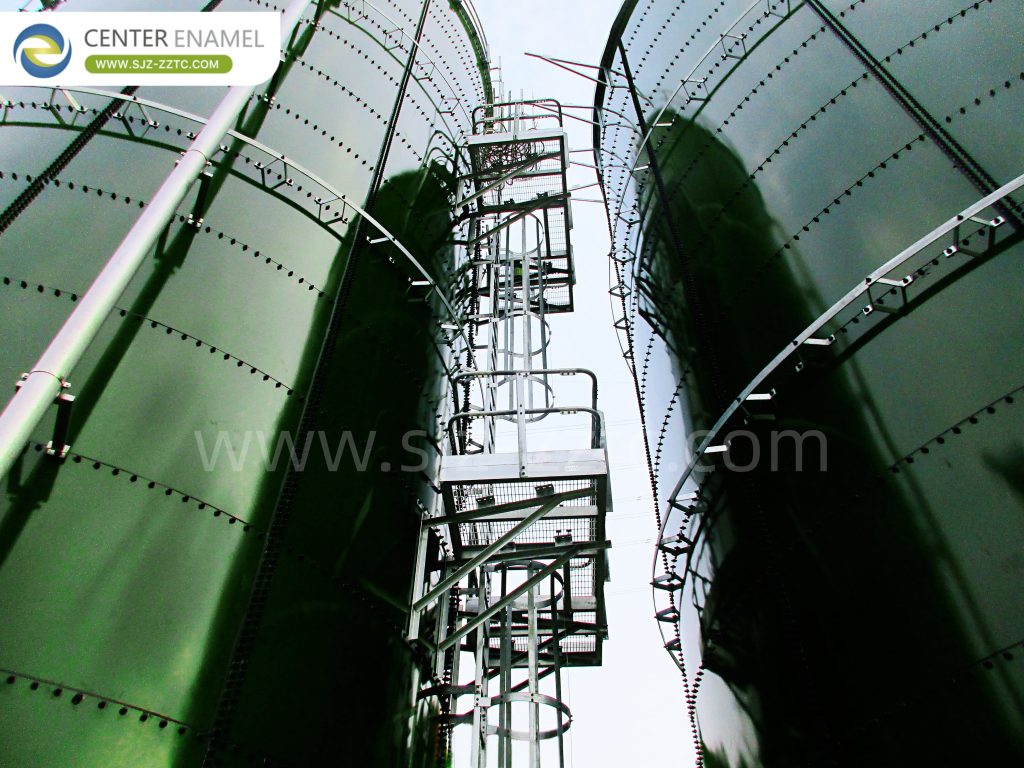
Glass-Fused-to-Steel (GFS) Tanks: These tanks combine the mechanical strength of steel with the exceptional corrosion resistance of glass. The enamel is fused to the steel at high temperatures (over 800°C), creating a hard, inert, and durable surface. This surface withstands the acidic, abrasive nature of POME and raw biogas without pitting, cracking, or degrading. GFS tanks are engineered to meet rigorous design standards, including AWWA D103 and EuroCode, ensuring a service life of 30 years or more-even in Indonesia’s tropical climate with high humidity and rainfall.
Double Membrane Roof: For most biogas project conditions, Center Enamel recommends the double membrane roof. Its advantages include direct cost optimization (lower roof cost compared to steel alternatives), space efficiency (reducing the overall footprint by eliminating separate ground-mounted gas holders), and simplified construction. The double membrane roof also provides excellent gas-tightness and visual monitoring of the tank interior. However, for sites with extreme weather (very high wind speeds or heavy snow loads-rare in most of Indonesia) or when a ground-mounted gas holder is specifically preferred, a Glass-Fused-to-Steel roof is available, especially for tank diameters under 23 meters.
Together, GFS Tanks and the double membrane roof form a complete, sealed, and highly efficient biogas capture and storage system, maximizing methane recovery for energy generation.
Supporting Equipment for a Complete Biogas Plant
Beyond the main reactor and roof, a fully functional biogas plant requires several other critical components. Center Enamel supplies all necessary auxiliary equipment to ensure seamless, trouble-free operation:
Gas Holder: For storing biogas prior to combustion in boilers or generators.
Lagoon / Black Membrane: For post-treatment polishing or long-term effluent storage before land application.
Hot Water Boiler: To maintain optimal mesophilic temperatures (around 35-37°C) inside the USR reactor, especially during nighttime or rainy seasons.
Emergency Torch System: Safely combusts excess biogas when production exceeds demand, preventing pressure buildup and ensuring safety.
Lifting Pumps: To transfer POME reliably between different treatment stages.
Dehydration and Desulfurization Tank: Removes moisture and corrosive hydrogen sulfide (H₂S) from raw biogas, protecting downstream engines, boilers, and piping.
Screw Sludge Dewatering Machine: Reduces the volume of digested sludge, making it easier to handle, transport, or apply as organic fertilizer.
Center Enamel’s Efficient Installation Capability
One of Center Enamel’s strongest advantages is rapid, efficient on-site installation. With an annual production capacity of over 250,000 GFS tank sheets, their logistics and assembly processes are highly streamlined. The bolted tank design requires no heavy welding or specialized construction equipment, which significantly cuts installation time and labor costs-a critical benefit for Indonesian mills located in remote areas of Sumatra or Kalimantan with limited access to skilled construction labor.
The modular nature of GFS Tanks allows easy transportation by truck to sites with narrow or unpaved roads. A professional technical team from Center Enamel supervises the entire assembly process, ensuring that every bolted joint and seal meets strict quality standards. This efficiency translates into less downtime for the mill, faster project completion (typically months faster than cast-in-place concrete or welded alternatives), and a quicker return on investment. For Indonesian mill owners, this means their biogas technology investment can start generating energy and financial returns sooner.
One-Stop Biogas Technology Solutions for Indonesian Palm Oil Mills
Center Enamel is not just a tank supplier; they are a complete one-stop solution provider for palm oil mills in Indonesia and worldwide. Their business scope covers everything from initial concept to operational handover: EPC service (Engineering, Procurement, and Construction), Process Package, and Equipment Supply. For an Indonesian palm oil mill owner, this single-source responsibility means less complexity, better coordination, guaranteed performance, and a single point of accountability.
They handle site assessment, civil design, mechanical installation, electrical and control systems, and commissioning. By offering integrated biogas technology solutions built around the efficient USR Process and durable GFS Tanks, Center Enamel enables mill operators to turn a costly waste problem into a profitable energy asset. Their team understands local conditions in Indonesia, including tropical climate, regulatory frameworks (such as Peraturan Pemerintah and Peraturan Menteri Lingkungan Hidup), and operational practices of local mills. This holistic approach is why hundreds of clients across more than 100 countries trust Center Enamel for their environmental and energy projects.
Frequently Asked Questions (FAQ)
Q1: How does the USR Process handle the high variability of POME flow during Indonesia’s harvesting seasons?
The USR Process is inherently robust to flow fluctuations. The regulating tanks in the pretreatment stage buffer daily and seasonal variations, while the USR reactor’s high solids retention time (typically 20-30 days) allows the anaerobic biomass to maintain stable activity even when influent flow changes. This makes USR ideal for Indonesian mills facing peak harvest months.
Q2: Can GFS Tanks withstand the acidic and abrasive conditions of raw POME for decades without coating failure?
Yes. The glass-fused-to-steel coating is fused at over 800°C, creating a chemically inert surface that resists the low pH (3.3-4.6) and abrasive solids in POME. Unlike field-applied coatings that can chip or delaminate, the factory-fused enamel is highly durable and has a proven service life of 30+ years in palm oil mill applications across Southeast Asia.
Q3: What project support does Center Enamel provide after commissioning a biogas plant in Indonesia?
Center Enamel offers comprehensive after-sales support, including operator training, spare parts supply, remote troubleshooting, and optional long-term maintenance contracts. Their team can conduct periodic performance audits to ensure the USR Process and GFS Tanks continue operating at peak efficiency throughout the plant’s lifetime.