
Biogas Technology: Transforming Organic Waste into Renewable Energy
As global industries and municipalities face mounting pressure to decarbonize and adopt circular economy frameworks, biogas technology has evolved from a niche alternative into an essential pillar of the modern renewable energy mix. By harnessing natural biological processes under engineered conditions, biogas systems transform organic waste streams—ranging from municipal wastewater sludge and agricultural manure to high-load industrial effluents—into clean, usable energy.
Understanding the core principles, engineering structures, and operational parameters of biogas technology is critical for project developers, environmental engineers, and industrial plant managers aiming to maximize resource recovery.
The Scientific Core: The Four Stages of Anaerobic Digestion
At the foundation of biogas technology is anaerobic digestion (AD)—a biological sequence where specialized microbial consortia break down biodegradable organic matter in the complete absence of oxygen. The conversion unfolds across four distinct biochemical phases:
- Hydrolysis: Extracellular enzymes secreted by bacteria break down complex, insoluble organic polymers (carbohydrates, proteins, and lipids) into soluble monomers such as sugars, amino acids, and fatty acids.
- Acidogenesis: Acid-forming bacteria convert these soluble monomers into volatile fatty acids (VFAs), alcohols, lactic acid, and carbon dioxide.
- Acetogenesis: Acetogenic bacteria transform VFAs into acetic acid, hydrogen, and carbon dioxide, which serve as immediate precursors for methane production.
- Methanogenesis: Strict anaerobic methanogenic archaea consume acetic acid and hydrogen to produce biogas, a combustible gas mixture typically comprising 50% to 70% methane (CH4) and 30% to 50% carbon dioxide (CO2), alongside trace impurities.
Core Engineering Infrastructure for Modern Biogas Plants
Scaling biogas technology from biological concept to industrial-grade power generation requires high-performance reactor architecture and robust containment systems:
- High-Rate Anaerobic Reactors: Advanced systems such as Upflow Anaerobic Sludge Blankets (UASB), Upflow Solids Reactors (USR), and Internal Circulation (IC) reactors maintain dense beds of active microbial biomass. This allows facilities to process massive chemical oxygen demand (COD) loads rapidly within a compact footprint.
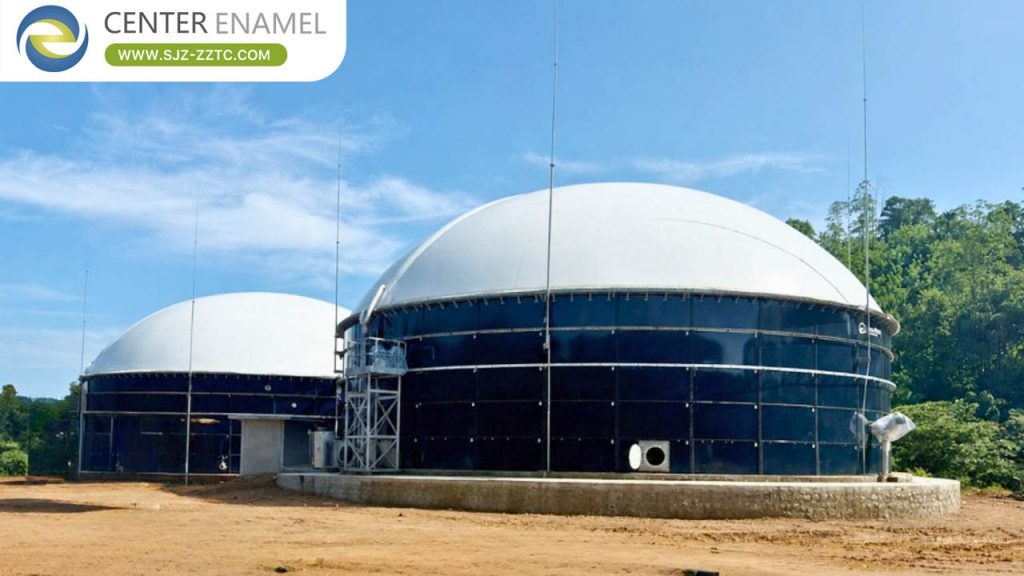
- Advanced Containment (Glass-Fused-to-Steel Tanks): Anaerobic digesters handle corrosive organic acids, high humidity, and hydrogen sulfide gas. Modern plants deploy Glass-Fused-to-Steel (GFS) bolted tanks, which fuse high-strength steel with an inert, titanium-rich glass coating. These tanks offer a pH resistance range of 1 to 14 and a verified service life exceeding 30 years.
- Biogas Upgrading & Scrubbing: Raw biogas undergoes desulfurization (removing H2S) and moisture stripping. It can be burned directly in combined heat and power (CHP) engines or scrubbed into high-purity biomethane (Renewable Natural Gas) for grid injection.
Comparative Data Table: Traditional Open Ponds vs. Advanced Enclosed Biogas Technology
| Evaluation Parameter | Traditional Open Waste Ponds | Advanced Enclosed Biogas Systems (GFS + High-Rate Reactors) |
| Methane Recovery | Uncontrolled fugitive release (high greenhouse gas leak risk) | 100% enclosed capture for power generation and heating |
| Organic (COD) Removal | Moderate (50% to 70%) | Superior (85% to 95%+) |
| Spatial Footprint | Massive land area required | Compact, vertical modular footprint |
| Infrastructure Durability | Prone to concrete cracking, corrosion, and seepage | Titanium-rich Glass-Fused-to-Steel (GFS) corrosion resistance |
| Energy Profile | Net energy consumer / zero recovery | Net energy producer (CHP or biomethane injection) |
Frequently Asked Questions (FAQ)
Q1: What is biogas technology and how does it work?
A: Biogas technology utilizes anaerobic digestion to break down organic waste in an oxygen-free environment using specialized microorganisms. The biological breakdown produces a methane-rich gas that can be captured and converted into electricity, thermal heat, or upgraded biomethane fuel.
Q2: What types of feedstock can be used in biogas plants?
A: Biogas technology can process a diverse range of organic materials, including municipal sewage sludge, agricultural livestock manure, food processing waste, and high-strength industrial organic wastewaters from fermentation and palm oil production.
Q3: Why are Glass-Fused-to-Steel (GFS) tanks preferred for modern biogas digesters?
A: GFS tanks combine the structural strength of steel with the chemical inertness of fused glass. They withstand the highly corrosive acids and sulfur compounds generated during anaerobic digestion, offer rapid modular construction, and provide a 30+ year operating lifespan superior to traditional concrete structures.