
Biogas to CNG: How to Turn Waste into Clean, Renewable Fuel
As the global energy transition accelerates, renewable energy sources are becoming increasingly important for reducing carbon emissions and improving energy security. Among these resources, biogas offers significant potential because it can be produced from organic waste, agricultural residues, livestock manure, municipal wastewater, and food waste.
However, raw biogas cannot be directly used as a substitute for conventional natural gas in most applications. It contains carbon dioxide (CO₂), hydrogen sulfide (H₂S), water vapor, and other impurities that must be removed before utilization.
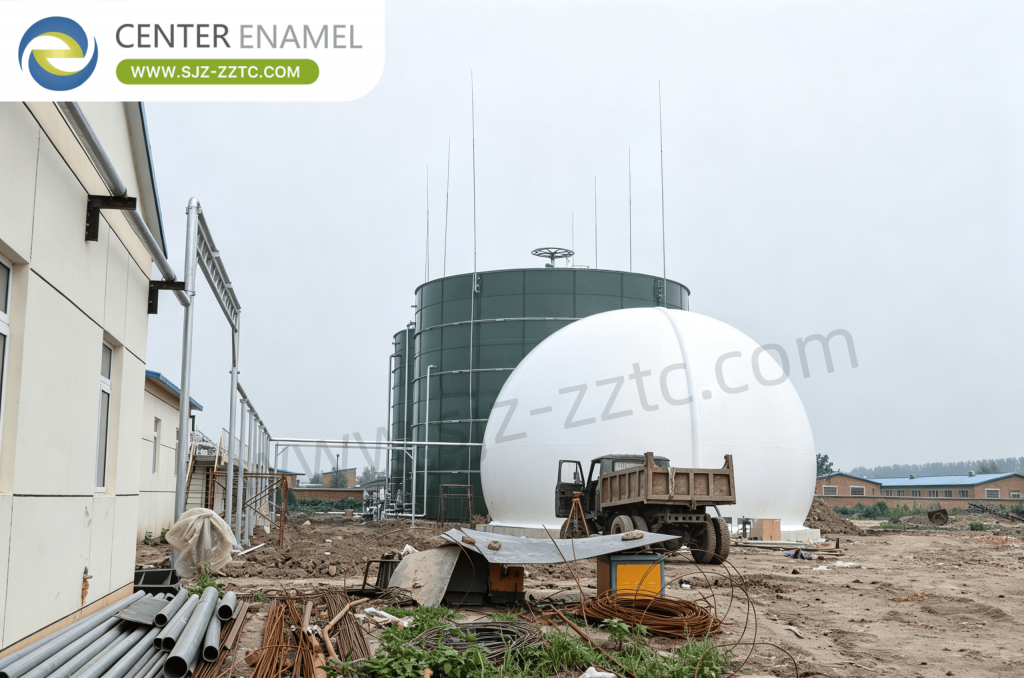
Through a series of upgrading, purification, and compression processes, raw biogas can be transformed into compressed biomethane, also known as Bio-CNG. This renewable fuel can be used in vehicles, industrial facilities, and natural gas distribution systems, providing a sustainable alternative to fossil-based natural gas.
This article explores how biogas is converted into CNG, the technologies involved, the key advantages, and its major applications.
1. What Is Biogas and How Is It Produced?
Biogas is a renewable gaseous fuel generated through the anaerobic digestion of organic materials. During this biological process, microorganisms break down biodegradable substances in an oxygen-free environment, producing a gas mixture primarily composed of methane (CH₄) and carbon dioxide (CO₂).
Common feedstocks for biogas production include:
Agricultural waste and crop residues
Livestock manure from farms and animal husbandry facilities
Food waste and organic municipal solid waste
Sewage sludge from wastewater treatment plants
Industrial organic wastewater and biodegradable residues
The anaerobic digestion process generally involves four biological stages: hydrolysis, acidogenesis, acetogenesis, and methanogenesis. Through these stages, complex organic compounds are gradually converted into methane-rich biogas.
Typically, raw biogas contains approximately 50–70% methane and 30–50% carbon dioxide, along with small quantities of hydrogen sulfide, water vapor, nitrogen, oxygen, and other trace contaminants. The exact composition depends on feedstock characteristics and digester operating conditions.
Although raw biogas can be used directly in certain boilers and combined heat and power (CHP) systems after appropriate conditioning, higher-quality purification is necessary when producing biomethane for natural gas pipelines or CNG vehicle fuel.
2. What Is Bio-CNG and Why Is Biogas Upgrading Necessary?
Bio-CNG is compressed biomethane produced by upgrading raw biogas to remove carbon dioxide and other unwanted components, followed by compression to the required storage or transportation pressure.
The key difference between raw biogas and Bio-CNG is methane concentration and gas quality.
Raw biogas contains substantial amounts of CO₂ and impurities, which reduce its energy density and may cause corrosion, equipment damage, or operational problems. In contrast, upgraded biomethane has a much higher methane concentration and can achieve properties comparable to conventional natural gas when it meets the applicable fuel specifications.
Biogas upgrading is necessary for several reasons:
Higher calorific value: Removing CO₂ increases methane concentration and energy content per unit volume.
Equipment protection: Removing H₂S and moisture helps prevent corrosion and extends equipment service life.
Pipeline compatibility: Gas quality must satisfy the requirements of the receiving natural gas network.
Vehicle fuel performance: High-purity biomethane provides suitable fuel characteristics for CNG engines.
Environmental performance: Capturing methane from organic waste and replacing fossil natural gas can reduce lifecycle greenhouse gas emissions.
The resulting biomethane can be injected into a natural gas distribution network or compressed into Bio-CNG for storage, transportation, and vehicle applications.
3. How to Convert Biogas into CNG: The Complete Process
The conversion of biogas into CNG involves several interconnected treatment and processing stages. Although specific configurations vary depending on raw gas composition, project capacity, and end-use requirements, a typical Bio-CNG production system includes the following steps.
Step 1: Raw Biogas Collection and Pretreatment
Raw biogas is collected from anaerobic digesters and transported through gas pipelines to the upgrading facility.
Before entering the main purification system, the gas undergoes preliminary treatment to remove large particles, condensate, and other substances that could affect downstream equipment.
Typical pretreatment equipment includes:
Gas-liquid separators
Condensate traps
Gas blowers
Initial filtration units
Gas cooling and moisture removal systems
This stage helps stabilize gas flow and protects compressors, adsorption units, and other equipment.
Step 2: Desulfurization – Removing Hydrogen Sulfide
Hydrogen sulfide is one of the most important contaminants in raw biogas. It is toxic, corrosive, and can produce sulfur dioxide during combustion.
Desulfurization is therefore essential for protecting gas processing equipment, pipelines, compressors, and vehicle fuel systems.
Common desulfurization technologies include:
Iron oxide adsorption: Iron-based materials react with hydrogen sulfide to remove sulfur compounds.
Activated carbon adsorption: Specialized activated carbon captures H₂S and other trace contaminants.
Biological desulfurization: Sulfur-oxidizing microorganisms convert hydrogen sulfide into elemental sulfur or other sulfur compounds.
Chemical scrubbing: Chemical solutions absorb or react with hydrogen sulfide.
The appropriate technology depends on the incoming H₂S concentration, gas flow rate, required outlet quality, and operating costs.
Step 3: Dehydration – Removing Water Vapor
Raw biogas is generally saturated with water vapor. If moisture remains in the gas, condensation may occur during compression or transportation.
Water can contribute to pipeline corrosion, equipment damage, and hydrate formation under certain operating conditions.
Common dehydration methods include:
Refrigeration and condensation
Adsorption using silica gel or molecular sieves
Glycol-based absorption systems
For Bio-CNG production, effective dehydration is particularly important because gas compression increases pressure and can influence water condensation behavior.
Step 4: CO₂ Removal – Increasing Methane Concentration
Carbon dioxide is the main component that must be separated from methane during biogas upgrading.
Removing CO₂ increases the methane concentration, improves the calorific value, and produces biomethane suitable for further compression.
Several technologies are widely used for this process:
Water Scrubbing
Water scrubbing uses the different solubilities of CO₂ and methane in water. Raw biogas is brought into contact with pressurized water, allowing CO₂ to dissolve preferentially. The methane-rich gas exits the system for further treatment.
Pressure Swing Adsorption (PSA)
PSA uses adsorbent materials to selectively capture CO₂ and certain impurities under pressure. When pressure is reduced, the adsorbed components are released, regenerating the adsorbent for another cycle.
Membrane Separation
Membrane technology uses selective permeability to separate CO₂ from methane. Carbon dioxide passes through specialized membranes more readily, while methane is retained in the high-pressure gas stream.
Chemical Absorption
Chemical absorption uses solvents such as amine solutions to selectively absorb CO₂. The solvent is subsequently regenerated through heating or other treatment methods.
Each technology has different requirements for energy consumption, methane recovery, maintenance, and investment.
Step 5: Final Purification and Gas Quality Control
After CO₂ removal, biomethane may undergo additional purification to remove residual moisture, oxygen, nitrogen, volatile organic compounds, siloxanes, and other trace contaminants where required.
Gas quality monitoring is conducted to ensure that the upgraded biomethane meets the applicable standards for its intended application.
Important parameters include:
Methane concentration
Hydrogen sulfide content
CO₂ concentration
Water and dew point
Oxygen content
Heating value or Wobbe index
Other applicable gas-quality indicators
For pipeline injection, the gas must comply with the receiving network's technical specifications and relevant national regulations.
For vehicle fuel, it must meet the applicable Bio-CNG or CNG fuel quality requirements.
Step 6: Compression – Producing Bio-CNG
Once the biomethane has reached the required purity and quality, it enters a high-pressure gas compressor.
The compressor increases the gas pressure to the required CNG storage or dispensing pressure. Depending on the applicable standard and system design, vehicle CNG systems commonly use nominal pressures around 200–250 bar.
The compressed biomethane is then transferred into high-pressure storage cylinders, tube trailers, or vehicle fueling systems.
Typical equipment includes:
Multi-stage gas compressors
Intercoolers and aftercoolers
High-pressure filters
Gas dryers, where required
Pressure control and safety systems
High-pressure storage vessels
CNG dispensers and metering equipment
At this stage, the biogas upgrading process is complete, and the resulting Bio-CNG can be distributed as a renewable transportation fuel.
4. Main Technologies Used for Biogas-to-CNG Conversion
Different biogas upgrading technologies can be selected according to project scale, raw biogas characteristics, energy costs, and the required biomethane quality.
The following table summarizes the major technologies used in commercial biogas upgrading systems.
| Technology | Working Principle | Main Advantages | Key Considerations |
| Water Scrubbing | CO₂ dissolves in pressurized water | Mature technology and relatively simple operation | Water circulation and regeneration requirements |
| Pressure Swing Adsorption (PSA) | Selective adsorption of CO₂ under pressure | No chemical solvents required | Requires optimized pressure cycles and pretreatment |
| Membrane Separation | Selective gas permeation through membranes | Compact design and modular expansion | Membrane performance depends on feed gas quality |
| Chemical Absorption | Chemical solvents selectively absorb CO₂ | High methane purity and effective CO₂ removal | Solvent regeneration and thermal energy requirements |
| Organic Physical Scrubbing | CO₂ dissolves in an organic solvent | Suitable for certain large-scale applications | Solvent management and energy consumption |
There is no universally optimal technology for every project. A feasibility study should consider methane recovery, product gas specifications, capital investment, operating expenditure, and local energy conditions before selecting the upgrading process.
In many projects, multiple purification technologies are combined to achieve the required gas quality and operational reliability.
5. Biogas-to-CNG Process Flow and Main Equipment
A typical Bio-CNG production plant integrates anaerobic digestion, gas pretreatment, upgrading, compression, storage, and dispensing into one continuous system.
The overall process can be summarized as follows:
Organic Waste → Anaerobic Digestion → Raw Biogas Collection → Pretreatment → Desulfurization → Dehydration → CO₂ Removal → Final Purification → Biomethane Compression → Bio-CNG Storage and Distribution
Each stage plays a specific role in maintaining product gas quality and ensuring safe, stable operation.
| Process Stage | Main Equipment | Primary Function |
| Biogas Production | Anaerobic digesters, gas holders | Generate and collect raw biogas |
| Pretreatment | Gas separators, filters, blowers | Remove condensate and particles |
| Desulfurization | Iron oxide towers, activated carbon filters | Remove hydrogen sulfide |
| Dehydration | Gas coolers, dryers, adsorption units | Reduce moisture content |
| CO₂ Removal | PSA, membranes, scrubbers | Increase methane concentration |
| Final Purification | Polishing filters, gas analyzers | Meet final gas-quality requirements |
| Compression | Multi-stage compressors | Increase gas pressure |
| Storage and Distribution | High-pressure cylinders, tube trailers, dispensers | Store and deliver Bio-CNG |
An integrated system allows organic waste treatment and renewable fuel production to operate as part of a coordinated energy recovery solution.
For projects requiring pipeline injection rather than vehicle fuel, the upgraded biomethane can instead pass through gas metering, pressure regulation, and quality monitoring facilities before entering the natural gas network.
6. Key Advantages of Converting Biogas into CNG
Converting biogas into Bio-CNG provides several environmental, economic, and operational benefits.
6.1 Renewable and Low-Carbon Transportation Fuel
Bio-CNG is produced from renewable organic resources rather than fossil fuel extraction. When sourced and managed sustainably, it can reduce lifecycle greenhouse gas emissions compared with conventional fossil natural gas and petroleum-based fuels.
Its environmental benefits are particularly significant when methane emissions from manure management, landfills, or wastewater treatment are effectively captured and utilized.
6.2 Higher Energy Density and Easier Transportation
Removing CO₂ and compressing biomethane increases the amount of usable energy stored in a given volume.
Compared with untreated biogas, Bio-CNG is more practical for transportation and storage, especially where a direct natural gas pipeline connection is unavailable.
6.3 Improved Energy Independence
Agricultural facilities, livestock farms, wastewater treatment plants, and food processing businesses can use locally available organic waste to produce renewable fuel.
This creates opportunities to reduce dependence on imported fossil fuels and improve regional energy security.
6.4 Waste Management and Resource Recovery
Biogas production transforms biodegradable waste into useful energy instead of allowing it to accumulate or decompose without energy recovery.
The remaining digestate can also be processed and utilized as an organic fertilizer or soil amendment when it meets applicable quality and environmental requirements.
6.5 Flexible Energy Distribution
Bio-CNG can be transported in high-pressure tube trailers and distributed to customers without requiring direct access to a natural gas pipeline.
It can also be injected into compatible natural gas networks after meeting the relevant technical and regulatory requirements.
7. Applications of Bio-CNG in Transportation and Industry
Bio-CNG is a versatile renewable fuel that can support different sectors.
7.1 Public Transportation
City buses and other public transportation vehicles equipped with CNG engines can use Bio-CNG as an alternative fuel.
Municipalities can integrate renewable gas production with public transportation systems to support cleaner urban mobility.
7.2 Logistics and Commercial Vehicles
Heavy-duty trucks, delivery vehicles, and commercial fleets can use Bio-CNG when equipped with compatible CNG fuel systems.
For fleet operators with centralized fueling facilities, a dedicated Bio-CNG production and dispensing system can provide a local renewable fuel supply.
7.3 Agricultural Machinery
Agricultural tractors and other specialized machinery designed or converted for gaseous fuels can use Bio-CNG.
This creates a circular agricultural energy model in which livestock manure and agricultural residues are converted into fuel for farm operations.
7.4 Natural Gas Pipeline Injection
Upgraded biomethane can be injected into compatible natural gas distribution networks after satisfying gas-quality, pressure, metering, and regulatory requirements.
Once accepted into the network, biomethane can be distributed through existing gas infrastructure and utilized by residential, commercial, and industrial customers.
7.5 Industrial Energy Applications
Bio-CNG can provide renewable energy for industrial boilers, heating systems, and other compatible gas-consuming equipment.
Manufacturing companies can use it as part of their strategies to diversify energy sources and reduce the carbon footprint of their operations.
8. Why Integrated Biogas Solutions Matter for Bio-CNG Projects
The successful conversion of biogas into CNG depends not only on upgrading technology but also on the reliability of the entire biogas production system.
Stable gas production, effective storage, consistent feedstock management, and properly designed treatment equipment are essential for continuous Bio-CNG production.
For agricultural, municipal, and industrial projects, an integrated biogas solution can help coordinate anaerobic digestion facilities with downstream gas purification and utilization systems.
As a professional biogas solution provider, Center Enamel offers integrated solutions for biogas projects, with expertise in biogas storage systems, anaerobic digestion tanks, and supporting project infrastructure.
Its glass-fused-to-steel tank technology provides corrosion-resistant storage solutions for biogas-related applications. Combined with appropriate engineering design and project integration, these systems help establish a reliable foundation for biogas production and renewable energy recovery.
Whether the objective is to produce Bio-CNG for transportation, supply biomethane to a natural gas network, or develop a comprehensive agricultural waste-to-energy project, selecting reliable storage and treatment infrastructure is essential for long-term project performance.
Conclusion
Converting biogas into CNG is an effective way to upgrade organic waste-derived energy into a higher-value renewable fuel. Through pretreatment, desulfurization, dehydration, CO₂ removal, final purification, and compression, raw biogas can be transformed into biomethane suitable for pipeline injection or Bio-CNG applications.
With mature upgrading technologies such as water scrubbing, PSA, membrane separation, and chemical absorption, Bio-CNG projects can be designed to meet different production capacities and end-use requirements.
As demand for renewable natural gas continues to grow, biogas-to-CNG technology offers opportunities to connect waste management, clean transportation, and sustainable energy production.
Center Enamel is committed to supporting biogas development through professional biogas solutions and reliable storage infrastructure, helping customers turn organic waste into valuable renewable energy.
Frequently Asked Questions (FAQs)
FAQ 1: Can Raw Biogas Be Directly Converted into CNG?
No. Raw biogas cannot generally be compressed directly into vehicle-grade CNG without appropriate purification. It must first undergo pretreatment, desulfurization, dehydration, CO₂ removal, and final gas-quality control to meet the applicable biomethane fuel specifications. After purification, the biomethane can be compressed into Bio-CNG.
FAQ 2: What Is the Difference Between Biogas, Biomethane, and Bio-CNG?
Biogas is the raw gas generated through anaerobic digestion and typically contains methane and carbon dioxide. Biomethane is upgraded biogas with a significantly higher methane concentration and controlled impurities. Bio-CNG is biomethane that has been compressed to a high pressure for storage, transportation, or vehicle fueling.
FAQ 3: Which Technology Is Best for Converting Biogas into CNG?
The most suitable technology depends on raw biogas composition, project capacity, required methane purity, energy consumption, and investment budget. Water scrubbing, pressure swing adsorption (PSA), membrane separation, and chemical absorption are widely used commercial upgrading technologies. A project-specific technical and economic assessment is recommended before selecting a system.
Looking for a reliable partner for your biogas project? Contact Center Enamel today to explore professional biogas solutions, advanced storage systems, and customized project support.
As an experienced Biogas Solution Provider, Center Enamel is ready to help you transform organic waste into valuable renewable energy and build a more sustainable future.