
Biogas Upgrading To Biomethane: CO2 Removal And Grid Injection
Biogas upgrading removes carbon dioxide - and residual H2S, water, and traces - to raise methane concentration from roughly 50-65% in raw biogas to 90-99% biomethane suitable for grid injection, compressed natural gas (CNG), or liquefied natural gas (LNG). The common technologies are membrane separation, pressure swing adsorption (PSA), water scrubbing, and amine absorption, chosen by scale, target purity, and how much methane loss the project can accept.
From Conditioning To Upgrading
Upgrading starts where conditioning ends. The gas is already desulfurized and dried for combustion; upgrading then strips CO2 (and any remaining impurities) so the product meets a natural-gas substitute spec. The CO2 is the target here, not the H2S - a different separation problem that rewards processes good at methane-versus-CO2 selectivity.
Upgrading Technologies
Membranes push gas across selective films that pass CO2 faster than methane; they are compact and scale well but lose some methane. PSA swings pressure to adsorb CO2 on a bed and releases it, giving high purity with tight methane recovery if tuned. Water scrubbing uses water's CO2 affinity and is robust and inexpensive to run on large flows. Amine absorption is selective and proven but brings reagent and regeneration energy. The decision is a trade between purity, recovery, and operating cost.
| Technology | Purity | Methane Loss | Best At |
| Membrane | High | Low-Medium | Compact, modular |
| PSA | High | Low (if tuned) | High recovery |
| Water scrubbing | Medium-High | Low | Large, cheap O&M |
| Amine | High | Low | Selective, proven |
Quality Specs For Grid And CNG
Grid injection and CNG each set a methane-number and impurity ceiling - typically 95%+ methane, tight limits on oxygen, H2S, water, and siloxanes, and a calorific value within the network band. LNG adds a liquefaction step. Meeting these is why upgrading is specified to a product spec, not merely a CO2 cut.
Project Case Study: Zhenyuan Vehicle-Grade Methane
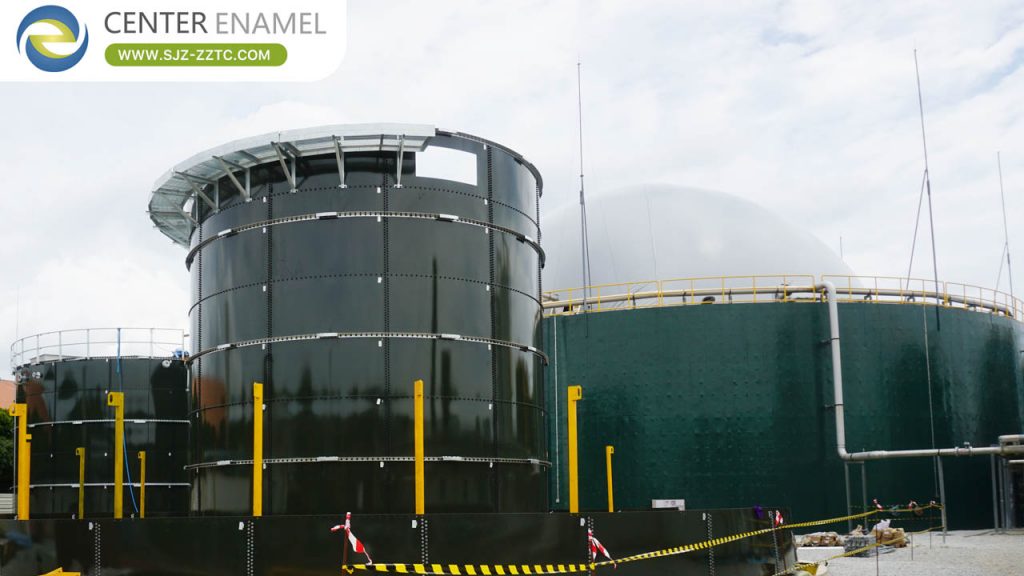
Project / Application: Biogas upgrading to vehicle-grade methane, Henan, China. Industry: Biogas / agriculture (upgrading implied; purification/upgrading specs not detailed in source). Tank Type: CSTR two-stage. Key Requirements: Produce fuel-grade methane from manure and washing wastewater. Note: the source records vehicle-grade methane output; the specific upgrading skid details are Not Specified In The Available Source.
| Field | Value | Source / Evidence |
| Handling Capacity | 650 T/D (manure + washing wastewater) | Company project reference |
| Treatment Type | Medium-temperature anaerobic fermentation | Company project reference |
| Reactor Type | CSTR (two-stage) | Company project reference |
| Primary Reactors | 3 sets, O15.29 x 15 m | Company project reference |
| Secondary Reactor | 1 set, O5.22 x 6 m | Company project reference |
| Annual Methane Production | 3,000,000 m3 (vehicle-grade) | Company project reference |
About Company
Shijiazhuang Zhengzhong Technology Co., Ltd (Center Enamel) is a comprehensive high-tech enterprise specializing in wastewater engineering, process section contracting, and equipment manufacturing. The company delivers biogas and wastewater projects through three main lines - EPC (turnkey) contracting, equipment supply, and process packages - covering livestock and municipal wastewater, biomass energy, industrial wastewater, and food waste. Its reactor portfolio spans CSTR, USR, UBF, UASB, IC, and EGSB, backed by in-house Glass-Fused-to-Steel tank manufacturing (enamel firing at 820-930 C) and certifications including ISO 9001, NSF/ANSI 61, and CE-EN 1090. With 35+ years of operation, a 150,000 m2 manufacturing base, and projects in 100+ countries, Center Enamel provides the single-responsibility engineering behind biogas engineering that delivers fuel-grade methane systems - pairing anaerobic reactors such as CSTR with the upgrading duty, as on the Henan plant producing 3,000,000 m3 per year of vehicle-grade methane from manure and washing wastewater.
Comparison: CHP Use Vs Grid Injection
| Element | CHP (conditioned) | Grid / CNG (upgraded) |
| Methane | 50-65% | 90-99% |
| CO2 | Left in | Removed |
| Product | On-site power/heat | Injectable / transportable fuel |
| Investment | Lower | Higher (upgrading skid) |
Biogas upgrading is the CO2-removal step that turns raw digester gas into grid-quality biomethane - membrane, PSA, water scrubbing, or amine selected by scale, purity, and methane recovery.
Frequently Asked Questions
Q1: Why upgrade biogas? A1: To reach natural-gas substitute purity for injection, CNG, or LNG.
Q2: What removes CO2? A2: Membrane, PSA, water scrubbing, or amine absorption.
Q3: What purity is needed? A3: Typically 90-99% methane with tight impurity limits.
Q4: Which technology is best? A4: Depends on scale, purity, and acceptable methane loss.
Q5: Is upgrading the same as conditioning? A5: No; conditioning cleans for combustion, upgrading strips CO2.
Q6: What is vehicle-grade methane? A6: Biomethane meeting transport fuel spec, as produced at the Henan plant.
Q7: Does upgrading lose methane? A7: Some processes do; PSA and water scrubbing recover most.
Q8: What feeds the upgrader? A8: Conditioned biogas already desulfurized and dried.
Suggested CTA
Share your biogas flow and target product with an engineer, or request an upgrading technology outline for your project.