
Black Film Pond for Livestock Manure Treatment: Working Principles, Benefits, and Applications
Livestock farms generate large quantities of animal manure every day. If this waste is not properly treated, it can cause unpleasant odors, water pollution, greenhouse gas emissions, and other environmental problems.
Anaerobic digestion provides an effective way to convert organic waste into renewable energy while reducing its environmental impact.
However, manure treatment does not necessarily end when biogas is produced in the main digester. The remaining digestate still requires further separation, storage, and treatment.
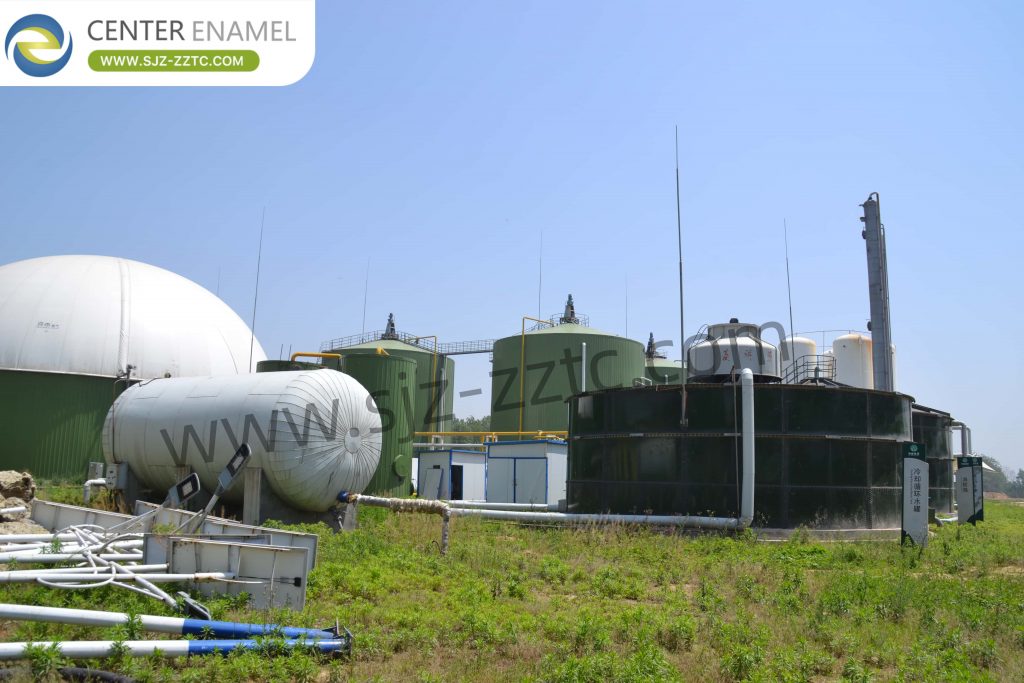
A black film pond is commonly used in agricultural waste management systems to store and treat liquid manure or digestate. When designed as a sealed anaerobic pond, it can also capture residual biogas generated during further decomposition.
In this article, we will explain the process from the CSTR digester to the black film pond, explore why black film ponds are used, and discuss their benefits for livestock farms.
CSTR Anaerobic Digester: Converting Livestock Manure into Biogas
The first stage in the illustrated process is the CSTR (Continuous Stirred-Tank Reactor).
Livestock manure, including pig manure, cattle manure, and other organic agricultural waste, is fed into the digester. Inside the tank, microorganisms break down organic matter under oxygen-free conditions.
This process is called anaerobic digestion.
During digestion, organic compounds are gradually converted into biogas, mainly consisting of methane (CH₄) and carbon dioxide (CO₂).
The CSTR is equipped with a mixing system that helps maintain uniform conditions inside the reactor. Mixing improves contact between microorganisms and organic materials and helps reduce sediment accumulation.
Its main functions include:
Receiving and treating livestock manure.
Maintaining suitable conditions for anaerobic microorganisms.
Breaking down biodegradable organic matter.
Producing renewable biogas for heating or electricity generation.
Reducing the organic load of the manure.
After the digestion process, the remaining material, known as digestate, is discharged for further processing.
Buffer Tank: Balancing Digestate Flow
After leaving the CSTR digester, the digestate enters the buffer tank.
The buffer tank provides temporary storage and regulates the flow of digestate before solid-liquid separation.
The discharge rate from an anaerobic digester may not always match the processing capacity of downstream equipment. Without flow buffering, sudden changes in feed volume could affect the efficiency and stability of the separation system.
The buffer tank helps solve this problem.
Its main functions include:
Temporarily storing discharged digestate.
Balancing fluctuations in digestate flow.
Providing a more stable feed to the separation equipment.
Reducing sudden hydraulic loading changes.
Supporting continuous operation of the treatment system.
Depending on the project design, the buffer tank may also include mixing equipment to prevent solids from settling and ensure a relatively uniform feed.
Solid-Liquid Separation: Separating Digestate into Two Fractions
After temporary storage, the digestate is transferred to the solid-liquid separation system.
Even after anaerobic digestion, the digestate still contains suspended solids, organic residues, and dissolved nutrients.
Solid-liquid separation divides the digestate into two fractions:
Solid fraction: Contains fibers, suspended organic materials, and other solid residues.
Liquid fraction: Contains water, dissolved nutrients, and fine suspended particles.
Common separation technologies include screw press separators, vibrating screens, and other mechanical separation equipment.
The separated solid material can be used for composting, soil improvement, or other agricultural applications after appropriate treatment.
The liquid fraction, commonly called liquid digestate, is then transferred to the black film pond.
| Separation product | Main characteristics | Potential application |
| Solid digestate | Contains organic fibers and solid nutrients | Composting, soil amendment, organic fertilizer production |
| Liquid digestate | Contains water, dissolved nutrients, and residual organic matter | Further treatment, storage, irrigation after meeting requirements |
Solid-liquid separation reduces the suspended solids content of the liquid fraction, making subsequent storage and treatment easier.
Black Film Pond: Further Treatment and Storage of Liquid Digestate
The black film pond is the next stage in the process.
It receives the liquid digestate produced by the solid-liquid separation system.
A black film pond generally uses a black HDPE geomembrane (high-density polyethylene membrane) as a lining material. In covered anaerobic applications, a flexible, gas-tight membrane also covers the pond to create an enclosed environment.
The pond can provide several functions depending on its design:
Storing liquid digestate before further utilization.
Providing additional treatment for residual organic matter.
Creating anaerobic conditions for further decomposition when operated as a covered lagoon.
Collecting additional biogas through a gas-tight cover and gas collection system.
Reducing leakage risks through an appropriate impermeable liner.
Because liquid digestate may still contain biodegradable organic compounds, further biological decomposition can occur under suitable anaerobic conditions.
When the pond is properly sealed and equipped with gas collection facilities, the residual methane can be collected and directed to biogas utilization or flaring equipment.
This makes the black film pond a useful component of an integrated livestock manure management system.
Why Are Black Film Ponds Used in Livestock Manure Treatment?
Livestock manure contains large amounts of water and organic matter. Even after the main anaerobic digestion process, the liquid digestate needs appropriate storage and management.
Black film ponds offer several practical advantages.
Excellent Anti-Seepage Performance
HDPE geomembranes have low permeability and provide an effective barrier against liquid leakage when properly installed.
This helps prevent untreated manure wastewater and digestate from directly entering surrounding soil and groundwater.
For livestock farms located near agricultural land or water resources, effective seepage control is particularly important.
Additional Anaerobic Treatment
When equipped with a gas-tight cover and operated under suitable anaerobic conditions, a black film pond can provide additional biological treatment.
Microorganisms continue breaking down some of the remaining biodegradable organic matter.
This may generate additional biogas, although the actual production depends on the residual organic content, temperature, retention time, and other operating conditions.
Biogas Recovery Potential
A covered black film pond can collect methane that would otherwise escape from an uncovered anaerobic storage system.
The collected gas can potentially be used for heating, electricity generation, or other suitable applications.
If the gas cannot be utilized, it can be directed to an appropriately designed flare system.
Gas-tight construction, gas collection pipes, pressure protection, and appropriate gas treatment are essential for this function.
Odor Control
Open manure storage ponds can release unpleasant odors into the surrounding environment.
A properly sealed cover helps contain odorous gases and reduces their direct release.
It is important to note that odor control depends on maintaining the integrity of the cover and properly managing gas collection and treatment.
Reduced Environmental Impact
By combining an impermeable liner with a gas-tight cover, a properly designed black film pond can help reduce liquid leakage, uncontrolled methane emissions, and odor release.
These benefits make it a practical option for integrated livestock waste management.
How Does a Black Film Pond Work?
The operating principle depends on whether the pond is designed for simple digestate storage or covered anaerobic treatment.
For a covered anaerobic black film pond, the general process is as follows:
Digestate inlet: Liquid digestate enters the pond through an inlet pipeline.
Temporary storage: The liquid is retained inside the lined pond.
Further decomposition: Anaerobic microorganisms continue breaking down biodegradable organic compounds.
Biogas generation: Residual organic matter may produce additional methane and carbon dioxide.
Gas collection: Biogas accumulates beneath the gas-tight membrane and is transported through a designated pipeline.
Digestate discharge: Treated liquid is discharged for further treatment, storage, or agricultural utilization according to its quality.
The pond should be designed with appropriate liquid-level management, gas pressure protection, drainage, and maintenance arrangements.
Black Film Pond vs. Traditional Open Storage Pond
Both systems can store liquid manure and digestate, but their construction and environmental performance differ.
| Comparison | Black Film Pond | Traditional Open Pond |
| Main structure | Geomembrane-lined pond, potentially with a gas-tight cover | Usually an open storage basin |
| Anti-seepage | High when properly lined and installed | Depends on soil and lining design |
| Biogas collection | Possible with a gas-tight cover and collection system | Generally not designed for gas recovery |
| Odor control | Better when properly covered | More odor release may occur |
| Methane management | Enables methane capture when properly sealed | Methane may escape into the atmosphere |
| Construction | Requires membrane installation and sealing | May have simpler construction |
| Maintenance | Requires inspection of liners, seams, and covers | Requires inspection of pond structure and storage conditions |
The appropriate solution depends on the farm's waste volume, treatment objectives, environmental requirements, and investment budget.
Important Considerations When Building a Black Film Pond
Although black film ponds offer practical benefits, proper engineering and installation are essential.
Several factors should be considered before construction.
Geomembrane Quality
Select suitable HDPE geomembranes according to project requirements. Membrane thickness, chemical resistance, mechanical strength, and installation conditions should be evaluated.
Foundation Preparation
The pond foundation should be properly excavated, leveled, and compacted. Sharp objects and uneven surfaces should be removed to reduce the risk of membrane damage.
Membrane Welding
Geomembrane seams should be installed by qualified technicians using appropriate welding equipment. Seam integrity should be tested before operation.
Gas Collection System
For covered anaerobic ponds, gas collection pipelines, pressure protection, condensate drainage, and gas monitoring should be included in the design.
Capacity and Retention Time
Pond capacity should be calculated according to daily digestate production, expected storage duration, treatment objectives, and local climatic conditions.
Regular Inspection
Operators should regularly inspect the membrane, weld seams, inlet and outlet pipelines, drainage systems, and gas collection equipment.
Proper design and maintenance help extend service life and ensure reliable operation.
Applications of Black Film Ponds in Agriculture
Black film ponds are suitable for different agricultural waste management projects, particularly those involving large quantities of liquid organic waste.
Common applications include:
Pig farms: Managing liquid pig manure and digestate after anaerobic digestion.
Dairy farms: Storing and treating liquid cattle manure.
Poultry farms: Managing suitable poultry manure wastewater and organic effluent.
Integrated livestock farms: Supporting centralized manure treatment and biogas recovery.
Agricultural wastewater treatment: Providing lined storage and additional treatment for suitable organic wastewater.
The specific design should be determined by wastewater characteristics, solids concentration, treatment requirements, and local environmental regulations.
Conclusion
The process illustrated in the diagram demonstrates how livestock manure can be converted into renewable energy and further managed through an integrated treatment system.
First, the CSTR anaerobic digester converts biodegradable organic matter into biogas. The discharged digestate then enters the buffer tank, where its flow is regulated before solid-liquid separation.
The separated liquid digestate is subsequently transferred to the black film pond for storage and, when designed as a covered anaerobic system, further biological treatment and biogas recovery.
A properly designed black film pond offers important benefits, including anti-seepage protection, odor control, digestate management, and potential methane recovery.
For livestock farms seeking more efficient manure treatment and resource utilization, black film ponds can be an important part of a sustainable agricultural waste management solution.
Frequently Asked Questions (FAQs)
1. What is a black film pond used for in livestock manure treatment?
A black film pond is used to store and manage liquid manure or digestate. When equipped with a gas-tight cover, it can also provide additional anaerobic treatment and collect residual biogas.
2. Can a black film pond produce biogas?
Yes. A black film pond designed as a covered anaerobic lagoon can produce additional biogas from residual biodegradable organic matter in liquid digestate. However, gas production depends on organic content, temperature, retention time, and operating conditions. A simple lined storage pond without a gas-tight cover is not a biogas recovery system.
3. What is the difference between a black film pond and a CSTR digester?
A CSTR is a controlled anaerobic reactor designed to digest organic waste and produce biogas through continuous mixing. A black film pond is generally used for liquid digestate storage and further treatment. When covered and properly designed, it can also provide additional anaerobic digestion and biogas collection.