
Brewery Wastewater Treatment: From Regulation to Resource Recovery with IC Process
Brewery wastewater treatment has moved from a back-of-plant cost center to a strategic compliance and energy decision. As regulations worldwide shift toward water reuse, resource recovery and tighter discharge limits, brewers need a treatment partner that can engineer the whole train-pre-treatment, high-rate anaerobic digestion, aerobic polishing and biogas recovery-as one accountable package. Center Enamel (Shijiazhuang Zhengzhong Technology Co., Ltd) delivers exactly that, with the IC Process at the core of its high-strength anaerobic solutions and a product and service network that spans every major market.
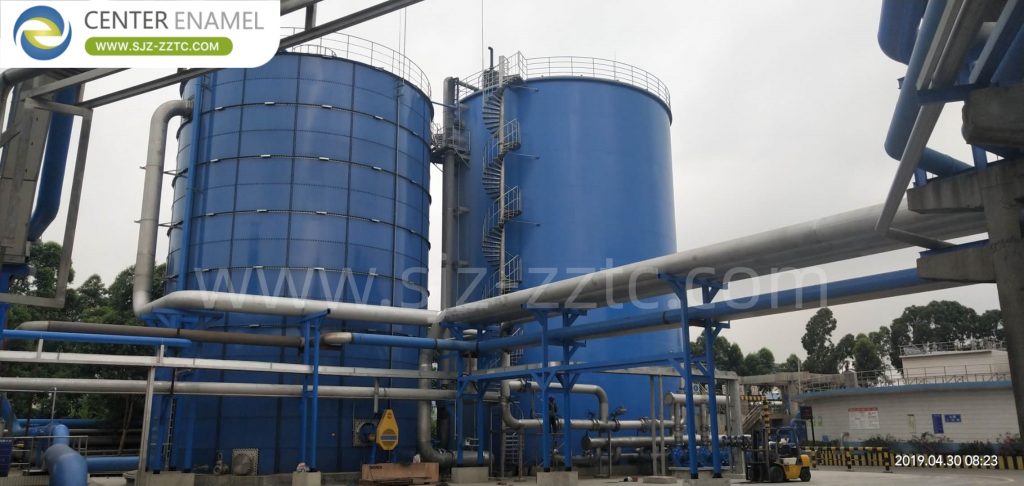
Regulations Are Shifting from Compliance to Resource Recovery
Industrial wastewater policies around the world are escalating from simple "compliance discharge" toward mandatory resource recovery and, in the strictest cases, zero liquid discharge. The EU Circular Economy Action Plan requires member states to raise industrial wastewater reuse rates and extends carbon-footprint accounting across the full lifecycle of treatment. China continues to tighten national water pollutant discharge standards, with increasingly strict limits on total nitrogen, total phosphorus and characteristic pollutants for chemicals, pharmaceuticals and dyeing; water-scarce regions and highly polluting industries are required to adopt zero- or near-zero-liquid-discharge technologies. Germany, meanwhile, has built a differentiated industry-by-industry pretreatment standard system, requiring industrial effluent to meet specific quality requirements before it enters municipal plants. For brewers, these global pressures translate into one practical requirement: a standardized, shock-load-resistant treatment train that can handle intermittent, seasonal discharge.
A Standardized Treatment Train Built for Brewery Effluent
The mature brewery wastewater treatment solution is a "solid–liquid separation + anaerobic digestion + aerobic polishing" process train, perfectly suited to high-concentration, easily biodegradable organic effluent. Pre-treatment uses screens, sedimentation tanks and microfiltration to remove spent-grain residues and colloidal suspended solids, preventing equipment clogging and reducing downstream biochemical load. The main stage uses high-efficiency UASB, EGSB or IC anaerobic reactors for rapid degradation of concentrated organic matter with simultaneous biogas energy recovery-exactly where pollution loads are highest. Subsequent A/O or contact-oxidation aerobic processes deeply remove residual pollutants, while final sedimentation and disinfection ensure stable effluent compliance. The anaerobic digesters are built in Center Enamel GFS tanks that resist organic-acid corrosion over a long service life. The whole train is highly shock-load tolerant, has a simple flow sheet and convenient operation and maintenance, matching the brewery industry's intermittent and seasonal discharge pattern.
| Stage | Core Units | Purpose |
| Pre-treatment | Screens, sedimentation tanks, microfiltration | Remove spent grain and colloidal solids; protect downstream equipment |
| Anaerobic main stage | UASB / EGSB / IC reactor in a GFS tank | Rapid high-strength degradation; recover biogas energy |
| Aerobic polishing | A/O or contact oxidation, final sedimentation, disinfection | Deep removal of residual pollutants; stable compliant effluent |
| Integrated utilities | Biogas desulfurization, dehydration and storage; online monitoring | Closed-loop gas recovery and real-time process control |
At the center of that anaerobic stage is the IC Process-and its performance depends on tightly integrated supporting equipment rather than bolt-on add-ons.
Inside the IC Process: Integrated Equipment, No External Pumps
The core of the system is a GFS tank fitted with a built-in gas-lift internal circulation system and upper and lower three-phase separators-the key components that enable autonomous circulation and reliable sludge–water separation. A bottom precision distribution system and pressure-regulating feed device ensure uniform, stable influent across the reactor floor, while influent lift pumps, equalization tanks and flow meters provide precise influent control.
At the top, high-efficiency biogas collection is integrated with desulfurization, dehydration and storage equipment, so recovered gas is delivered usable rather than vented. High-precision online monitoring tracks temperature, pH, COD and liquid level in real time, and dedicated bottom and mid-section sludge-discharge pipes with recirculation control remove excess sludge without needing external return pumps. The complete system is highly integrated, free of redundant external equipment, compact in structure and high in automation-which is precisely why it handles the variable loads typical of breweries so predictably. This level of integration is only possible because Center Enamel controls the entire product chain, not just one component.
A Full Product Matrix Behind Every Reactor
Center Enamel has built a complete product matrix of "core storage tanks + supporting covers + specialty pressure vessels + complete environmental engineering services," and it is the only company worldwide to combine integrated enamel frit R&D, self-manufacturing and GFS tank application. At the core are proprietary GFS tanks using double-sided hot-rolled double-layer enamel anti-corrosion technology, resistant to strong acids and alkalis, high salinity and microbial corrosion, assembled modularly and quickly for the most corrosive wastewater, biogas and chemical conditions.
Supporting the tanks are fusion-bonded epoxy (FBE) tanks produced on China's first intelligent standardized production line, primarily for drinking water, fire water and neutral-media storage. For sealing and gas containment, proprietary high-strength aluminum dome covers use a self-supporting aluminum-alloy structure that meets international waterproof and load-bearing standards for both tank sealing and biogas collection. The range also includes carbon steel tanks, stainless steel tanks, composting tanks and various non-standard pressure vessels, backed by environmental EPC general contracting and anaerobic process-section subcontracting-a one-stop offering across food waste, leachate, municipal wastewater, livestock biogas, petrochemical and metallurgical effluent, and seawater desalination. A great product still needs dependable delivery and long-term support anywhere in the world.
Global Service That Keeps Plants Running After Handover
Leveraging regional sales centers in China and overseas local agent networks, Center Enamel has built a complete after-sales service loop covering every market. The system rests on four pillars: a 24/7 rapid-response mechanism, on-site domestic and overseas installation services, full-project-cycle after-sales support and long-term warranty protection. Together they form a complete service chain from preliminary site survey, through mid-term construction management, to long-term inspection and maintenance. The whole system is uniformly adapted to both domestic and international project service standards, coordinating personnel scheduling, material support and on-site coordination across simultaneous projects in multiple regions-significantly cutting customers' multi-party coordination costs and ensuring efficient delivery both at home and abroad. Coordinating globally becomes easier still when the team itself speaks the client's language and understands local rules.
Multilingual Experts Who Know Local Regulations and Returns
Center Enamel's team brings together multi-skilled environmental professionals and multilingual foreign-trade specialists with deep expertise in the global biogas, wastewater and biomass new-energy markets, backed by extensive practical project experience in Southeast Asia, Africa, Europe and the Americas. The team is fluent in national wastewater discharge regulations, biogas subsidy policies and carbon-trading rules, and provides one-stop preliminary site survey, solution planning and investment-return analysis. With multilingual capability in English, French, Spanish and Arabic, it communicates effectively with clients worldwide, matching regional industrial resources, project budgets and environmental requirements-and customizing GFS tanks and anaerobic reactor solutions around each client's production capacity, treatment targets and expected gas output. Drawing on overseas project experience, the team also proactively helps clients avoid risks in overseas approvals, equipment import and construction execution. Beyond local know-how, large overseas tenders demand hard credentials, and Center Enamel carries them.
Certifications That Open International Tender Doors
Center Enamel holds CE, NSF, WRAS, ISO 9001, BSCI and ASME certifications, fully clearing tendering barriers across the EU, North America, Southeast Asia and Africa. For overseas brewery projects, these credentials are not bureaucratic formalities-they are the hard-procurement advantages that let owners shortlist the same supplier for both process and equipment.
| Certification | Scope / Market Access |
| CE | European Economic Area-equipment safety and tendering |
| NSF | Drinking-water contact materials, North America |
| WRAS | UK water-regulations compliance |
| ISO 9001 | Quality management system |
| ASME | Pressure vessels, biogas and steam equipment |
| BSCI | Social-compliance audit for international buyers |
Whether you are sizing a new brewhouse effluent plant or retrofitting an overloaded anaerobic section, our engineers can benchmark your discharge profile against the IC Process and propose a fixed-scope EPC solution. Contact Center Enamel today for a preliminary process scheme, biogas recovery estimate and tender-ready equipment package.
Frequently Asked Questions
What does a brewery wastewater treatment EPC project typically include?
A standardized train of screens, sedimentation and microfiltration pre-treatment, a high-rate anaerobic reactor (UASB/EGSB/IC Process) housed in a GFS tank, aerobic A/O or contact-oxidation polishing, plus biogas desulfurization, dehydration and storage-delivered as one accountable scope from process design through commissioning.
Why is the IC Process preferred for high-strength brewery effluent?
The IC Process uses built-in gas-lift internal circulation and three-phase separators to recirculate sludge without external pumps, achieving high loading rates in a compact footprint. Integrated biogas collection and online monitoring of temperature, pH, COD and level make it stable under the intermittent, seasonal discharge typical of breweries.
Can Center Enamel support overseas brewery projects under local regulations?
Yes. The multilingual team-English, French, Spanish, Arabic-knows national discharge standards, biogas subsidies and carbon-trading rules, while CE, NSF, WRAS, ISO 9001, ASME and BSCI certifications cover tendering across the EU, North America, Southeast Asia and Africa.