
Brewing Wastewater Treatment Project EPC Contractor Delivering GFS Tanks for High-Strength Industrial Applications
The competitive landscape of industrial wastewater treatment shows clear divergence, with leading companies building integrated service capabilities through technical integration and capital operations, and industry concentration gradually increasing. Chinese companies continue to consolidate their advantages in mid-tier equipment exports, while international giants target high-end customers and complex industrial wastewater markets. Local players occupy the mid-to-low-end and industrial park centralized treatment markets with service responsiveness and cost advantages. Navigating this landscape requires an experienced Brewing Wastewater Treatment Project EPC Contractor capable of integrating equipment, process design, and long-term operational support.
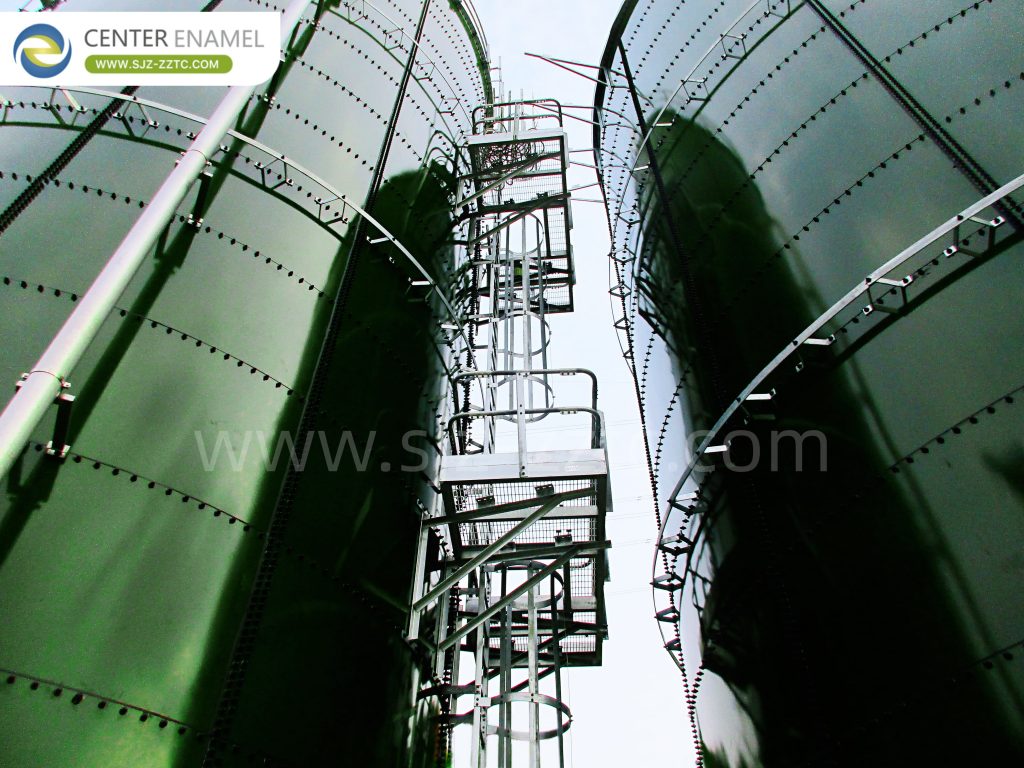
Within the anaerobic process segment, UASB, EGSB, and IC anaerobic reactors are widely used for high-concentration organic wastewater pretreatment in food processing, pharmaceutical fermentation, alcohol brewing, and chemical industries, thanks to their high loading rates, small footprints, and stable operation. These reactors rely on steel tank shells, and their corrosion resistance and gas-tightness directly determine long-term operational stability. This is precisely where GFS Tanks demonstrate increasingly prominent application value, combining structural strength with exceptional corrosion resistance.
GFS Tanks Built for Complex Operating Conditions Across All Industries
Center Enamel has independently developed over 200 specialized enamel frit formulations and supporting patents, capable of customizing anti-corrosion enamel based on customer storage media. This delivers adaptability comprehensively superior to concrete tanks, which use a single material suitable only for neutral clean water storage. When storing corrosive materials such as livestock manure, palm oil mill effluent, chemical wastewater, food waste digestate, or high-salinity wastewater, concrete requires additional anti-corrosion linings that are prone to failure, preventing long-term stable operation and limiting adaptability to alternating high/low concentration storage conditions.
GFS tanks can be specifically formulated with specialized enamels resistant to strong acids, strong alkalis, high organic content, and high salinity. A single tank can switch between multiple wastewater and fermentation feedstock storage requirements. They are universally applicable across biogas anaerobic digestion, municipal wastewater, livestock farming, food processing, and industrial water treatment scenarios, eliminating the need to rebuild tanks for media changes. This flexibility perfectly meets the needs of diversified, multi-condition environmental protection projects-an essential capability for any Brewing Wastewater Treatment Project EPC Contractor serving clients with varied production profiles.
IC Reactor Process: How Internal Circulation Drives Treatment Efficiency
Pretreated high-strength organic wastewater enters the lower main reaction zone from the bottom, mixing with recirculated sludge-water mixture and rising rapidly. Anaerobic microorganisms efficiently degrade organic matter, producing large volumes of biogas. The gas-lift action of biogas carries the mixed liquor upward to the top gas-liquid separator where biogas is collected. Degassed sludge-water mixture returns by gravity through downcomers to the reactor bottom, creating autonomous internal circulation that repeatedly enhances pollutant degradation.
After multiple circulation cycles, the wastewater enters the upper polishing zone for further reaction and sludge-water separation. Remaining trace organics are fully degraded, sludge settles back to the lower reaction zone, treated effluent overflows from the top, and aged sludge is periodically discharged. This fully autonomous circulation enables efficient continuous operation with minimal external energy input-a key reason IC reactors remain a preferred choice for high-strength industrial wastewater pretreatment.
Brewery Wastewater Characteristics: High Strength, High Biodegradability
Brewery wastewater presents distinct characteristics that shape treatment design: high concentration, high suspended solids, high color, slightly acidic, and excellent biodegradability-with significant fluctuations. COD typically ranges from 5,000 to 25,000 mg/L, with high-strength spent mash and still bottoms peaking at hundreds of thousands of mg/L. Suspended solids can reach 40,000 mg/L, with thick turbid liquor. pH remains stable and slightly acidic at 3–5.
Pollutants are primarily natural organics from grain fermentation-starches, reducing sugars, proteins, and alcohols-with no synthetic toxic substances. BOD/COD can reach 0.5–0.6, representing industry-leading biodegradability. However, significant fluctuations occur with production batches and seasonal capacity, and the wastewater is susceptible to secondary fermentation and odor if left standing. These characteristics make anaerobic technologies particularly well-suited to brewing applications, and they inform how a Brewing Wastewater Treatment Project EPC Contractor designs process trains for maximum biogas recovery and treatment stability.
Table 1: Brewery Wastewater Key Parameters
| Parameter | Typical Range | Notes |
| COD | 5,000–25,000 mg/L | Peaks at hundreds of thousands mg/L in spent mash/still bottoms |
| Suspended Solids | Up to 40,000 mg/L | Thick turbid liquor |
| pH | 3–5 | Stable slightly acidic |
| BOD/COD Ratio | 0.5–0.6 | Industry-leading biodegradability |
| Primary Pollutants | Starches, reducing sugars, proteins, alcohols | Natural organics, no synthetic toxins |
| Key Challenge | Batch/seasonal fluctuation | Susceptible to secondary fermentation and odor |
Over a Decade of Global Installation Experience
Center Enamel offers unmatched global practical experience among domestic peers-over a decade covering multiple regions and all industry sectors. In 2009, the company completed its first overseas GFS tank installation, sending a team to Niger, Africa for drinking water storage tank installation. In 2015, it broke industry ground with China's first GFS tank export and installation to the US, passing strict US acceptance standards.
All installed projects have operated stably for many years, covering livestock biogas, POME, municipal wastewater, and drinking water storage applications. Construction has covered Southeast Asia, Africa, the Americas, and other regions, accumulating specialized solutions for complex sites including mountainous terrain, coastal salt spray, tropical high temperatures, and high-standard European/American facility conditions-maturely addressing global special construction requirements. Center Enamel is also the only company globally integrating proprietary enamel frit R&D, self-manufactured tanks, and EPC general contracting-full-process self-control from solution design, equipment production, cross-border logistics, overseas construction, to post-construction O&M-significantly reducing client coordination and time costs.
Table 2: Global Installation Milestones
| Year | Milestone | Significance |
| 2009 | First overseas GFS tank installation (Niger, Africa) | Entry into international project delivery |
| 2015 | First GFS tank export and installation to the US | Passing strict US acceptance standards |
| Ongoing | Projects across Southeast Asia, Africa, Americas | Specialized solutions for complex site conditions |
| Present | 10,000+ total projects, 2,000+ wastewater, 1,000+ biogas | Full-process EPC self-control capability |
Aluminum Alloy Trough Deck Roof for Water Storage Applications
The Aluminum Alloy Trough Deck Roof is a cost-effective economical tank cover solution for clean water and wastewater storage scenarios, primarily designed for drinking water, production wastewater, and firewater reserve tanks, balancing practicality and cost advantages. The main body is integrally formed from anti-corrosion aluminum alloy plates, paired with aluminum support trusses. Its lightweight design imposes less load on the tank foundation, reducing civil construction investment.
A naturally formed dense oxide protective layer on the surface resists rain and mild wastewater corrosion, withstands outdoor sun and rain exposure, and effectively blocks wind, rain, insects, fallen leaves, and odor volatilization, protecting water quality by preventing dust and debris from falling in and causing secondary contamination. The flat roof structure is neat and orderly, allowing installation of maintenance walkways, guardrails, vents, and level monitoring ports on top, facilitating daily inspection and equipment maintenance.
The simple sealing structure enables straightforward installation with short construction timelines and virtually eliminates the need for anti-corrosion painting maintenance, resulting in extremely low operational costs. It is suitable for various small, medium, and large atmospheric pressure water storage tanks and has been widely implemented in waterworks clear water tanks, industrial circulating water tanks, park firewater tanks, and domestic wastewater temporary storage facilities. It is highly compatible with water storage applications that do not require biogas collection or high-pressure sealing.
When paired with GFS Tanks, this roof solution provides a complete, corrosion-resistant storage system for water applications across municipal, industrial, and fire protection duty.
Frequently Asked Questions
Q1: Why are GFS tanks preferred over concrete for brewing wastewater treatment?
GFS tanks use specialized enamels resistant to acids, alkalis, and high organic loads. Unlike concrete, which requires anti-corrosion linings prone to failure, GFS tanks maintain structural integrity and gas-tightness for decades, ensuring stable anaerobic process performance.
Q2: What makes brewery wastewater suitable for anaerobic treatment?
Brewery wastewater has BOD/COD ratios of 0.5–0.6, among the highest in industrial wastewater. This excellent biodegradability enables efficient anaerobic digestion, producing biogas for energy recovery while reducing treatment costs.
Q3: How does Center Enamel support overseas brewing wastewater projects?
The company provides full-process EPC delivery-from design and tank manufacturing to cross-border logistics, overseas construction, and post-construction O&M-backed by 24/7 after-sales support and over a decade of global installation experience.
Start Your Brewing Wastewater Treatment Project with Center Enamel
Whether you are planning a new brewery wastewater treatment facility or upgrading an existing anaerobic system, our engineering team is ready to assess your specific water quality and capacity requirements. Contact us today to discuss how GFS tanks and IC reactor technology can deliver reliable, long-term treatment performance for your operations.
Reach out to our specialists for a tailored project consultation and discover why Center Enamel is trusted by clients across 100+ countries for brewing and industrial wastewater treatment solutions.