
How Can a Brewing Wastewater Treatment Project Benefit from GFS Tanks and IC Process Technology?
Industrial wastewater treatment continues to face mounting pressure from increasingly stringent environmental regulations and the inherent complexity of high-strength organic effluent. Across the new energy, chemical, and pharmaceutical industries, wastewater streams present complex compositions with numerous characteristic pollutants that traditional treatment processes struggle to remove effectively. While Chinese companies have established significant price advantages in the mid- to low-end equipment segment, the industry as a whole faces continuous technological upgrade pressure-alongside new requirements for digitalization and low-carbon transformation that demand more refined operational management capabilities.
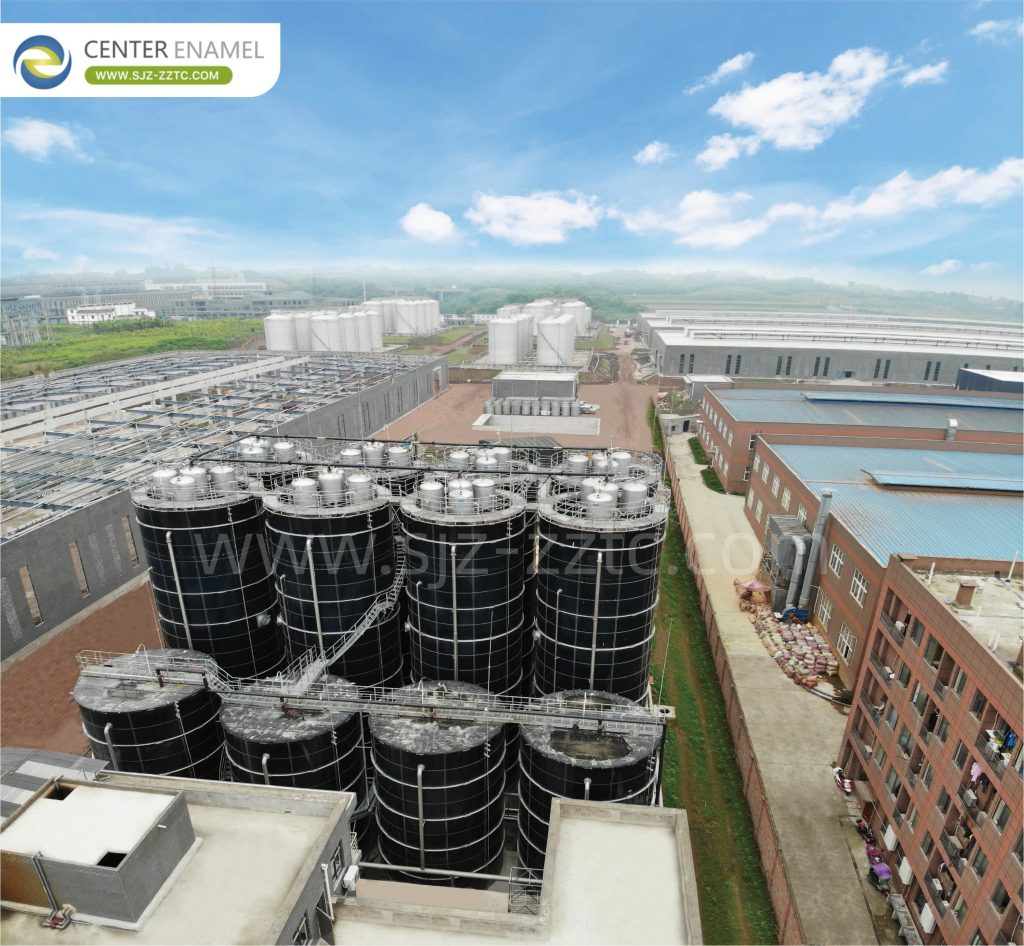
Amid these challenges, the brewing industry stands out as a sector where effective treatment is both urgently needed and highly achievable. Brewery wastewater is characterized by exceptionally high organic loads but also excellent biodegradability, making it ideally suited to anaerobic treatment technologies. When combined with the right containment infrastructure-specifically GFS Tanks-brewing wastewater treatment projects can achieve outstanding treatment efficiency while recovering valuable biogas energy.
Why GFS Tanks Outperform Concrete for Brewing Wastewater Treatment Projects
Selecting the right tank technology is fundamental to the success of any Brewing Wastewater Treatment Project. GFS Tanks are assembled on-site from prefabricated panels, offering short construction periods and support for expansion, relocation, and reuse-advantages distinctly different from immovable concrete tanks.
Concrete tank pouring requires formwork, rebar tying, pouring, and long curing periods, with a single tank construction taking months. Rain, snow, and low temperatures force work stoppages and delays. Once poured, they are permanent fixed structures that cannot be dismantled, expanded, or relocated-project relocation means complete abandonment.
GFS tank panels are all factory-prefabricated, transported to site, and directly assembled with simple procedures. Construction can proceed even in low-temperature, light-rain conditions, with installation time only one-third that of concrete tanks-making construction schedules highly controllable. For expansion, additional steel panels can be installed to increase volume; for plant relocation, tanks can be fully disassembled with panels transported to new sites for reassembly and reuse, significantly reducing material and construction costs. This makes GFS Tanks ideally suited for short-term environmental projects, phased expansion projects, and relocated construction projects-all common scenarios in the brewing industry.
| Feature | GFS Tanks | Concrete Tanks |
| Construction Time | 1/3 of concrete tanks | Months per tank |
| Weather Impact | Can proceed in low temp/light rain | Work stoppages in rain/snow/low temp |
| Expansion | Add panels to increase volume | Not expandable |
| Relocation | Fully disassemblable and reusable | Permanent, cannot relocate |
| Reuse | Panels transported and reassembled | Complete abandonment |
| Best For | Short-term, phased, relocated projects | Permanent fixed installations |
Inside the IC Reaction Process: How Anaerobic Digestion Works
The IC Process is the engine that drives efficient anaerobic digestion in brewing wastewater treatment. Understanding its operation reveals why it delivers such exceptional performance.
Pretreated high-strength organic wastewater enters the lower main reaction zone from the bottom, mixing with recirculated sludge-water mixture and rising rapidly. Anaerobic microorganisms efficiently degrade organic matter, producing large volumes of biogas. The gas-lift action of biogas carries the mixed liquor upward to the top gas-liquid separator where biogas is collected. Degassed sludge-water mixture returns by gravity through downcomers to the reactor bottom, creating autonomous internal circulation that repeatedly enhances pollutant degradation.
After multiple circulation cycles, the wastewater enters the upper polishing zone for further reaction and sludge-water separation. Remaining trace organics are fully degraded, sludge settles back to the lower reaction zone, treated effluent overflows from the top, and aged sludge is periodically discharged. This fully autonomous circulation enables efficient continuous operation with minimal external energy input-a critical advantage for brewing facilities seeking to minimize operational costs while maximizing biogas recovery.
Brewery Wastewater: Key Water Quality Characteristics
Brewery wastewater possesses distinctive characteristics that make it particularly well-suited to anaerobic treatment. It features high concentration, high suspended solids, high color, slightly acidic pH, and excellent biodegradability-with significant fluctuations.
COD typically ranges from 5,000–25,000 mg/L, with high-strength spent mash and still bottoms peaking at hundreds of thousands of mg/L. Suspended solids can reach up to 40,000 mg/L, with thick turbid liquor. The wastewater maintains a stable slightly acidic pH of 3–5. Pollutants are primarily natural organics from grain fermentation-starches, reducing sugars, proteins, and alcohols-with no synthetic toxic substances present. BOD/COD can reach 0.5–0.6, representing industry-leading biodegradability.
These characteristics mean brewery wastewater responds exceptionally well to anaerobic digestion. However, significant fluctuations with production batches and seasonal capacity require robust system design, and the wastewater is susceptible to secondary fermentation and odor if left standing-making prompt treatment essential.
| Parameter | Typical Range |
| COD | 5,000–25,000 mg/L (peaks to hundreds of thousands) |
| Suspended Solids | Up to 40,000 mg/L |
| pH | 3–5 (slightly acidic) |
| BOD/COD Ratio | 0.5–0.6 (excellent biodegradability) |
| Pollutants | Natural organics – starches, sugars, proteins, alcohols |
| Toxic Substances | None (no synthetic toxics) |
| Key Challenge | Fluctuations, secondary fermentation, odor |
Proven Anaerobic Digestion: The Pakistan Biogas Demonstration Project
Real-world project experience validates the effectiveness of anaerobic digestion across diverse feedstocks. Center Enamel served as the general contractor for the Pakistan Food Waste + Napier Grass Biogas Demonstration Project, a landmark initiative showcasing the viability of mixed-feedstock anaerobic digestion.
| Project Parameter | Specification |
| Location | Pakistan |
| Feedstock | Food waste + Napier grass |
| Core Process | CSTR (Continuous Stirred Tank Reactor) |
| Biogas Production | 100 m³/day |
| Project Type | Official demonstration project |
| Future Plan | Multiple large-scale biogas projects |
The project utilizes CSTR as the core anaerobic process, using food waste and Napier grass as mixed fermentation feedstock. The system is equipped with a mechanical mixing system that ensures thorough mixing of feedstock and anaerobic microorganisms, achieving efficient organic degradation with stable daily biogas production of 100 m³. This installation serves as the local official demonstration project for validating gas production efficiency and long-term continuous operational stability. Following successful pilot operation, multiple large-scale Napier grass biogas projects are planned locally to promote biomass clean energy and support regional low-carbon development.
Smart Manufacturing Base: Scale, Quality, and Green Production
Delivering complex brewing wastewater treatment projects at global scale requires manufacturing capacity that matches ambition. Center Enamel's core intelligent manufacturing base is located in Hebei Province, China, covering a total area of over 150,000 m², with Phase I mature manufacturing facility and Phase II high-end environmental equipment industrial park-dual-base synergy ensures stable production capacity.
| Facility Feature | Specification |
| Total Area | Over 150,000 m² |
| Base Configuration | Phase I + Phase II dual-base synergy |
| R&D Facilities | Dedicated R&D offices, material labs, testing centers |
| Quality Standards | ISO, NSF, CE, and other international standards |
| Green Certification | Provincial Green Factory |
| Marketing Centers | 6 across China |
| Staff | Over 500 employees |
| Production Lines | Multiple parallel automated lines |
| Logistics | Adjacent to expressways and major logistics hubs |
| Container Shipping | Complete capabilities for global projects |
The base includes dedicated R&D office buildings, proprietary material laboratories, and finished product testing centers, with full-process quality control systems meeting ISO, NSF, CE, and other international standards. The facility operates to green manufacturing standards, certified as a Provincial Green Factory-balancing efficient production with energy conservation and emission reduction. The company has 6 marketing service centers across China, establishing a nationwide production-sales network ensuring stable global order delivery. The base is adjacent to expressway networks and major logistics hubs, with complete container shipping capabilities-supporting simultaneous large-scale tank projects globally. The base employs over 500 staff, with multiple parallel automated production lines-facility scale and production capacity firmly placing it among the global top tier of GFS tank equipment manufacturers.
Over a Decade of Global Installation Experience
Manufacturing capability alone is insufficient without proven field experience. Center Enamel possesses unmatched global practical experience among domestic peers-over a decade covering multiple regions and all industry sectors.
In 2009, Center Enamel completed the first overseas GFS tank installation-sending a team to Niger, Africa for drinking water storage tank installation. In 2015, it broke industry ground with China's first GFS tank export and installation to the US-passing strict US acceptance standards. All installed projects have operated stably for many years, covering livestock biogas, POME, municipal wastewater, and drinking water storage applications. Construction has covered Southeast Asia, Africa, the Americas, and other regions-accumulating specialized solutions for complex sites including mountainous terrain, coastal salt spray, tropical high temperatures, and high-standard European/American facility conditions-maturely addressing global special construction requirements.
| Milestone | Year | Significance |
| First Overseas Installation | 2009 | Niger, Africa – drinking water storage |
| First US Export & Installation | 2015 | Passed strict US acceptance standards |
| Application Coverage | Ongoing | Livestock biogas, POME, municipal wastewater, drinking water |
| Regional Coverage | Ongoing | Southeast Asia, Africa, Americas |
| Special Site Solutions | Ongoing | Mountains, coastal salt spray, tropical heat, EU/US standards |
FAQ
Q1: Why are GFS Tanks ideal for brewing wastewater treatment projects? GFS Tanks offer fast assembly, one-third the construction time of concrete, and can be expanded or relocated-perfect for fluctuating brewery production.
Q2: What makes brewery wastewater suitable for anaerobic digestion? Brewery wastewater has BOD/COD of 0.5–0.6 with no synthetic toxics, making it highly biodegradable and ideal for IC Process anaerobic treatment.
Q3: How does Center Enamel support global brewing wastewater projects? Center Enamel provides full EPC delivery with a 150,000 m² manufacturing base, over a decade of global installation experience, and proven biogas project references.
Ready to upgrade your brewing wastewater treatment with GFS Tanks and IC Process technology? Contact Center Enamel today for a customized solution designed around your effluent profile and production capacity.
Let our engineers show you how GFS Tanks can reduce construction time and lifecycle costs for your next Brewing Wastewater Treatment Project. Reach out to Center Enamel for a consultation and discover why clients worldwide trust our anaerobic digestion expertise.