
Brunei Food Waste Biogas Project | Advanced Anaerobic Technologies by Center Enamel
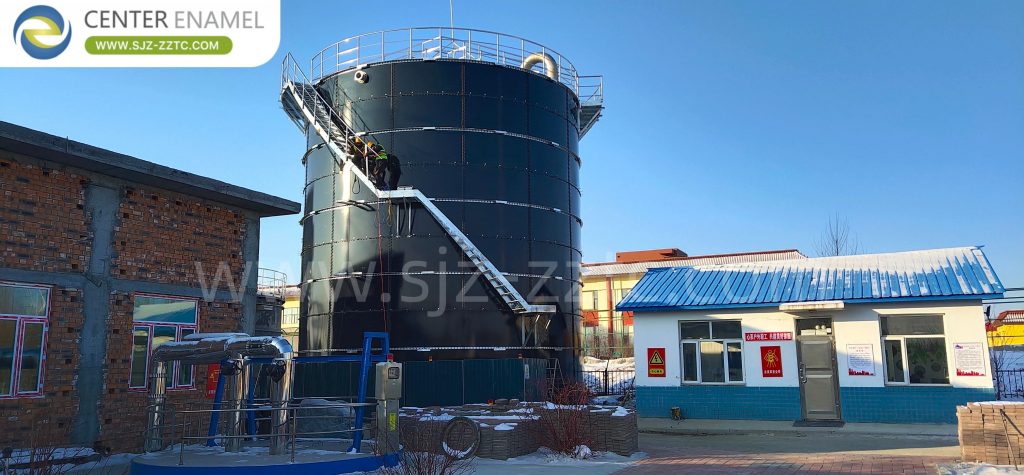
Brunei is a prosperous tropical country with a booming catering industry, luxury hotels, urban residential communities and growing food processing sectors. With stable economic development and rising living standards, large volumes of food waste are generated every day across Bandar Seri Begawan and major towns. Food waste mainly includes restaurant leftovers, hotel catering waste, household food residues and food factory scraps.
Under Brunei’s tropical climate, food waste decomposes rapidly, releasing unpleasant odors, harmful greenhouse gases and causing environmental pollution. Traditional landfill and open stacking methods waste land resources and cannot solve long-term ecological pressure. To promote circular economy, carbon reduction and renewable energy layout, developing Food Waste Biogas Project has become an inevitable trend. As a professional global EPC contractor, Center Enamel provides customized Anaerobic Technologies and complete sets of GFS Tanks solutions for Brunei, helping realize harmless disposal and energy recycling of food waste.
Overview of Food Waste in Brunei
Brunei’s food waste features high moisture, high organic content and easy acidification. A large amount of untreated food waste is piled up randomly, triggering odor pollution, soil deterioration and methane emissions. As a country committed to green energy transformation, Brunei is actively reducing reliance on fossil fuels and encouraging biomass energy development.
However, limited professional waste treatment facilities and backward disposal methods restrict resource utilization. Therefore, adopting mature Anaerobic Technologies to build Food Waste Biogas Project becomes the most effective way to solve waste pollution and supplement clean energy supply.
How Food Waste Generates Biogas
Food waste is rich in carbohydrates, protein and organic matter, which can be efficiently converted into biogas through anaerobic digestion without oxygen. The whole process includes four natural degradation stages:
- Hydrolysis Stage: Complex organic substances in food waste are decomposed into small molecular sugars and amino acids by hydrolytic bacteria.
- Acidification Stage: Small molecules are converted into volatile fatty acids, hydrogen and carbon dioxide.
- Acetogenesis Stage: Fatty acids are further decomposed into acetic acid, the key raw material for methane production.
- Methanogenesis Stage: Methanogenic bacteria produce biogas containing 55%–70% methane and 30%–45% carbon dioxide.
The generated biogas can be used for power generation and heating, while fermentation residues are made into organic fertilizer, forming a complete circular economy model.
Advantages of Food Waste Biogas Project for Brunei Energy Development
Promoting Food Waste Biogas Project brings multiple economic, environmental and social benefits to Brunei’s energy transition.
First, enrich renewable energy structure. Brunei is accelerating the pace of clean energy transformation; food waste biogas provides stable biomass power, reducing dependence on oil and gas resources.
Second, reduce carbon emissions and environmental pollution. Biogas projects capture methane from decaying food waste, effectively lowering greenhouse gas emissions and eliminating odor and soil pollution.
Third, save land and disposal costs. Biogas treatment greatly reduces landfill demand, easing Brunei’s land occupation pressure and cutting daily waste management expenses.
Fourth, support national green policy goals. The project conforms to Brunei’s circular economy and low-carbon development strategy, helping hotels, restaurants and enterprises meet environmental compliance standards.
Four Main Anaerobic Technologies for Food Waste Biogas
Center Enamel matches four mature Anaerobic Technologies for Brunei’s climate, waste characteristics and project scale.
CSTR Process (Completely Stirred Tank Reactor)
CSTR adopts mechanical stirring to mix food waste and microbial flora evenly. It prevents scum and sediment accumulation, suitable for high-solids catering waste and large centralized Food Waste Biogas Project in Brunei urban areas.
UASB Process (Upflow Anaerobic Sludge Blanket)
UASB features high organic removal efficiency and low operating cost. Wastewater flows through the sludge blanket for efficient degradation, ideal for liquid food waste treatment in food processing factories.
USR Process (Upflow Solids Reactor)
USR has simple structure and low energy consumption. It requires no complex stirring system and is easy to maintain, perfect for small and medium decentralized biogas projects in Brunei suburban towns.
IC Process (Internal Circulation)
IC is an advanced high-rate anaerobic technology with 3–5 times higher treatment load than traditional reactors. It occupies small land area, making it the best choice for densely built areas in Bandar Seri Begawan.
Core Equipment for Brunei Food Waste Biogas Project
Center Enamel provides full-set equipment adapted to Brunei’s tropical high temperature, high humidity and coastal salt fog environment.
Glass-Fused-to-Steel (GFS) Tanks
As core equipment, GFS Tanks are fired at over 820°C, with pH resistance of 1–14. They resist acid corrosion, UV aging and coastal salt spray. Bolted installation is fast and flexible, with a service life of more than 30 years, far better than concrete tanks.
Double Membrane Gas Holders
High airtight design safely stores biogas, automatically adjusts internal pressure, ensures stable power generation and gas supply, and avoids leakage and safety risks.
Fusion Bonded Epoxy (FBE) Tanks
Used for regulating tanks and water storage tanks, providing cost-effective anti-corrosion protection for auxiliary facilities of biogas projects.
Multiple Tank Roof Systems
Includes Air Membrane Roof, Enamel Roof, Sun Panel Roof, Aluminum Flat Roof, FRP Roof and Aluminum Dome Roof. Various types adapt to heavy rainfall and coastal climate, ensuring long-term sealing.
Agitation, Feeding and Discharging Systems
Support automatic feeding, stirring and sludge discharge, realizing stable unmanned operation suitable for Brunei local management mode.
Overall Advantages of Center Enamel
Strong R&D and Customization: Owns over 200 patented enamel formulas, tailoring Anaerobic Technologies and GFS Tanks for Brunei’s tropical climate and food waste features.
Leading Manufacturing Base: Asia’s largest GFS tank production base ensures standardized prefabrication and stable delivery.
International Quality Certification: Comply with ISO 28765, AWWA D103, NSF/ANSI 61, CE and OSHA; each tank plate passes 1500V high-voltage spark test.
Industry Standard Authority: Main drafter of China GFS tank industry standards, with global technical influence.
Southeast Asian Project Experience: Familiar with Brunei’s climate, environmental policies and construction norms.
One-Stop EPC Service: Covers design, manufacturing, installation, commissioning and after-sales support.
Center Enamel’s Professional Installation Process
- Hydraulic jacking top-down installation: No large cranes or high-altitude scaffolding, suitable for narrow urban sites in Brunei.
- Zero on-site welding: All components are factory prefabricated and bolt-assembled, avoiding humidity and dust welding defects.
- Rapid commissioning: Short construction period, fast put into operation and quick investment return.
- Dedicated after-sales team: Regular maintenance and technical guidance for Southeast Asian projects.
Two Successful Project Cases
Turkey Food Waste Treatment Project
Process: CSTR
Tank Dimensions: φ16.81 × 16.8 m (H) — 2 Units
Total Volume: 7,452 m³
Completion Date: 2020
Malaysia Biogas Project
Tank Dimensions: φ22.93 × 12.325 m (H) — 1 Unit
Total Volume: 5,087 m³
Completion Date: 2025
Food waste pollution and energy transformation are key development issues for Brunei. Building Food Waste Biogas Project with mature Anaerobic Technologies and high-performance GFS Tanks can perfectly realize waste harmless disposal and clean energy recycling. As a professional EPC contractor, Center Enamel integrates technology, equipment and rich Southeast Asian experience to provide one-stop customized solutions. It helps Brunei reduce carbon emissions, optimize energy structure and achieve long-term green and sustainable development.