
Can CO2 From Biogas Be Sold?
Yes—CO₂ from biogas can be sold, but only where three things line up: the CO₂ reaches the required purity (food grade for beverages and dry ice), the plant produces a steady volume, and buyers are close enough that transport does not erase the margin. For many small or remote plants, the economics favor on-site use or venting instead.
Who Buys Biogenic CO₂
The buyers are beverage bottlers and breweries (carbonation), dry-ice manufacturers, greenhouse operators (enrichment), water-treatment chemical suppliers, and increasingly Power-to-X projects. Beverage and dry-ice buyers pay the most but demand food-grade certification and consistent quality; industrial buyers accept lower grades at lower prices.
What Decides Whether It Pays
Three factors dominate. Purity and certification set the ceiling on price and eligible buyers. Volume must be steady enough to warrant a buyer's logistics. Distance to buyer is decisive because CO₂ is usually liquefied and trucked, so transport cost rises fast with distance—a plant next to a bottler can sell what a remote plant must vent.
Comparative Data Table: Sell vs Use vs Vent
| Option | When it works | Economics |
| Sell food grade | certified + near beverage/dry-ice buyer | highest revenue |
| Sell industrial | near greenhouse / water-treat buyer | modest revenue |
| Use on-site | greenhouse adjacent to plant | avoids cost, no sale |
| Vent | no buyer, no use, small volume | zero, lost asset |
Technical Considerations
Selling CO₂ needs more than a gas stream: liquefaction or compression, storage, cylinder or bulk logistics, and a certified quality system with batch records. A realistic offtake contract—volume, purity, price, and take-or-pay terms—should be secured before building the polishing and liquefaction train, not after.
Advantages and Limitations
A CO₂ offtake turns a waste stream into a second, often premium, revenue line and strengthens the sustainability story. The limits are real: capital for purification and logistics, price volatility, and the hard geography of moving a bulky gas. It is a strategic option, not a default.
Best Practices / How to Evaluate
Map buyers within a sensible haul radius first; confirm the purity and certification they require; model liquefaction plus transport cost against the achievable price. Secure a letter of intent or contract before committing capital. If no buyer exists, design for on-site greenhouse use or plan to vent without over-investing.
CO₂ from biogas can absolutely be sold—premium prices await plants that are certified, steady, and close to buyers. For everyone else, on-site use or venting is the honest answer. The deciding variables are purity, volume, and, above all, distance.
Frequently Asked Questions (FAQ)
Q1: Can CO2 from biogas be sold?
A: Yes, where the CO₂ reaches the needed purity, the plant has steady volume, and buyers are close enough that transport cost does not erase the margin.
Q2: Who buys it?
A: Beverage bottlers and breweries (carbonation), dry-ice makers, greenhouse operators, water-treatment suppliers, and Power-to-X projects—food-grade buyers pay most.
Q3: What decides if it pays?
A: Purity/certification (price ceiling), steady volume (buyer logistics), and distance to buyer (transport cost). All three must align.
Q4: Is transport a problem?
A: Often yes. CO₂ is liquefied and trucked, so haul cost rises with distance; a plant beside a bottler can sell what a remote plant must vent.
Q5: Do I need a contract first?
A: Strongly recommended. Secure an offtake (volume, purity, price, take-or-pay) before building purification and liquefaction, since that capital is sunk either way.
Q6: What if there is no buyer?
A: Use the CO₂ on-site (greenhouse enrichment is the common loop) or design to vent without over-investing in polishing you cannot use.
Project Case Reference
Zhenyuan Group Biogas Project in Henan — Xinzheng, Henan, China · 2013
650 T/D · CSTR Process · 3M m³ Vehicle-grade CH₄/Year
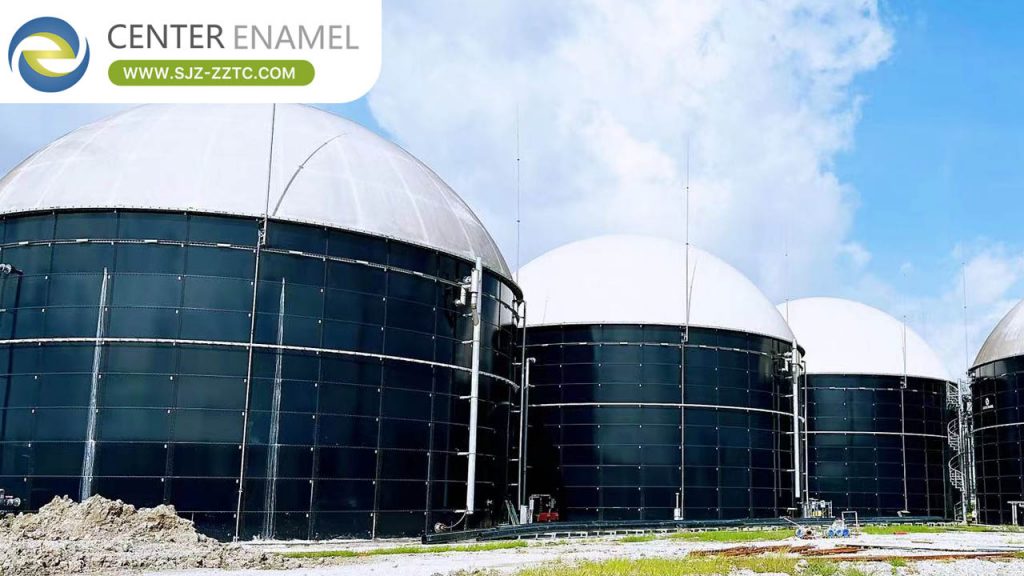
A vehicle-grade methane production project for Zhenyuan Group in Henan Province. Using medium-temperature anaerobic fermentation with CSTR technology, the plant treats 650 T/D of farm animal manure and washing wastewater, producing 3 million cubic meters of methane annually for vehicle fuel. The system includes 3 primary and 1 secondary anaerobic reactors for two-stage digestion.
Technical Specifications
Handling Capacity: 650 T/D (manure + washing wastewater)
Treatment Type: Medium Temp. Anaerobic Fermentation
Reactor Type: CSTR (Continuous Stirred-Tank Reactor)
Primary Reactors: 3 sets, Φ15.29 × 15 m
Secondary Reactor: 1 set, Φ5.22 × 6 m
Annual Methane Production: 3,000,000 m³ (vehicle-grade)