
Can Cow Dung to Biogas Be Reversed? Full Analysis of Biogas Conversion & Reversibility
With the rapid popularization of cow dung biogas projects worldwide, many farmers, investors, engineers and researchers have raised a critical scientific question: Can cow dung to biogas be reversed? This question involves the basic principles of anaerobic digestion, material and energy conversion laws, engineering practice, and sustainable utilization of resources.
In this article, we will give a clear scientific answer, explain the whole process of cow dung converting to biogas, analyze why the reaction cannot be reversed under natural and engineering conditions, introduce the rational utilization of fermentation residues, and finally explain four advanced anaerobic processes, the application advantages of GFS Tanks, and the rich global EPC experience of Center Enamel in cow dung biogas projects.
Clear Scientific Answer: Can Cow Dung to Biogas Be Reversed?
The short answer: No, cow dung to biogas cannot be reversed under normal temperature, pressure and engineering conditions.
The conversion from cow dung to biogas is a complex biochemical reaction driven by anaerobic microorganisms, in which organic macromolecules are decomposed into smallmolecule gases (methane and carbon dioxide). This process is irreversible in terms of thermodynamics, microbiology and engineering practice.
Once cow dung is decomposed into biogas, it is impossible to recombine methane, carbon dioxide and water back into the original organic matter, fiber, protein and carbohydrate structure of cow dung through natural or conventional technical means.
In short:
- Cow dung → biogas + digestate: possible and efficient
- Biogas → cow dung: impossible
Why Can’t Cow Dung to Biogas Be Reversed? 4 Core Reasons
1. Thermodynamic Irreversibility
The anaerobic digestion of cow dung is a process of energy release and entropy increase. Organic matter with high potential energy is broken down into lowenergy gases. The reverse reaction requires huge external energy input and cannot be completed spontaneously.
2. Microbial Reaction Mechanism Is Unidirectional
Microorganisms only perform decomposition of organic matter, not synthesis of original cow dung components. No known microbes can rebuild solid dung from biogas.
3. Structural Damage of Organic Matter
Cow dung contains cellulose, lignin, protein and colloid structures. After hydrolysis, acidification, acetogenesis and methanation, these macromolecules are completely destroyed and cannot be restored.
4. Mass Loss and Component Separation
During fermentation, part of carbon escapes as biogas, while nutrients remain in digestate. The material balance is changed, making reverse recombination physically impossible.
What Is the Product After Cow Dung Is Converted to Biogas?
Although the reaction cannot be reversed, the cow dung biogas project produces two highly valuable resources instead of waste:
1. Biogas
Main components: 55%–70% methane, 30%–45% carbon dioxide. Uses: power generation, cooking, heating, boiler fuel, biomethane, vehicle fuel.
2. Digestate
Solid–liquid mixture after fermentation, rich in nitrogen, phosphorus, potassium, organic matter and probiotics.
Uses: highgrade organic fertilizer, soil conditioner, feed additive, farmland returning.
This forms a circular economy system: Cow dung → biogas (energy) + digestate (fertilizer) → crop growth → more cow dung.
Is There Any “Similar Reverse” Technology in Biogas Projects?
Although true reversal is impossible, some related technologies are often misunderstood as “reverse”:
1. Biogas Upgrading to Biomethane
Purify biogas to remove CO₂ and get highpurity methane. This is purification, not reversal.
2. Digestate Composting
Dry and ferment digestate to make organic fertilizer. This is reprocessing, not reversal.
3. CO₂ Capture and Utilization
Collect carbon dioxide from biogas for industrial use. This is gas reuse, not rebuilding cow dung.
None of these can turn biogas back into raw cow dung.
Key Benefits of Cow Dung Biogas Projects (Since Reversal Is Unnecessary)
Since the reaction cannot be reversed, the value of cow dung biogas projects lies in highefficiency forward conversion:
- Solve breeding pollution and odor problems
- Produce clean renewable energy
- Reduce greenhouse gas emissions
- Produce organic fertilizer to replace chemical fertilizers
- Increase economic income for farms
- Promote green and sustainable development of animal husbandry
Four Advanced Anaerobic Processes for Cow Dung Biogas Projects
To achieve stable, highefficiency conversion of cow dung to biogas, Center Enamel provides four mature anaerobic technologies suitable for different project scales:
1. CSTR (Continuous StirredTank Reactor)
With mechanical stirring, suitable for highsolid cow dung. Strong antishock load, stable gas production, ideal for largescale farms.
2. UASB (Upflow Anaerobic Sludge Blanket)
Relies on highactivity granular sludge, high organic load, small footprint. Suitable for lowconcentration cow dung slurry and wastewater.
3. USR (Upflow Solid Reactor)
Simple structure, strong anticlogging ability, low investment. Best for smallmedium rural biogas projects.
4. IC (Internal Circulation)
Highefficiency internal circulation reactor, 3–5 times treatment efficiency of traditional systems. For largescale centralized cow dung treatment.
Core Equipment: Advantages of GFS Tanks in Cow Dung Biogas Projects
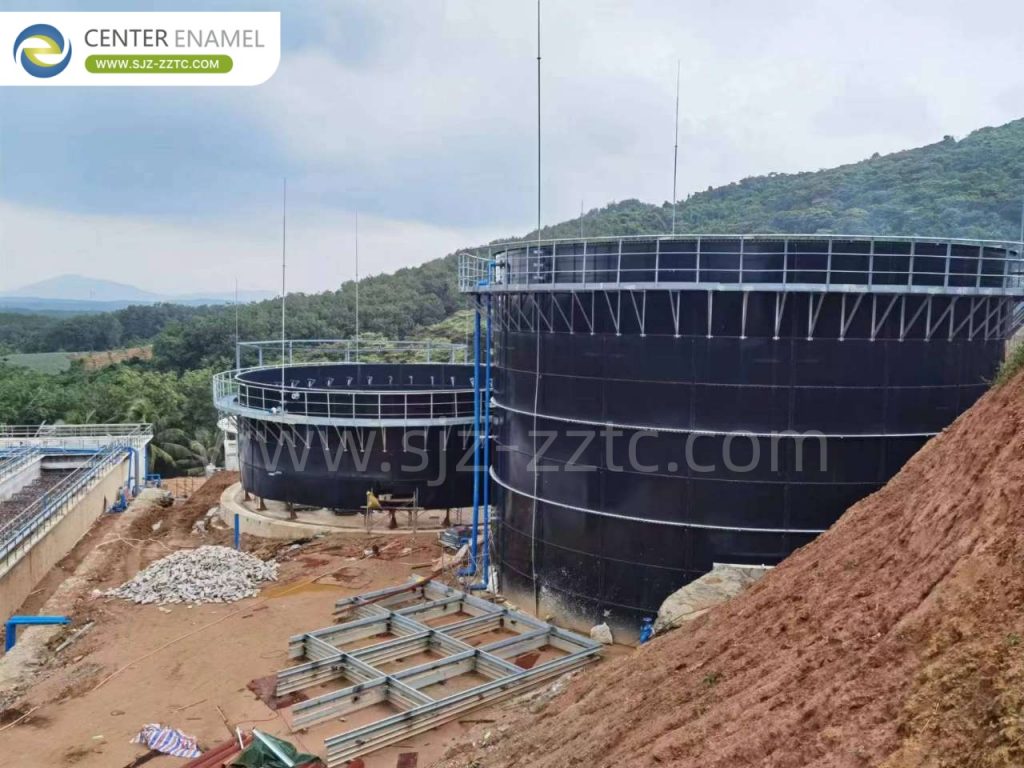
GFS Tanks (Glass-Fused-to-Steel Tanks) are the most critical equipment for ensuring stable anaerobic digestion, and they match all four processes perfectly:
1. Super Corrosion Resistance
Enamel layer resists acid, alkali, hydrogen sulfide and organic corrosion, adapting to harsh cow dung fermentation environment.
2. Excellent Airtightness
Special sealing structure prevents biogas leakage and ensures safe operation.
3. Modular Bolted Installation
Factory prefabricated, onsite assembly, no welding, short construction period, suitable for remote farms.
4. Long Service Life
Service life exceeds 30 years, smooth surface not easy to scale, low maintenance cost.
5. Flexible Expansion
Tank capacity can be expanded as farm scale and biogas demand increase.
6. Wide Applicability
Suitable for anaerobic digestion, storage, mixing and other systems.
Center Enamel: Trusted Global EPC Contractor for Cow Dung Biogas Projects
Center Enamel is a leading international EPC service provider for biogas projects, with rich experience in cow dung wastetoenergy projects worldwide.
1. Strong R&D and Manufacturing Capacity
200+ patented enamel technologies, products meet ISO, AWWA and other international standards.
2. Full Turnkey EPC Services
Onestop solution: design, production, transportation, installation, commissioning, training, aftersales.
3. Customized Process Design
Tailor CSTR / UASB / USR / IC systems according to farm scale, climate and site conditions.
4. Rich Global Project Experience
Successful projects in Asia, Africa, Europe, North America, South America and Oceania.
5. High Efficiency and CostEffectiveness
Optimize system to improve biogas yield, reduce operation cost and ensure stable longterm operation.
6. Professional Installation Team
Hydraulic jacking installation, strict safety and airtightness acceptance.
To the question Can cow dung to biogas be reversed?, the clear scientific conclusion is: No, it cannot be reversed under natural or engineering conditions.
Anaerobic digestion of cow dung is a oneway, energyreleasing biochemical process that converts organic waste into clean energy and organic fertilizer. This irreversibility is not a defect, but the core value of biogas projects—turning pollutants into renewable resources.
With advanced anaerobic processes (CSTR, UASB, USR, IC) and highperformance GFS Tanks, cow dung biogas projects achieve high efficiency, stability and economy. As a professional EPC contractor, Center Enamel helps global farms realize wastetoenergy, environmental protection and income increase, and promotes the development of global circular agriculture and lowcarbon energy.