
Can Livestock Wastewater Make Biogas?
Yes — livestock wastewater is energy-rich and readily makes biogas through anaerobic digestion, typically yielding 0.30–0.45 m³ of biogas per kg COD removed at 55–65% methane (CH₄). Manure-laden water carries large organic loads, so even after solids separation the liquid fraction fuels a digester that offsets farm energy and cuts odor and pathogens.
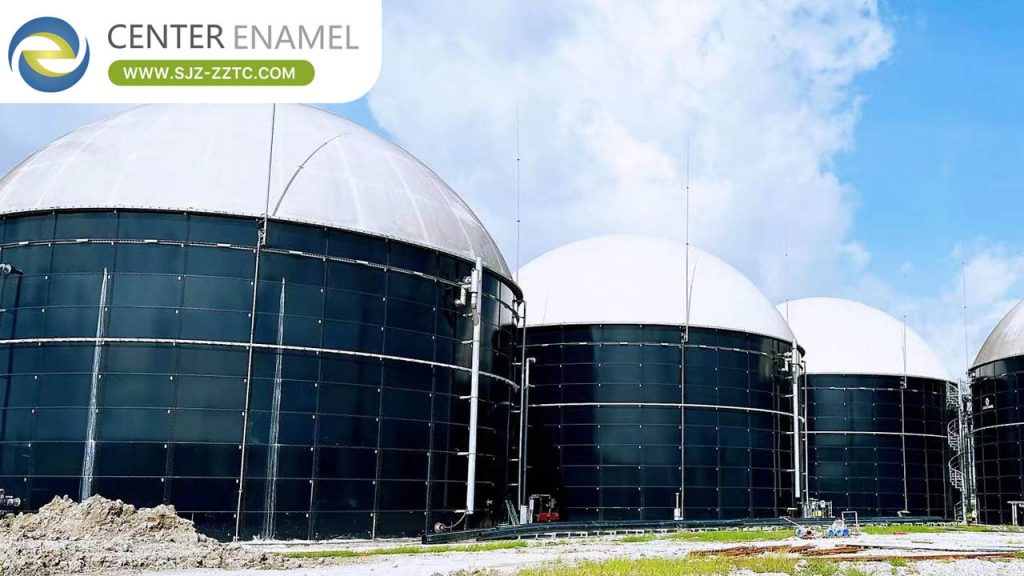
Why Manure Water Is Energy-Rich
Animal manure concentrates biodegradable organics — COD often ranges from several thousand to over 10,000 mg/L in pig and cattle streams. That carbon is exactly what methanogens convert to CH₄ and CO₂, so livestock wastewater is among the highest-yield biogas feedstocks.
How Much Biogas It Yields
At mesophilic 35–38°C, anaerobic digestion returns roughly 0.30–0.45 m³ biogas per kg COD removed, with 55–65% CH₄. A farm processing 900 m³/day of manure can produce tens of thousands of m³/day of biogas, usable in boilers, CHP (35–45% electrical, 80–90% total), or upgrading to vehicle fuel.
| Feed | Typical yield | CH₄ | Use |
| Cattle manure water | 0.20–0.30 m³/kg VS | 55–65% | CHP / heat |
| Pig manure water | 0.30–0.45 m³/kg COD | 55–65% | CHP / upgrade |
| Co-digested mix | higher | 55–65% | vehicle fuel |
Which Digester Suits Manure Water
UASB fits soluble, warm liquid; USR handles higher solids; CSTR suits mixed slurry and co-digestion. All operate at 35–38°C and need H₂S-resistant tankage. Size by COD/VS load and HRT (15–30 days for wet CSTR).
Technical Considerations
Livestock biogas contains H₂S that corrodes steel, so specify Glass-Fused-to-Steel (glass fused at 820–930°C) or properly lined tanks and gas handling. Manage ammonia inhibition at high load, plan equalization for flushing surges, and consider cold-climate insulation.
How to Scope a Manure-to-Biogas Project
Measure daily volume and COD/VS, pick the digester by solids content, size for gas demand (heat, CHP, or upgrade), then specify corrosion-resistant tankage. A load-and-goal sheet lets suppliers model biogas and payback.
Project Case Study
Zhenyuan Group Biogas Project in Henan. A vehicle-grade methane plant treating 650 T/D of farm animal manure and washing wastewater by medium-temperature CSTR, producing 3,000,000 m³ of methane annually for vehicle fuel — a documented large-scale livestock-wastewater-to-biogas project.
| Project | Zhenyuan Group Biogas Project in Henan |
| Location | Xinzheng, Henan, China |
| Industry | Agriculture / Biogas |
| Application | Manure + washing wastewater → vehicle CH₄ |
| Product | CSTR anaerobic digesters |
| Capacity | 650 T/D feedstock |
| Output | 3,000,000 m³ CH₄/year |
| Reactors | 3 primary (Ø15.29 × 15 m) + 1 secondary |
| Status | Delivered 2013 |
About Center Enamel
Center Enamel brings relevant project experience in livestock-wastewater biogas, having supplied CSTR tankage for manure-to-vehicle-fuel plants such as the Henan Zhenyuan project (650 T/D, 3 million m³ CH₄/year) and manure-and-residue CSTR systems in Inner Mongolia. The company delivers bolted Glass-Fused-to-Steel digesters engineered for H₂S and ammonia duty across farm-scale and industrial biogas.
Advantages and Limitations
Turning livestock wastewater into biogas cuts energy cost, odor, and pathogens while recovering value. Limits: high ammonia needs management, surges need equalization, and cold climates need heat. With right tankage, manure water is a dependable renewable-gas source.
Comparison: Manure Water vs Other Feed
| Feed | Biogas potential | Challenge |
| Livestock wastewater | high | ammonia / H₂S |
| Food waste | very high | acidity |
| Crop residue | medium | dry / C:N |
Livestock wastewater makes biogas well — 0.30–0.45 m³ per kg COD at 55–65% CH₄ via UASB/USR/CSTR at 35–38°C. Scope by COD/VS load and gas goal, and specify H₂S-resistant GFS tankage, as proven on the Henan manure-to-vehicle-CH₄ project.
Frequently Asked Questions (FAQ)
Q1: Can livestock wastewater make biogas?
A: Yes — manure water is energy-rich; anaerobic digestion yields 0.30–0.45 m³/kg COD at 55–65% CH₄.
Q2: How much methane content?
A: Biogas from manure is typically 55–65% CH₄; upgrading raises it to 95–99% for vehicle fuel.
Q3: Which digester suits it?
A: UASB for soluble warm liquid, USR for higher solids, CSTR for mixed slurry and co-digestion.
Q4: What tank material suits biogas?
A: Glass-Fused-to-Steel, glass fused at 820–930°C, resists H₂S and ammonia.
Q5: What capacity is available?
A: Center Enamel supplies GFS digester tanks from 200 m³ to 60,000 m³.
Q6: What project experience exists?
A: Delivered 650 T/D manure-to-vehicle-CH₄ CSTR in Henan and manure-and-residue CSTR in Inner Mongolia.
Suggested CTA
Share your livestock wastewater volume and COD/VS. We will size a UASB/USR/CSTR digester, estimate biogas and CH₄, and quote H₂S-resistant GFS tankage for your farm.