
Can Municipal Waste Be Used to Produce Biogas? A Complete Guide to Waste-to-Energy
The world generates an estimated 2.01 billion tons of municipal solid waste (MSW) annually, with organic materials comprising approximately 57% of this total . With global waste generation projected to reach 3.4 billion tons by 2050, the need for sustainable waste management solutions has never been more urgent . One promising answer lies in converting this waste into renewable energy. So, can municipal waste be used to produce biogas? The answer is a resounding yes. Through a natural biological process called anaerobic digestion, the organic fraction of municipal solid waste (OFMSW) can be transformed into biogas-a renewable fuel primarily composed of methane (CH₄) and carbon dioxide (CO₂). This guide explores the science, technologies, benefits, and challenges of this innovative waste-to-energy pathway.
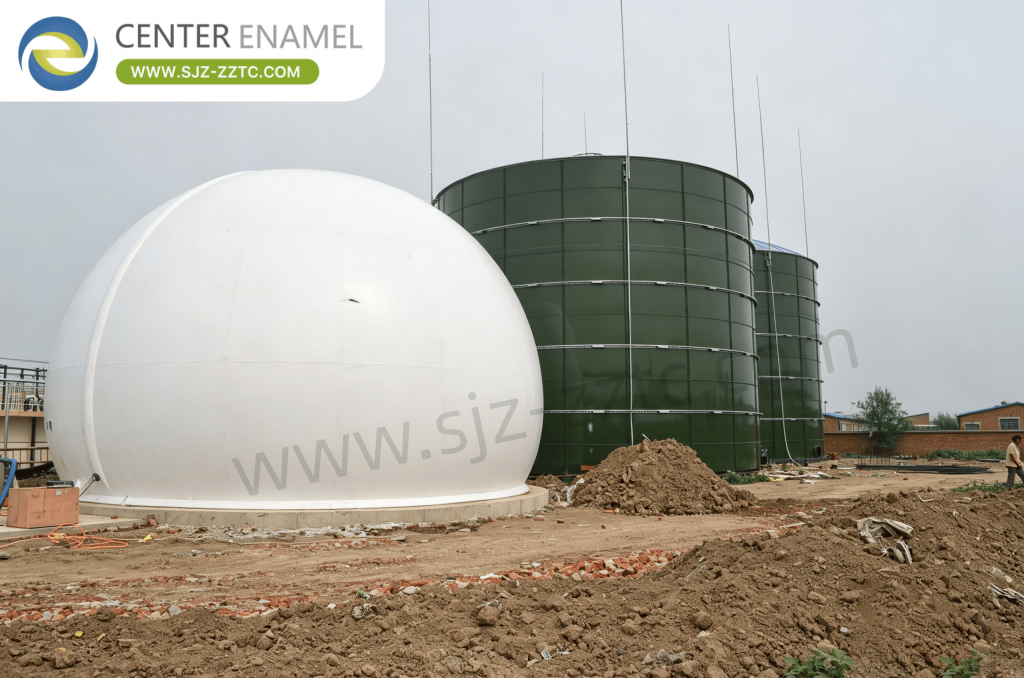
What Is Biogas and How Is It Produced from Municipal Waste?
Biogas is a gaseous renewable fuel produced through the breakdown of organic matter in the absence of oxygen, a process known as anaerobic digestion (AD). During this process, microorganisms decompose biodegradable materials-such as food scraps, yard waste, paper, and cardboard-releasing a mixture of gases. The resulting biogas typically contains 50-70% methane, along with carbon dioxide and trace amounts of other gases like hydrogen sulfide .
The anaerobic digestion process occurs in four key stages:
Hydrolysis: Complex organic polymers are broken down into simpler sugars, amino acids, and fatty acids.
Acidogenesis: These simpler compounds are further converted into volatile fatty acids, alcohols, and ammonia.
Acetogenesis: The products from acidogenesis are transformed into acetic acid, hydrogen, and carbon dioxide.
Methanogenesis: Methanogenic archaea convert these substrates into methane and carbon dioxide-the primary components of biogas .
The Organic Fraction of Municipal Solid Waste (OFMSW)
Not all municipal waste is suitable for biogas production. The ideal feedstock is the organic fraction of municipal solid waste (OFMSW), which includes:
Food waste (kitchen scraps, restaurant waste)
Yard and garden waste (grass clippings, leaves)
Paper and cardboard
Vegetable and fruit market waste
Research has demonstrated that optimizing the composition of OFMSW-particularly by balancing food waste with garden residues-substantially enhances biogas production by improving substrate biodegradability and maintaining critical parameters like the carbon-to-nitrogen (C/N) ratio and moisture content . In fact, one study found that OFMSW typically makes up about 45% of global waste, representing a vast untapped energy resource .
Key Technologies for Converting MSW to Biogas
Several technologies exist for converting municipal waste into biogas, each suited to different scales and applications:
Dry Anaerobic Digestion
Dry AD systems are designed to process feedstocks with high total solids content (over 15%). These systems are particularly popular for treating mechanically sorted OFMSW because they can handle high levels of impurities without requiring extensive pre-treatment. Continuous dry AD systems offer advantages including lower investment costs, less sophisticated pre-treatment requirements, and higher biogas yields compared to batch systems . As of 2023, Turkey had installed 24 AD facilities treating OFMSW, with 21 of these being dry AD plants-19 of which use continuous processes .
Wet Anaerobic Digestion
Wet AD systems process feedstocks with lower solids content (typically under 15%) and are often used for source-separated organic waste. While they generally require more sophisticated pre-treatment to remove contaminants, they can achieve efficient biogas production from relatively clean organic streams .
Hybrid and Integrated Approaches
Emerging technologies are combining anaerobic digestion with other processes to maximize resource recovery. One innovative strategy integrates AD with pyrolysis: the organic fraction is first digested to produce biogas, and the remaining digestate is then co-pyrolyzed with plastic waste. This approach converts both organic and plastic waste into diverse products (biogas, pyrolysis oil, and char) while producing higher-quality outputs than either technology alone .
Bioreactor Landfills
Bioreactor landfills represent another approach to enhancing biogas production from landfilled waste. These systems optimize in situ conditions through leachate recirculation, partial aeration, and water addition to accelerate biodegradation and improve biogas yields. Studies have shown that hybrid bioreactors combining aeration with leachate recirculation can significantly enhance waste degradation and biogas generation .
Biogas Yield and Quality from Municipal Waste
The quantity and quality of biogas produced from municipal waste depend on several factors, including feedstock composition, pre-treatment methods, and operating conditions.
Methane Content
Research indicates that biogas produced from municipal waste typically contains 66-70% methane, making it a valuable fuel source. A study of raw MSW in a bioreactor system achieved a methane content of approximately 70%, while treated waste produced biogas with about 66% methane .
Production Timeframes
The timeline for biogas production varies significantly based on waste characteristics and pre-treatment. Raw, high-organic waste may require an initial acid phase lasting several weeks before methanogenesis begins, while pre-treated waste can start producing biogas within days. One study found that raw waste reached peak production after about 28 days, whereas treated waste initiated methanogenesis within a week .
Enhancement Strategies
Pre-treatment of municipal waste can substantially improve biogas production. Fermentation and leaching processes have been shown to increase solubilization from 12.7% to 22%, resulting in methane production 1.6 times greater than from untreated material. Total energy recovery can increase from 1103.6 kJ/kg to 2482.6 kJ/kg OFMSW through these methods .
Challenges in Municipal Waste-to-Biogas Conversion
Despite its potential, converting municipal waste to biogas faces several challenges:
Contamination and Pre-treatment
Municipal solid waste is a complex mixture containing contaminants such as plastics, metals, glass, and textiles. These materials can interfere with the anaerobic digestion process, causing equipment damage, reducing biogas yields, and creating quality issues in the final product. Effective separation of organic materials from contaminants remains a significant operational challenge .
Process Inhibition
High concentrations of volatile fatty acids (VFAs), ammonia, and heavy metals can inhibit methanogenic microorganisms, slowing or stopping biogas production. Maintaining optimal pH (typically 6.5-8.0) is critical for methanogenesis. Raw MSW often exhibits initially acidic conditions (pH as low as 5.56) that must be carefully managed .
Economic Viability
The capital costs of anaerobic digestion facilities can be substantial, and economic feasibility depends on factors including gate fees, energy prices, and government incentives. In Turkey, feed-in tariffs of 13.3 cents per kWh provided crucial support for AD plant development, though recent reductions to 8.0-9.0 cents per kWh have affected new project economics .
Biogas Upgrading and Storage
Raw biogas requires upgrading to remove carbon dioxide and hydrogen sulfide before it can be used as a high-quality fuel. Simple, off-grid upgrading technologies using materials like steel wool and calcium hydroxide have been developed, but these add to the overall system cost and complexity .
Environmental and Economic Benefits From Waste to Biogas
Converting municipal waste to biogas offers multiple benefits:
Climate Change Mitigation
By capturing methane that would otherwise be released from landfills, AD systems significantly reduce greenhouse gas emissions. Biogas also serves as a renewable alternative to fossil fuels, contributing to carbon neutrality goals .
Waste Diversion
AD provides an alternative to landfilling and incineration, helping to meet waste diversion targets. For example, Turkish regulations mandate that only 40% of MSW weight can be sent to landfills by 2035, driving adoption of pre-treatment technologies like AD .
Renewable Energy Generation
Biogas can be used for electricity generation, heating, or upgraded to biomethane for injection into natural gas networks or use as vehicle fuel. With approximately 9,600 biogas plants in Germany alone, the technology represents a significant renewable energy source .
Circular Economy Benefits
AD produces digestate, a nutrient-rich residue that can be used as a soil amendment, supporting sustainable agriculture and closing nutrient loops .
Global Implementation and Case Studies
Municipal waste-to-biogas projects are being implemented worldwide:
Germany: With 9,600 biogas plants supplying 11% of renewable electricity generation (50 TWh in 2021), Germany demonstrates the scalability of biogas technology .
Turkey: The country has rapidly expanded its AD infrastructure, installing 24 facilities between 2011 and 2023, driven by landfill regulations and renewable energy incentives .
Tanzania: Pilot-scale floating drum digesters constructed with locally available materials in Kimbiji ward demonstrate the potential for community-level waste-to-energy systems in developing regions .
United States: Research at the Technical University of Mombasa (Kenya) and in the US Midwest is advancing integrated AD-pyrolysis strategies for converting contaminated MSW into multiple valuable products .
Conclusion
Municipal waste can indeed be used to produce biogas through anaerobic digestion. The organic fraction of municipal solid waste-consisting of food waste, yard waste, paper, and other biodegradable materials-is an ideal feedstock for producing renewable biogas that can be used for electricity, heating, or as a vehicle fuel. While challenges remain in contamination management, process optimization, and economic viability, the environmental and energy benefits make MSW-to-biogas a promising component of sustainable waste management strategies. As technologies continue to advance and policy support grows, municipal waste-to-biogas conversion will play an increasingly important role in the circular economy and the transition to renewable energy.
FAQ
1. What types of municipal waste can be used to produce biogas?
Municipal waste suitable for biogas production includes the organic fraction of municipal solid waste (OFMSW): food waste, kitchen scraps, yard and garden waste, vegetable and fruit market waste, and paper/cardboard. These materials are biodegradable and can be broken down by microorganisms during anaerobic digestion. Contaminants such as plastics, metals, glass, and electronics must be removed before processing, as they can interfere with the digestion process and reduce biogas quality. Studies have shown that optimizing the composition of OFMSW, particularly balancing food waste with garden residues, can substantially enhance biogas yields .
2. How long does it take to produce biogas from municipal waste?
The time required for biogas production varies significantly based on waste characteristics and pre-treatment. Raw municipal solid waste with high organic content may take approximately 5 weeks for acid production to subside and methanogenesis to begin, with cumulative biogas production stabilizing around 260 days. Pre-treated or composted waste can start producing biogas within a week, with stabilization achieved after about 145 days . Factors affecting production time include waste composition, moisture content, temperature, pH levels, and the type of digester system used. Advanced bioreactor technologies with leachate recirculation and aeration can accelerate the process .
3. What are the main barriers to using municipal waste for biogas?
The primary barriers to municipal waste-to-biogas conversion include: (1) Contamination-MSW contains non-organic materials (plastics, metals, glass) that must be separated before digestion; (2) Process inhibition-high levels of volatile fatty acids, ammonia, and heavy metals can inhibit methane-producing microorganisms; (3) Economic viability-high capital costs and uncertain returns on investment, requiring supportive policies such as feed-in tariffs; (4) Biogas upgrading-raw biogas contains CO₂ and H₂S that must be removed for high-quality fuel applications; and (5) Scale challenges-laboratory success does not always translate to full-scale operations due to the physical and chemical complexity of real-world waste streams .