
Can Pig Waste Make Biogas?
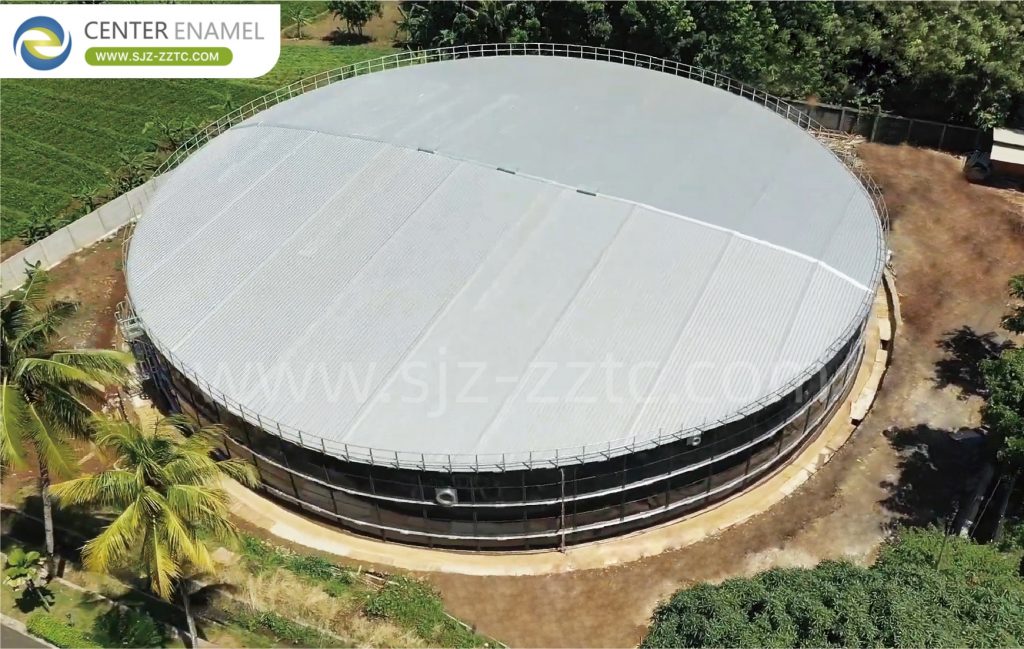
Yes, pig waste absolutely can make biogas — and it is one of the most efficient, widely used organic materials for biogas production worldwide. Pig manure and pig farm wastewater are rich in organic matter, nitrogen, phosphorus, and easily biodegradable components, making them perfect feedstock for anaerobic digestion. Converting pig waste into biogas not only produces clean, affordable energy but also solves serious environmental pollution caused by untreated livestock waste. For large-scale pig farms, rural breeding areas, and integrated agricultural projects, pig waste biogas projects have become a key part of sustainable development, circular economy, and environmental compliance.
In this article, we fully answer the question “Can pig waste make biogas?”, explain the composition and characteristics of pig waste, introduce four core anaerobic technologies for biogas production, highlight the advantages of GFS Tanks, and show why Center Enamel is the most reliable partner for pig waste biogas projects.
Composition and Characteristics of Pig Waste
Pig waste mainly includes pig manure, urine, flushing wastewater, feed residues, and litter. It has unique features that make it highly suitable for biogas generation:
1. High organic content
Pig waste is rich in organic matter, protein, cellulose, and carbohydrates, which can be rapidly decomposed by anaerobic microbes.
2. High COD and BOD concentration
The concentration of COD and BOD in pig farm wastewater is extremely high, providing sufficient energy for biogas production.
3. Abundant nutrients
It contains nitrogen, phosphorus, potassium, and trace elements, which support microbial activity and become high-quality organic fertilizer after digestion.
4. High moisture content
Pig waste is usually mixed with flushing water, forming fluid slurry that is easy to pump, mix, and treat in closed reactors.
5. Potential environmental risks
Without proper treatment, pig waste causes odor, groundwater pollution, eutrophication, and pathogen spread. Biogas technology eliminates these risks completely.
Thanks to these characteristics, pig waste is not a burden but a valuable biomass resource for renewable energy production.
How Pig Waste Is Converted Into Biogas
When you ask “Can pig waste make biogas?”, you also want to know how it works.
Pig waste is processed in a sealed, oxygen-free anaerobic reactor. Microbes break down organic materials into biogas in four stable biological stages:
Hydrolysis: Complex organic matter is broken down into small molecules like sugars, amino acids, and fatty acids.
Acidification: Acid-forming bacteria convert small molecules into volatile fatty acids, hydrogen, and carbon dioxide.
Acetogenesis: Intermediates are further transformed into acetic acid, the main precursor of methane.
Methanogenesis: Methanogenic bacteria produce biogas consisting of 55%–70% methane and 30%–45% carbon dioxide.
The produced biogas can be used for:
- Farm electricity generation
- Boiler heating
- Daily cooking and heating
- Combined heat and power (CHP) systems
The digested residue becomes odor-free organic fertilizer for crops, pastures, and orchards, forming a closed circular economy system.
Four Core Anaerobic Technologies for Pig Waste Biogas Projects
To turn pig waste into biogas efficiently, professional anaerobic technologies are required. Center Enamel provides four mature, widely used systems suitable for different farm scales:
1. CSTR Process (Completely Stirred Tank Reactor)
The best choice for high-solid pig waste. Full mechanical stirring ensures uniform mixing, prevents crusting and sediment, stabilizes fermentation, and achieves high biogas yield. Ideal for large-scale commercial pig farms.
2. UASB Process (Upflow Anaerobic Sludge Blanket)
Suitable for low-solid pig wastewater after pretreatment. High treatment efficiency, low energy consumption, small footprint, and stable performance. Perfect for medium-scale farms.
3. USR Process (Upflow Solids Reactor)
Simple structure, low investment, easy operation and maintenance. Suitable for small-to-medium pig farms and decentralized rural breeding projects.
4. IC Process (Internal Circulation)
High-rate reactor with biogas-driven internal circulation. Organic loading is 3–5 times higher than traditional systems. Very compact, ideal for industrial livestock parks with limited land.
These four technologies make pig waste biogas production stable, efficient, and adaptable to any breeding scale.
Advantages of GFS Tanks in Pig Waste Biogas Projects
Glass-Fused-to-Steel (GFS) Tanks are the most widely used reactor and storage equipment in modern pig waste biogas projects, with outstanding benefits:
1. Strong corrosion resistance
GFS Tanks provide a pH 1–14 inert protective layer, resisting acid, alkali, hydrogen sulfide, and organic corrosion from pig waste.
2. Anti-biofouling and smooth surface
The glossy glass surface prevents sludge adhesion and crusting, reducing cleaning and maintenance costs.
3. Long service life
Designed for more than 30 years of service, much longer than concrete, plastic, or ordinary steel tanks.
4. Fast, bolted installation
Factory-prefabricated panels are assembled on site with bolts. No welding, no long curing time, short construction period.
5. Good gas tightness
Excellent sealing ensures safe biogas storage and high energy recovery efficiency.
6. Wide capacity range
From small farm tanks to large industrial reactors, GFS Tanks support full scalability.
Overall Advantages of Center Enamel in Pig Waste Biogas & Wastewater Projects
Center Enamel is a leading global EPC Contractor for livestock waste biogas and wastewater treatment projects. When you choose us for your pig waste biogas system, you benefit from:
1. Mature and customized solutions
We design processes based on your farm size, waste volume, climate, and energy needs, ensuring maximum biogas yield and compliance.
2. Patented GFS Tank technology
We own 200+ enamel patents and operate Asia’s largest GFS tank production base, guaranteeing top quality.
3. International certifications
Products meet ISO 28765, AWWA D103, NSF/ANSI 61, CE, and OSHA standards. Every tank passes a 1500V spark test.
4. Full-cycle turnkey EPC service
We provide one-stop service: design → manufacturing → installation → commissioning → training → after-sales support.
5. Advanced installation technology
Hydraulic jacking installation without scaffolding or large cranes, suitable for narrow farm sites.
6. Proven global project experience
We have completed hundreds of pig waste biogas projects worldwide, with deep understanding of livestock waste treatment and local environmental regulations.
7. Economic and environmental benefits
Our systems reduce pollution, eliminate odor, produce cheap biogas energy, and create high-value organic fertilizer, greatly improving farm profitability.
To the question “Can pig waste make biogas?”, the answer is a definite yes. Pig waste is a high-quality raw material for biogas production, and anaerobic digestion technology has become the best solution for pig farm environmental protection and energy recycling.
With four advanced anaerobic technologies, high-performance GFS Tanks, and full-scope EPC capabilities, Center Enamel helps farms of all sizes convert pig waste into clean energy and organic fertilizer, achieving environmental protection, energy saving, and economic growth at the same time.
If you are planning a pig waste biogas project, Center Enamel provides reliable, efficient, and long-life solutions to support your sustainable development.