
Can We Convert Biogas to LPG? Process, Technology, and Benefits
Biogas is an important renewable energy source produced from organic waste, agricultural residues, animal manure, and wastewater. It is widely used for electricity generation, heating, and cooking. However, as the demand for cleaner and more versatile fuels increases, an interesting question arises: Can we convert biogas to LPG?
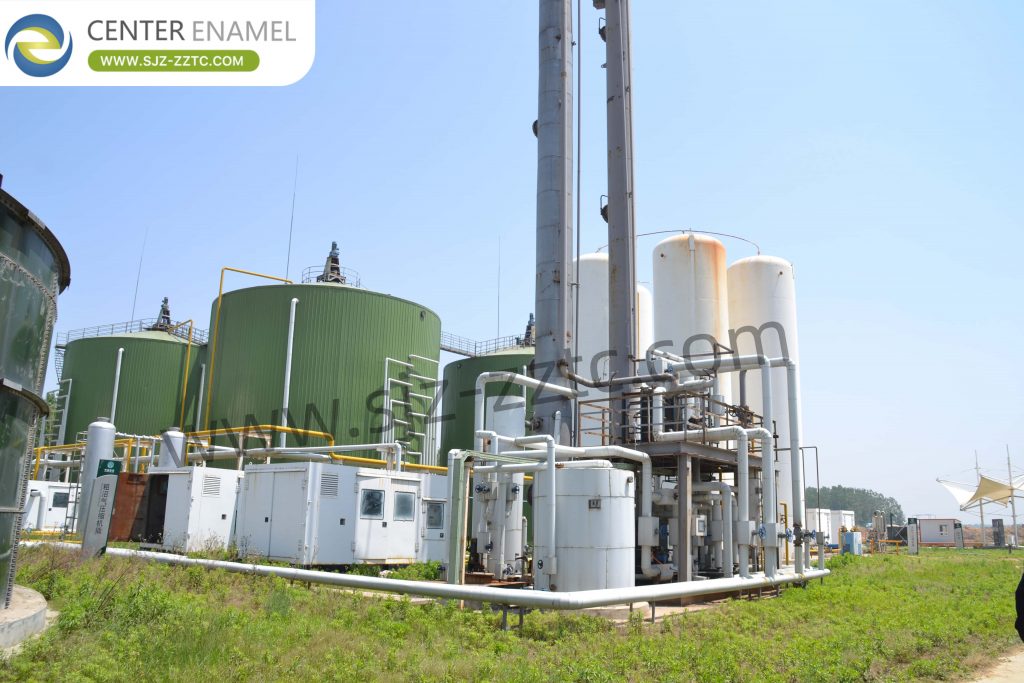
The short answer is yes. Biogas can potentially be converted into Liquefied Petroleum Gas (LPG) through advanced chemical conversion technologies. However, this process is more complicated than simply purifying biogas. It requires several stages of gas treatment and chemical transformation to produce propane and butane, the two main components of conventional LPG.
Let's explore how this conversion works, what technologies are involved, and whether it is a practical renewable energy solution.
What Is the Difference Between Biogas and LPG?
Before discussing the conversion process, it is important to understand the differences between these two fuels.
Biogas is produced through anaerobic digestion, a biological process in which microorganisms break down organic materials without oxygen. Its main components are methane (CH₄) and carbon dioxide (CO₂), with small amounts of other gases and impurities.
LPG, on the other hand, is primarily composed of propane (C₃H₈) and butane (C₄H₁₀). It is commonly used for household cooking, industrial heating, commercial applications, and transportation.
| Feature | Biogas | LPG |
| Main components | Methane and CO₂ | Propane and butane |
| Production method | Anaerobic digestion | Natural gas processing and petroleum refining |
| Storage | Usually stored as a low-pressure gas | Stored as a pressurized liquid |
| Renewable potential | High | Depends on production source |
| Common applications | Heating and electricity | Cooking, heating, and industrial fuel |
The key difference is their chemical composition. Methane cannot simply be compressed or liquefied to become LPG. It must undergo chemical conversion to produce longer-chain hydrocarbons.
Can Biogas Really Be Converted into LPG?
Yes. Technically, biogas can be converted into renewable LPG through specialized thermochemical processes.
The challenge is that biogas mainly contains methane, while LPG contains propane and butane. Therefore, the methane and carbon dioxide in biogas must be transformed into larger hydrocarbon molecules.
One proposed approach is to convert biogas into synthesis gas (syngas), a mixture mainly consisting of hydrogen (H₂) and carbon monoxide (CO). The syngas can then be processed through catalytic reactions to produce methanol and, subsequently, LPG-range hydrocarbons.
This type of conversion is being explored through innovative technologies, including the Cool LPG process.
However, it is worth noting that biogas-to-LPG conversion is not yet a widely established commercial route. Its economic feasibility and large-scale deployment depend on technology development, energy costs, and available feedstock.
How Does the Biogas-to-LPG Conversion Process Work?
The conversion process generally involves several stages.
Step 1: Biogas Production
First, organic materials such as food waste, agricultural residues, sewage sludge, and animal manure are collected and processed through anaerobic digestion.
Microorganisms break down the organic matter and produce raw biogas.
Typically, biogas contains approximately 45%–75% methane, with most of the remaining gas consisting of carbon dioxide.
Step 2: Biogas Purification
Raw biogas cannot be directly fed into advanced chemical conversion equipment without appropriate treatment.
It may contain hydrogen sulfide, moisture, siloxanes, and other impurities that can damage equipment or interfere with catalysts.
Therefore, the gas must undergo purification to remove unwanted substances and ensure a suitable feedstock quality.
Step 3: Syngas Production
After suitable pretreatment, biogas undergoes a reforming process.
During reforming, methane and carbon dioxide react with steam or other suitable reactants to produce synthesis gas.
The resulting syngas mainly contains hydrogen and carbon monoxide, which serve as the building blocks for further chemical synthesis.
Step 4: Catalytic Conversion
The syngas is then processed through catalytic reactions to produce intermediate chemicals, such as methanol.
Further catalytic upgrading converts these intermediates into hydrocarbons with three or four carbon atoms, corresponding to propane and butane.
Step 5: LPG Separation and Purification
Finally, the resulting hydrocarbon mixture undergoes separation and purification.
Propane and butane are recovered, while unwanted gases and other byproducts are separated or recycled where appropriate.
The final product can then be processed to meet the required LPG quality specifications.
What Technologies Are Used to Convert Biogas into LPG?
Several technologies may be involved in the conversion process.
| Technology | Main Function |
| Biogas upgrading | Removes CO₂ and impurities |
| Steam reforming | Converts methane into syngas |
| Dry reforming | Uses methane and CO₂ to produce syngas |
| Methanol synthesis | Converts syngas into methanol |
| Catalytic conversion | Produces longer-chain hydrocarbons |
| Gas separation | Recovers propane and butane |
An important example is the Cool LPG process, which has been developed as a potential pathway for producing renewable LPG from biogas.
It uses biogenic methane and carbon dioxide as feedstocks, converting them into synthesis gas and then into methanol and LPG-range hydrocarbons through catalytic processing.
This technology demonstrates how organic waste-derived gas could become a source of renewable propane and butane.
What Is the Difference Between Biogas Upgrading and LPG Conversion?
These two processes are often confused, but they have different purposes.
Biogas upgrading focuses on increasing methane concentration by removing carbon dioxide and contaminants. The resulting product is called biomethane or renewable natural gas.
LPG conversion goes further by chemically transforming the feedstock into propane and butane.
| Comparison | Biogas Upgrading | Biogas-to-LPG Conversion |
| Main objective | Produce high-purity methane | Produce propane and butane |
| Main technologies | Membranes, PSA, water scrubbing | Reforming and catalytic synthesis |
| Final product | Biomethane | Renewable LPG |
| Process complexity | Relatively established | More complex |
| Commercial maturity | Commercially established | Emerging and less widely deployed |
Therefore, upgrading biogas does not automatically produce LPG. Additional chemical processing is necessary.
What Are the Benefits of Converting Biogas into LPG?
Converting biogas into renewable LPG could offer several important advantages.
1. Better Utilization of Organic Waste
Agricultural waste, food waste, and animal manure can become valuable energy resources instead of being discarded.
2. Renewable Fuel Production
Renewable LPG can potentially replace a portion of conventional fossil-based LPG, helping diversify the energy supply.
3. Convenient Storage and Transportation
LPG can be stored as a liquid under moderate pressure. This makes it convenient to transport and distribute using suitable tanks, cylinders, and existing LPG infrastructure.
4. Multiple Applications
Renewable LPG can serve many of the same applications as conventional LPG, including household cooking, commercial heating, industrial processes, and certain transportation applications.
5. Potential Environmental Benefits
Using waste-derived feedstocks can support waste management and reduce dependence on fossil resources. Actual greenhouse gas benefits depend on feedstock sourcing, processing energy, methane leakage, and the overall production system.
What Are the Main Challenges of Biogas-to-LPG Conversion?
Although the technology is promising, several challenges need to be addressed.
High investment costs: Reforming equipment, catalytic reactors, and gas separation systems require substantial capital investment.
Energy consumption: Chemical conversion requires energy, which affects overall efficiency and operating costs.
Catalyst performance: Impurities in biogas can affect catalyst activity and equipment lifespan.
Process complexity: Multiple conversion and purification stages increase operational requirements.
Commercial scalability: More demonstration and commercial-scale projects are needed to establish long-term economic performance.
For these reasons, converting biogas directly into electricity, heat, or biomethane may currently be more practical for many facilities.
Is Biogas-to-LPG Conversion Better Than Traditional LPG Production?
The answer depends on the intended application, production costs, and environmental objectives.
Traditional LPG is generally produced during natural gas processing and crude oil refining. Its production infrastructure and distribution networks are already well established.
Renewable LPG offers an alternative by using renewable feedstocks. However, not all renewable LPG comes from biogas. Commercial bioLPG is also produced as a byproduct of renewable diesel manufacturing, particularly through the hydrotreatment of vegetable oils, waste oils, and animal fats.
Biogas-to-LPG conversion is another potential production pathway, but it still faces technical and economic challenges.
Ultimately, the best option depends on local feedstock availability, energy prices, conversion efficiency, and the required fuel specifications.
What Is the Future of Renewable LPG?
As countries seek to reduce fossil fuel consumption and improve waste management, renewable LPG is attracting increasing attention.
Technological developments in catalytic conversion, gas reforming, and renewable hydrogen production may create new opportunities for converting biogas and other biomass-derived resources into propane and butane.
In the future, biogas-to-LPG technology could help connect organic waste management with the existing LPG supply chain.
Although widespread commercial adoption will take time, continued research and investment may improve conversion efficiency and reduce production costs.
Conclusion
So, can we convert biogas to LPG?
Yes, biogas can technically be converted into LPG through advanced chemical processes involving syngas production, catalytic conversion, and hydrocarbon separation.
However, it is not a simple purification process, and biogas-to-LPG technology is not yet as commercially established as conventional biogas upgrading.
With continued technological development, renewable LPG produced from biogas could become another valuable way to turn organic waste into usable energy.
Frequently Asked Questions (FAQs)
1. Can biogas be used directly as LPG?
No. Biogas cannot be used directly as LPG because its main component is methane, while LPG mainly contains propane and butane. Chemical conversion is required to transform methane-derived feedstock into LPG-range hydrocarbons.
2. What is the main product of biogas-to-LPG conversion?
The main target products are propane (C₃H₈) and butane (C₄H₁₀). These hydrocarbons are separated and purified to produce renewable LPG that can meet relevant fuel specifications.
3. Is renewable LPG better for the environment than conventional LPG?
Renewable LPG can reduce reliance on fossil resources and potentially lower lifecycle greenhouse gas emissions. However, its actual environmental performance depends on the feedstock, production technology, energy sources, and methane emissions throughout the production process.