
Cassava Processing Waste into Energy for Cambodia: Advanced GFS Tanks and CSTR Process Solutions
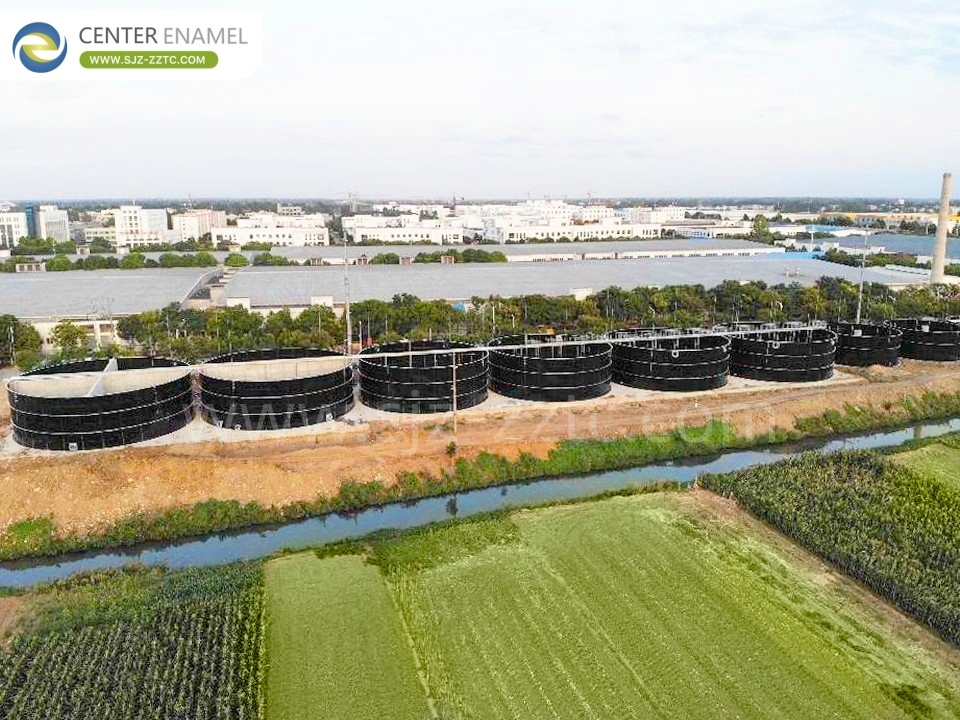
Cambodia, as one of Southeast Asia's fastest-growing cassava producers, generates millions of tons of organic waste that poses significant environmental challenges. By implementing advanced anaerobic digestion technologies like the CSTR Process and durable GFS Tanks, cassava processing facilities across the kingdom can effectively transform cassava processing waste into clean, renewable energy while achieving wastewater treatment compliance.
Cassava Cultivation and Industry in Cambodia
Cassava has become a cornerstone of Cambodia's agricultural economy, now ranking as the nation's second most important export crop after rice . Cambodian smallholders produced nearly 16 million metric tonnes of cassava in 2025, with exports valued at approximately US$690 million . The country's tropical weather, abundant sunshine, and heavy rainfall allow this hardy crop to be cultivated across nearly all provinces, with planted areas expanding from 663,929 hectares in 2020 to 774,843 hectares . Cambodia is now the fourth largest exporter of cassava starch globally, and projections suggest cassava exports could reach US$1.2 billion by 2030 . With 16 cassava processing factories currently operating nationwide—up from just seven in 2020—the domestic processing capacity continues to expand rapidly .
Transforming Cassava Processing Waste into Biogas
Cassava processing generates significant waste, including solid and liquid forms that raise serious environmental and health concerns . Liquid waste poses risks of groundwater, lake, and river pollution, while solid waste from chip processing can be repurposed for crop and animal production. These waste byproducts frequently release unpleasant odors, creating inhospitable conditions for neighboring farming communities . However, the organic-rich nature of cassava wastewater makes it an ideal feedstock for anaerobic digestion. Under oxygen-free conditions, organic matter decomposes through four biological stages—hydrolysis, acidogenesis, acetogenesis, and methanogenesis—to produce biogas typically composed of 55–70% methane. The generated biogas can be used for factory power generation and boiler heating, while fermented residues become valuable organic fertilizer . Implementing Biogas Project solutions helps cassava factories achieve wastewater treatment, reduce operational costs, and comply with Cambodia's renewable energy and circular economy objectives.
The CSTR Process: A Core Anaerobic Technology
The CSTR Process (Continuous Stirred-Tank Reactor) is the most suitable anaerobic treatment technology for high-solids cassava processing wastewater. This highly effective system ensures fermentation raw materials and microorganisms are fully mixed in a closed tank to produce biogas. The CSTR reactor is equipped with a mechanical stirring device that ensures a homogeneous environment, preventing scum crusting and sediment accumulation—common issues when treating high-suspended solids waste . By feeding continuously or semi-continuously at a constant temperature, the organic wastewater is kept in a complete mixed fermentation state, allowing for stable biogas production and efficient degradation of organic matter. The CSTR Process can achieve high chemical oxygen demand (COD) removal rates exceeding 90% when treating agro-industrial effluents, making it ideal for large-scale cassava processing operations .
Professional Biogas Project Design by Center Enamel
As a professional global EPC contractor, Center Enamel provides tailored Biogas Project solutions that integrate proven anaerobic technologies and premium equipment. With deep experience in the Southeast Asian market, the company specializes in adapting its solutions to Cambodia's tropical climate, high humidity, and industrial requirements. Center Enamel offers a comprehensive EPC service covering project design, equipment manufacturing, installation, commissioning, and long-term after-sales support . Their technical team performs thorough evaluation of site-specific factors including waste composition, daily wastewater volume, and local environmental conditions to engineer highly efficient systems. By integrating advanced processing technology with robust infrastructure, Center Enamel ensures that each project is optimized for maximum biogas yield and long-term operational reliability, helping Cambodian cassava factories achieve wastewater treatment compliance while meeting stringent environmental regulations.
GFS Tanks and Double Membrane Roof for Biogas Projects
For reliable infrastructure, Center Enamel's GFS Tanks serve as the core of the anaerobic digestion system. These tanks are manufactured using a unique high-temperature firing process (820°C–930°C) that fuses glass to steel, creating an inert, inorganic bond that combines the strength and flexibility of steel with outstanding corrosion resistance . This makes them immune to the aggressive acids, ammonia, and hydrogen sulfide (H₂S) generated during the digestion process, with a pH resistance range of 1–14 and a service life exceeding 30 years . The Double Membrane Roof is the preferred solution for biogas gas storage under normal working conditions. It provides excellent airtightness for safe biogas collection and odor control, while its design also optimizes costs by reducing the need for a separate, ground-mounted gas holder.
Diverse Tank Roof Solutions
To meet the specific requirements of different applications, Center Enamel offers a variety of tank cover solutions:
Aluminum Geodesic Dome Roof: Provides advanced corrosion resistance, expansive clear span capability, and efficient, cost-effective construction with minimal maintenance.
Aluminum Alloy Trough Deck Roof: An economical option for applications like potable water, wastewater, and firewater storage, designed to keep out rain and wind with effective odor control.
Glass-Fused-to-Steel Roof: Offers airtightness and is often utilized for pressurized structures and demanding applications requiring superior corrosion resistance.
Stainless Steel Roof: Provides excellent airtightness and super anti-corrosion performance with a long service life, making it a viable solution for harsh environments.
FRP Roof: A suitable option for situations where airtightness is not required, such as drinking water and firewater storage, and is available in dome or flat shapes.
Comprehensive Biogas Equipment Solutions
A complete biogas plant relies on a suite of supporting equipment to ensure stable and efficient operation. Center Enamel provides a full range of auxiliary systems:
Gas Holder: For safe and variable-volume storage of the produced biogas.
Black Membrane: Often used for covering lagoons or as part of a gas storage system.
Solid-Liquid Separator: Used in the post-treatment stage to separate digestate into solid and liquid fractions for fertilizer or further processing.
Torch System: A critical safety component used to safely burn off excess biogas during maintenance or emergencies.
Lifting Pump: Essential for moving slurry and wastewater between different stages of the treatment process.
Dehydration and Desulfurization Tank: Crucial for purifying raw biogas by removing moisture and corrosive hydrogen sulfide (H₂S) before it is used in energy generation equipment.
Screw Sludge Dewatering Machine: Used for efficient and reliable dewatering of the digested sludge.
Efficient Installation of GFS Tanks
Center Enamel's GFS Tanks are engineered for rapid and straightforward on-site assembly, significantly reducing construction timelines :
Hydraulic jacking top-down installation: No scaffolding or large cranes required, making it suitable for Cambodia's factory sites with space constraints.
Zero on-site welding: All components are factory prefabricated and assembled with high-strength bolts, avoiding humidity and dust-related welding failures common in tropical climates.
Rapid commissioning: Bolted tanks eliminate long curing periods, shortening construction cycles and accelerating investment return.
Standardized after-sales: Dedicated Southeast Asia team provides regular maintenance and technical optimization.
Why Choose Center Enamel as Your Biogas Partner
Center Enamel is a leading one-stop solution supplier for biogas projects in Cambodia, offering several key advantages :
Proven Expertise: Commitment to water, wastewater, and biogas projects with installations in over 100 countries worldwide.
Advanced Manufacturing: Asia's largest manufacturer for GFS tanks, operating a 150,000 m² production base with over 200 patented enamel formulas and an annual production capacity of 250,000 tank sheets .
Strict Quality Standards: All products meet rigorous international certifications including ISO 28765, AWWA D103, NSF/ANSI 61, CE, and OSHA, ensuring long-term reliability and safety .
Full EPC Service: Provides a complete turnkey solution from initial design and procurement to fabrication, installation, and after-sales support, ensuring single-point accountability.
Localized Customization: Tailors anaerobic parameters, reactor layout, and GFS Tanks volume based on Cambodian waste composition and tropical conditions.
ASEAN Experience: Deep understanding of Cambodia's agricultural policies, environmental regulations, and tropical construction challenges.
Successful Project Case Studies
Center Enamel's proven track record demonstrates the global application of its Biogas Project solutions:
Biogas Project in Sweden
Tank dimensions: φ19.11m x 19.2m (H) (1 unit)
Total volume: 5,510 m³
Completion year: 2024
Biogas Project in Indonesia
Application: Anaerobic reactor for palm oil wastewater treatment plant
Tank models: Ø17.58m x 8.4m, Ø16.82m x 7.2m
Number of tanks: 3 GFS tanks
Installation date: 2013
Conclusion
The conversion of cassava processing waste into renewable energy presents a significant opportunity for Cambodia to address environmental pollution while enhancing its energy security . By utilizing the powerful CSTR Process and the durable, corrosion-resistant GFS Tanks, cassava processing facilities can transform environmental liability into a valuable economic asset. Center Enamel stands as a reliable partner, offering professional Biogas Project solutions and comprehensive EPC services to support Cambodia's transition toward a sustainable and circular agricultural economy. With world-class manufacturing, international certifications, and extensive Southeast Asian experience, Center Enamel delivers the infrastructure needed for long-term success in Cambodia's rapidly expanding cassava processing industry.
Frequently Asked Questions (FAQs)
1. Why is cassava waste management becoming critical for Cambodia's agricultural sector?
Cambodia's cassava production has grown to nearly 16 million tons annually, making it the second-largest export crop . The processing waste generated—both solid and liquid—poses significant environmental risks to groundwater and rivers if not properly treated . Biogas solutions offer a sustainable pathway to manage this waste while generating renewable energy.
2. How does biogas technology benefit Cambodian cassava processing factories?
Biogas technology converts cassava processing wastewater into methane-rich fuel that can power factory operations, significantly reducing electricity costs . The anaerobic digestion process also treats wastewater to meet environmental standards, while the nutrient-rich digestate can be used as organic fertilizer, creating a circular economy model .
3. Can small-scale cassava processors in rural Cambodia utilize biogas technology?
The National Biodigester Programme has already installed over 28,000 domestic biodigesters across Cambodia, demonstrating the viability of biogas technology at various scales . For industrial cassava processing facilities, Center Enamel offers scalable GFS Tanks and CSTR Process solutions that can be customized to meet the specific production capacity and waste volume requirements of each operation.