
Cattle Manure Anaerobic Digestion: Biogas From Dairy And Beef Waste
Cattle manure anaerobic digestion converts dairy and beef farm waste - typically high in total solids, bedding, and a C:N near 20-25:1 - into biogas in a mixed CSTR at 35-38 C. Because cattle manure is less nitrogen-dense than poultry but bulker with bedding, the train emphasises solids handling and, in cold regions, reactor insulation and waste-heat recovery. The design is driven by the solids and the climate, not by a poultry or crop-only recipe.
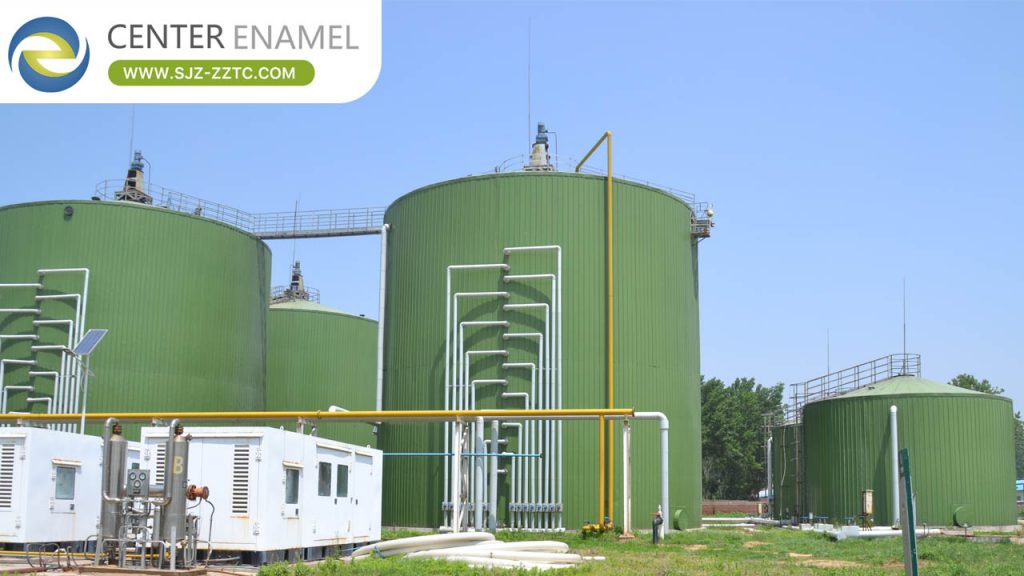
How Cattle Manure Differs
Cattle manure sits between crop residue and poultry manure. It is less concentrated in ammonia than poultry (so ammonia toxicity is a lesser risk) but carries more bedding and bulk solids from housed animals. Its C:N near 20-25:1 is already close to the stable digestion band, which is why cattle manure digests steadily - but the bedding and sand add abrasion and inert load the reactor must handle.
| Trait | Cattle manure | Design note |
| C:N | 20-25:1 | Near stable band |
| Solids | High (bedding) | Separate first |
| Ammonia | Moderate | Lower risk than poultry |
| Bedding | Sand / straw | Abrasion, inert |
Reactor And Solids Handling
A CSTR with mechanical mixing suits the heterogeneous, solid-rich cattle feed and tolerates bedding better than a granular-sludge reactor. Separating the solids first protects the digester from grit and lets the fibre become compost, while the liquid fraction digests. The mixing and insulation duty is what keeps the 35-38 C mesophilic set-point through cold months.
Cold-Climate Operation
In cold regions a dropped digester temperature directly cuts gas output, so the reactor is insulated and often paired with waste-heat recovery from the biogas use or a dedicated heating loop. This is not optional in places like Inner Mongolia: the design assumes winter duty, not just summer performance. A stable temperature is what protects the daily biogas rate.
| Stage | Unit | Role |
| Separation | Screen / screw | Remove bedding/grit |
| Anaerobic | CSTR (insulated) | Biogas, 35-38 C |
| Heat | Recovery loop | Hold temperature |
Project Case Study: Inner Mongolia Wushenqi Cattle Farm
Project / Application: Cattle farm biogas, Ordos, Inner Mongolia. Industry: Livestock / dairy. Process: CSTR with insulation system. Key Requirements: Stable biogas in extreme cold.
| Field | Value | Source / Evidence |
| Location | Ordos, Inner Mongolia | Company project reference |
| Process | CSTR + insulation | Company project reference |
| Application | Cattle farm biogas | Company project reference |
| Feedstock | Cattle manure | Company project reference |
| Design | Cold-climate thermal | Company project reference |
About Company
Shijiazhuang Zhengzhong Technology Co., Ltd (Center Enamel) is a comprehensive high-tech enterprise specializing in wastewater engineering, process section contracting, and equipment manufacturing. The company delivers biogas and wastewater projects through three main lines - EPC (turnkey) contracting, equipment supply, and process packages - covering livestock and municipal wastewater, biomass energy, industrial wastewater, and food waste. Its reactor portfolio spans CSTR, USR, UBF, UASB, IC, and EGSB, backed by in-house Glass-Fused-to-Steel tank manufacturing (enamel firing at 820-930 C) and certifications including ISO 9001, NSF/ANSI 61, and CE-EN 1090. With 35+ years of operation, a 150,000 m2 manufacturing base, and projects in 100+ countries, Center Enamel provides the single-responsibility engineering behind the Wushenqi cattle farm project that ran an insulated CSTR on cattle manure for stable cold-climate biogas - a scoped livestock-waste solution.
Comparison: Cattle Versus Poultry Manure
| Element | Cattle | Poultry |
| C:N | 20-25:1 | 5-10:1 |
| Bedding | Much | Little |
| Ammonia risk | Lower | High |
| First step | Separate bedding | Co-feed carbon |
Cattle manure anaerobic digestion is the bedding-aware, insulated CSTR route - scoped from the manure's solids and the cold-climate duty, distinct from poultry or crop-only treatment.
Frequently Asked Questions
Q1: How does cattle manure differ in AD? A1: C:N near 20-25:1 with high bedding and solids, lower ammonia risk than poultry.
Q2: What C:N does cattle manure have? A2: Roughly 20-25:1, already near the stable digestion band.
Q3: How is cold climate handled? A3: Insulated reactor plus waste-heat recovery to hold 35-38 C through winter.
Q4: Which reactor fits cattle manure? A4: A mixed, insulated CSTR after solids separation.
Q5: Is bedding a problem? A5: Sand/straw adds abrasion and inert load; separation protects the digester.
Q6: Is ammonia a risk? A6: Less than poultry, but still managed in the polish if needed.
Q7: What does cattle biogas become? A7: Heat, CHP, or upgraded biomethane like any AD biogas.
Q8: Is cattle manure better than poultry for AD? A8: Neither is universally better - cattle brings C:N near 20-25:1 with bedding to manage, while poultry is higher in nitrogen and needs co-feeding; the choice follows the farm's manure type.
Suggested CTA
Send your herd size, manure volume, and winter low to an engineer, or request a scoped cattle manure outline.