
Relaible CBG Plant EPC Solutions with UASB Process for Industrial Wastewater Treatment
The core challenges of industrial wastewater treatment center on the "three highs"-high difficulty, high cost, and high energy consumption. Wastewater from new energy, chemical, and pharmaceutical industries is complex in composition with numerous characteristic pollutants, and traditional treatment processes are difficult to remove effectively. While Chinese companies have significant price advantages in the mid-to-low-end equipment segment, the industry also faces continuous technological upgrade pressure from increasingly stringent emission standards, as well as new requirements for digitalization and low-carbon transformation on operational refinement management capabilities. Addressing these challenges requires integrated solutions that combine advanced biological treatment with robust infrastructure-precisely what the UASB Process and comprehensive CBG Plant EPC Solutions deliver.
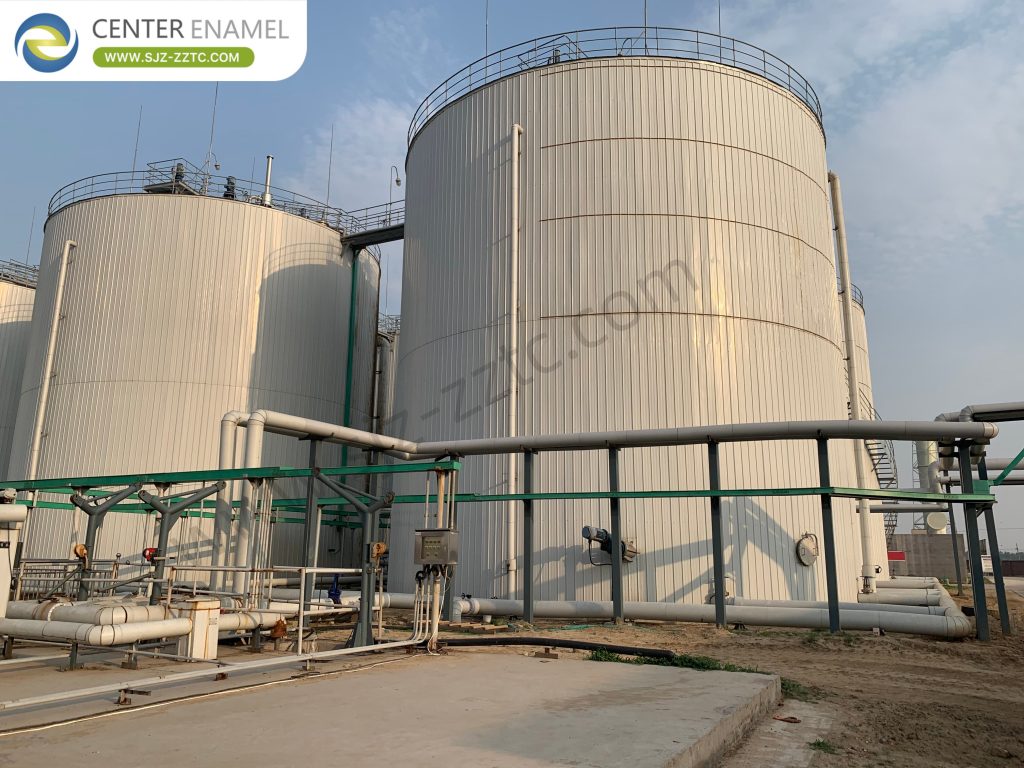
The UASB Process: Benchmark Technology for Organic Wastewater
At the heart of modern industrial wastewater treatment lies the UASB (Upflow Anaerobic Sludge Blanket) Reactor, the benchmark mainstream technology for medium-to-high concentration soluble organic wastewater treatment. It requires no mechanical mixing or media carriers, relying on the upward flow of wastewater to suspend and expand granular sludge within the reactor, forming a stable sludge bed layer. Highly active anaerobic granular sludge efficiently degrades pollutants, with excellent settleability and high microbial concentration. The UASB Process innovatively integrates reaction, sedimentation, and gas-liquid-solid separation functions, simplifying the anaerobic treatment process with advantages of high efficiency, energy savings, and compactness. This makes it widely applicable across various medium-to-high concentration soluble organic wastewater treatment applications, forming the core biological treatment step in any CBG Plant EPC Solutions package.
Brewery Wastewater: A Typical Application for UASB Technology
The practical value of the UASB Process becomes evident when examining specific industrial wastewater streams. Brewery wastewater is high-concentration organic wastewater from the entire production process of beer, liquor, and wine-a high-volume wastewater type in the food industry. Key pollution stages include raw material soaking/washing, saccharification/fermentation, distillation/purification, and filling/packaging. Major wastewater streams include still bottoms, fermentation yellow water, spent mash, and raw material soaking wastewater, with auxiliary discharges from equipment/pipeline washing, floor cleaning, production line maintenance, and cooling water.
Discharge has significant intermittency and seasonality-high volume during peak production seasons, reduced during off-seasons. Large breweries have unified collection systems, while small and medium-sized facilities have more dispersed collection with prominent uncontrolled discharge issues, concentrated in brewing facility areas. These characteristics demand treatment systems with strong shock load resistance and operational flexibility-capabilities inherent to the UASB Process, which maintains a stable sludge bed even with fluctuating influent conditions. This is why UASB reactors are a cornerstone of CBG Plant EPC Solutions for the beverage industry.
Proven Performance: Indonesia Palm Oil Biogas Upgrade Project
The real-world effectiveness of integrated UASB and GFS tank solutions is demonstrated by the Indonesia Palm Oil Biogas Upgrade Project, commissioned in 2013 as the core anaerobic digestion reactor for the POME treatment station. The project utilized three GFS tanks in two sizes: 17.58 m diameter × 8.4 m height and 16.82 m diameter × 7.2 m height. These tanks serve as the core anaerobic reaction equipment specifically designed for high-organic palm oil production wastewater, where anaerobic digestion degrades pollutants and recovers biogas simultaneously.
The tanks were adapted to local palm industry wastewater needs, with GFS tank assembly proving convenient and corrosion resistance performing exceptionally well in Southeast Asia's hot, humid, high-corrosion environment. This project stands as a mature biomass energy environmental benchmark, demonstrating the viability of UASB-based biogas plant design in challenging tropical conditions. Its success validates the comprehensive approach offered by CBG Plant EPC Solutions, which combine process engineering with durable infrastructure.
Center Enamel's 30+ Year Evolution: From Manufacturer to EPC Provider
Supporting these global project deliveries requires deep technological roots and integrated capabilities. Center Enamel has been deeply engaged in the environmental bolted storage equipment field for over 30 years. Starting with proprietary enamel anti-corrosion material technology, the company has gradually completed the full-industry-chain upgrade from a single tank manufacturer to a comprehensive environmental EPC service provider. Throughout its 30+ year history, the company has been recognized as a National High-Tech Enterprise, National Specialized and Sophisticated "Little Giant," Manufacturing Single Champion, and Provincial Green Factory.
It has successfully delivered over 30,000 environmental projects globally, establishing itself as a leading enterprise in the global GFS tank storage industry. The company has fully integrated the entire chain from enamel frit R&D, intelligent environmental equipment manufacturing, to EPC project contracting-every business breakthrough has been achieved through proprietary core anti-corrosion technology. This evolution positions Center Enamel as a trusted partner for CBG Plant EPC Solutions, offering not just equipment but complete project execution capabilities.
Innovative Material Technology: The Foundation of Durability
The longevity of any wastewater treatment or biogas plant depends on material integrity. Center Enamel has independently developed over 200 anti-corrosion enamel formulations, with proprietary double-sided double-layer enameling technology ensuring GFS tank anti-corrosion service life exceeds 30 years-far surpassing concrete and ordinary equipment. This advanced material technology is suitable for global high-corrosion wastewater and biogas fermentation conditions, providing the robust foundation required for reliable UASB Process operation and overall CBG Plant EPC Solutions.
Aluminum Geodesic Dome Roof: Advanced Infrastructure for Biogas Plants
Complementing the UASB reactor and GFS tank system, the Aluminum Geodesic Dome Roof independently developed by Center Enamel is manufactured using high-strength aluminum alloy plates through integral stamping. It features a triangular grid spherical self-supporting structure, enabling large-span full coverage without internal support columns. Made of aluminum alloy, the roof offers excellent weather resistance and corrosion resistance, capable of long-term protection against acid rain, salt spray, and UV radiation, suitable for various extreme outdoor climate conditions.
The structural design complies with international AWWA D108 standards, with aluminum plate thickness, rib cross-sections, and joint connections all verified by finite element stress analysis, ensuring wind and snow load resistance that meets building code requirements across different global regions. The weight of the Aluminum Geodesic Dome Roof is only one-third to one-half of a steel roof with the same span, significantly reducing the load on the tank top and allowing direct installation without tank wall reinforcement. This is particularly advantageous for CBG Plant EPC Solutions where tank integrity is paramount.
The roof provides superior overall sealing performance, with double sealing between panels using specialized sealant strips and mechanical interlocking, enabling both airtight gas storage and enclosed odor control. This makes it suitable for biogas collection and storage, wastewater tank odor control, and drinking water contamination prevention. The support-column-free design does not interfere with the installation and operation of internal equipment such as mixers and water distributors. The aluminum material does not support microbial growth, requiring no anti-corrosion maintenance over long-term use, resulting in low total life-cycle costs-a critical consideration for any CBG Plant EPC Solutions project.
Conclusion
From the "three highs" of industrial wastewater to the specific challenges of brewery and palm oil effluent, the combination of the UASB Process and comprehensive CBG Plant EPC Solutions offers a proven, cost-effective, and globally deployable answer. The UASB reactor provides high-efficiency organic removal and biogas recovery with minimal energy input, while GFS tanks and aluminum dome roofs ensure long-term structural integrity and operational reliability. With over 30 years of industry evolution, 200+ proprietary formulations, and 30,000+ global project deliveries, Center Enamel delivers complete solutions that transform industrial wastewater from an environmental burden into a renewable energy asset.
Frequently Asked Questions (FAQ)
1. What is the UASB Process and why is it effective for high-strength industrial wastewater?
The UASB (Upflow Anaerobic Sludge Blanket) Process is an anaerobic digestion technology that treats medium-to-high concentration soluble organic wastewater. It uses a granular sludge bed that retains high concentrations of active biomass, achieving 90–94% COD removal without mechanical mixing. It is particularly effective for wastewater from brewing, food processing, and chemical industries due to its high loading capacity, small footprint, and biogas recovery capability.
2. What does a comprehensive CBG Plant EPC Solutions package include?
A complete CBG (Compressed Biogas) Plant EPC Solutions package covers engineering design, procurement, and construction of the entire biogas production facility. This includes UASB reactors, GFS tanks, gas collection systems, desulfurization/dehydration equipment, biogas storage, and optional upgrading units. Center Enamel provides end-to-end services from site survey and process design to installation, commissioning, and operator training.
3. How do GFS tanks and aluminum dome roofs enhance biogas plant durability?
GFS (Glass-Fused-to-Steel) tanks feature a proprietary double-sided enamel coating that resists corrosion from organic acids, high salinity, and variable pH for over 30 years. The Aluminum Geodesic Dome Roof provides a lightweight, self-supporting, corrosion-resistant cover that ensures gas-tight sealing, prevents odor release, and withstands extreme weather conditions. Together, they reduce lifecycle costs and ensure long-term operational stability.