
Center Enamel: Leading Biogas EPC Contractor & GFS Tank Manufacturer
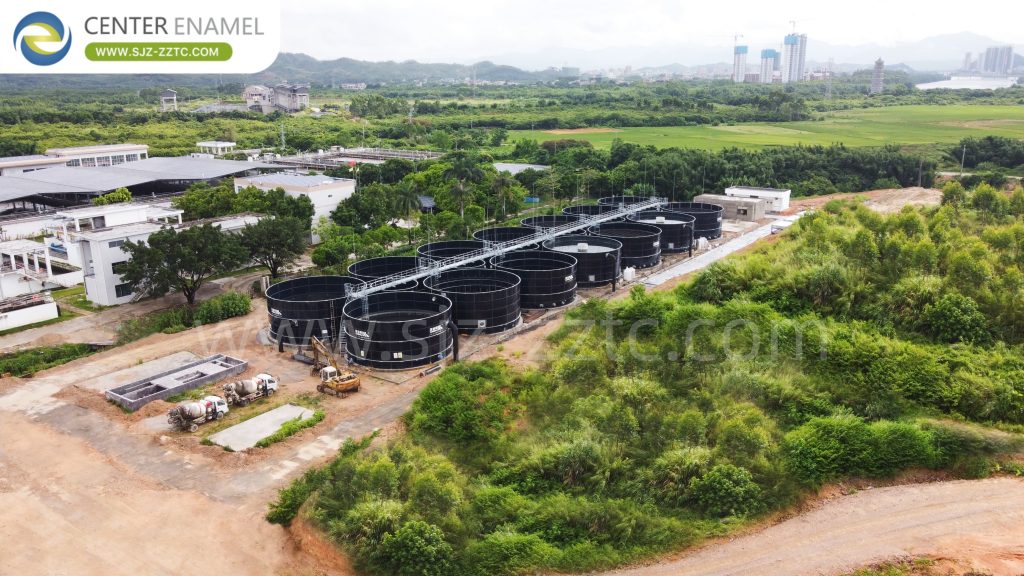
Global biogas policy has evolved from a purely waste treatment orientation to a core component of energy strategy and climate action. The EU, through the Renewable Gas Directive and REPowerEU Plan, has set mandatory targets for biomethane production growth and uses the Carbon Border Adjustment Mechanism to incentivize member states to improve organic waste treatment rates, incorporating biogas into the green hydrogen certification system. The US, under relevant energy legislation, provides multiple incentives such as production tax credits and investment tax credits for biogas and biomethane projects, and includes biogas in the Renewable Fuel Standard system.
China has incorporated biogas into its rural revitalization strategy and the "Rural Energy Revolution" priority development catalog, updated national standards for automotive biomethane, and promotes the integration of biomethane into urban gas pipeline networks. The global policy framework is shifting from fiscal subsidy-driven to carbon market-driven and quota-mandatory approaches, with more countries incorporating biogas into their Nationally Determined Contributions.
Superior Corrosion Resistance of GFS Tanks
Center Enamel's independently developed double-sided double-layer enameling technology is the industry's leading coating anti-corrosion technology, with corrosion resistance completely surpassing concrete tanks. Concrete tank interiors are riddled with pores, allowing wastewater and acid/alkaline media to easily penetrate and corrode the structural layer. Long-term use leads to irreversible problems such as internal wall spalling, water seepage, and rebar corrosion, which are difficult to repair and cannot be fundamentally resolved.
GFS tanks feature high-temperature enameling on both the interior and exterior surfaces of steel panels, with a dense, non-porous enamel finish that completely blocks corrosive liquids and biogas permeation. The enamel layer has extremely strong chemical stability, resisting acids, alkalis, salts, and microbial corrosion.
Concrete tanks will develop extensive corrosion and leakage after 5-8 years of use, while GFS tank anti-corrosion service life can exceed 30 years, with no need for frequent internal lining repairs throughout the service life, significantly reducing long-term anti-corrosion maintenance investment and fundamentally eliminating environmental risks of medium leakage contaminating sites and groundwater. Compared to traditional concrete and FRP tanks, GFS tank coatings have no risk of peeling or blistering, and are adaptable to highly corrosive conditions such as palm oil mill effluent, livestock manure, and chemical high-salinity wastewater, with outstanding long-term comprehensive cost advantages.
Core Advantages of CSTR Anaerobic Digestion Technology
Excellent adaptability, with outstanding treatment results for high-solids, high-viscosity, high-suspended-solids organic wastewater, thoroughly solving the shortcomings of traditional anaerobic processes such as stratification, crusting, and low sludge utilization. The full-mix agitation mode ensures thorough contact between microorganisms and pollutants, with homogeneous and stable reaction conditions and excellent resistance to water quality and hydraulic shock loads—stable compliance even with significant influent fluctuations.
The simple process structure, without complex media or three-phase separators, results in low equipment cost, short construction period, and low maintenance difficulty, with no need for frequent cleaning of clogged components and low O&M costs. The process simultaneously achieves wastewater treatment and biogas energy recovery. Sludge acclimation is fast, quickly adapting to various specialty organic wastewaters, with high process error tolerance and strong universal applicability.
Environmental Safety and Toxicity Profile of Digestate
Overall high safety, very low toxicity, controllable ecological risks, and no high-risk pollution hazards. All pollutants are natural fermentation residues from organic materials, containing no heavy metals, synthetic toxins, bacteriostats, or persistent organics—no inhibition or toxicity to microorganisms, plants, or animals. The anaerobic environment completely inactivates pathogenic microorganisms—no biological pollution or disease transmission risks. Humic acids and trace elements are beneficial ecological substances, improving soil quality when properly applied to farmland. Only long-term excessive discharge can cause nitrogen/phosphorus enrichment, algal blooms, and nutrient accumulation in soil—no acute toxicity, chronic accumulation, or carcinogenic/teratogenic/mutagenic risks, with excellent environmental compatibility.
R&D Excellence and Global Certifications
Technology R&D is Center Enamel's core competitive advantage. The company independently masters over 200 differentiated anti-corrosion enamel formulations, with full self-control over the enamel raw material chain, holding nearly 100 invention and utility patents. Products have passed NSF, WRAS, ASME, BSCI, CE, ISO9001, and other global certifications.
Company certifications and honors include: National High-Tech Enterprise, National Specialized and Sophisticated "Little Giant," Hebei Manufacturing Single Champion, Provincial Smart Factory, Provincial Green Factory; complete environmental engineering and special equipment manufacturing compliance qualifications. The company maintains long-term collaborative research with multiple universities through joint materials laboratories—continuously iterating anti-corrosion coatings and large bolted tank structural design technologies. The proprietary material technology barrier creates an irreplaceable competitive advantage, with product performance comparable to high-end imported European/American storage equipment.
Professional Installation and Construction Team
The installation team has practical experience from over 10,000 GFS tank projects globally, strictly following standardized construction procedures—full control over project mobilization, civil coordination, tank assembly, piping, and commissioning schedules and quality.
The team is proficient in complete standardized installation processes for GFS tanks, dual-membrane gas storage covers, USR/CSTR/IC anaerobic reactors, and biogas desulfurization/piping systems—adaptable to large-scale farms, industrial parks, remote mountainous sites, coastal high-corrosion sites, and other complex locations—strictly implementing unified global safety construction standards. For large overseas cross-border projects, the team can be deployed as complete units for on-site construction, technical training, and local worker practical instruction—full control over construction details, air-tightness testing, and corrosion protection—ensuring timely and stable commissioning of global environmental projects through standardized delivery capability.
Glass-Fused-to-Steel Roofs for Anaerobic Tanks
Glass-Fused-to-Steel Roof is a specialized tank cover solution designed for high air-tightness applications, primarily suited for CSTR anaerobic fermentation tanks and other biogas reactor tanks, serving as a core supporting component in organic waste anaerobic treatment projects. The roof is manufactured with the same material system as glass-fused-to-steel assembled tanks, with steel substrate and high-temperature fused glass coating integrated into one unit. The roof panel joints are equipped with specialized sealant strips and fasteners, achieving high-level overall air-tightness that completely seals biogas generated from anaerobic reactions inside the tank, preventing methane and odorous gas leakage while enabling biogas recovery and on-site odor control.
The product resists long-term corrosion from fermentation liquid and acid/alkaline biogas slurry, and will not be corroded or delaminate due to microorganisms or sulfides in the anaerobic environment. Its service life is synchronized with the glass-fused-to-steel tank, significantly reducing maintenance frequency. The structure employs steel truss supports for the glass-coated panels, providing stable load-bearing capacity. It can accommodate various process openings for mixers, biogas collection, monitoring, and manways, offering high integration. Modular components enable rapid on-site assembly, suitable for large-volume anaerobic fermentation tanks. It is widely used in livestock manure treatment, food waste anaerobic digestion, straw biogas, and municipal sludge disposal projects, and is the mainstream reliable roof selection for anaerobic fermentation tanks.