
Center Enamel: EPC Contractor for Indonesia Cattle Farm Biogas Projects
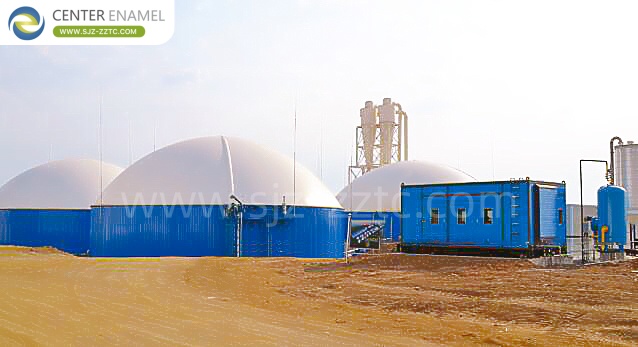
In Indonesia’s rapidly developing agricultural sector, cattle farming stands as a cornerstone of rural livelihoods and national food security. With a large population of livestock across regions like Java, Sumatra, and Kalimantan, the industry generates massive amounts of manure—an organic waste stream that poses environmental risks if improperly managed, yet holds enormous potential as a renewable energy source.
Center Enamel (Shijiazhuang Zhengzhong Technology Co., Ltd), a global leader in environmental engineering and renewable energy solutions, emerges as the premier EPC Contractor for Indonesia cattle farm Biogas Project initiatives. We deliver full turnkey solutions that convert cattle manure into clean biogas, promote circular agriculture, reduce greenhouse gas emissions, and support Indonesia’s transition to sustainable energy and eco-friendly livestock farming.
Analysis of Biogas Generation Principles in Cattle Farms
Biogas production from cattle manure is a natural and efficient anaerobic digestion process that converts organic matter into combustible gas without oxygen. Cattle manure is rich in cellulose, hemicellulose, organic nitrogen, and other biodegradable components, making it an ideal feedstock for anaerobic microbes.
The biogas generation process follows four key stages:
- Hydrolysis: Complex organic materials in manure are broken down into small molecular compounds like sugars and amino acids by hydrolytic bacteria.
- Acidification: Acidogenic bacteria transform small molecules into volatile fatty acids, hydrogen, and carbon dioxide.
- Acetogenesis: Acetogenic bacteria convert fatty acids into acetic acid, hydrogen, and carbon dioxide—key precursors for methane.
- Methanogenesis: Methanogenic archaea convert acetic acid and hydrogen into methane (55%–70%) and carbon dioxide (30%–45%), the main components of biogas.
This process not only eliminates odor and reduces pathogens in manure but also produces biogas that can be used for on-farm electricity generation, heating, cooking, or injected into the local energy grid. The by-product, digestate, serves as high-quality organic fertilizer, closing the loop for sustainable cattle farming. For Indonesia’s tropical climate with high rainfall and temperature, this biological process operates efficiently year-round, maximizing energy recovery from cattle waste.
Anaerobic Technologies for Indonesia Cattle Farm Biogas Projects
As a specialized EPC Contractor for Biogas Project development, Center Enamel integrates four mature Anaerobic Technologies tailored to Indonesia’s cattle farm conditions, ensuring stable operation, high biogas yield, and strong adaptability to different farm scales.
1. CSTR (Completely Stirred Tank Reactor)
CSTR is the most widely used technology for large-scale cattle farms with high solid content manure. It uses mechanical stirring to fully mix manure and anaerobic sludge, preventing crusting and sedimentation. It supports continuous feeding and discharging, maintains stable reaction conditions, and delivers consistent biogas production. It is highly suitable for large-scale commercial cattle farms in Indonesia with high daily manure output.
2. USR (Upflow Solids Reactor)
USR is a high-efficiency anaerobic reactor optimized for livestock manure with high suspended solids. It relies on upward flow to retain granular sludge and organic particles, enhancing reaction efficiency without mechanical stirring. It features low energy consumption, simple structure, and easy maintenance, making it ideal for medium-sized cattle farms in remote areas of Indonesia.
3. UASB (Upflow Anaerobic Sludge Blanket)
UASB is a proven and reliable anaerobic technology widely applied in organic wastewater and waste treatment. Wastewater flows upward through a dense sludge blanket, where organic matter is efficiently degraded. It has high loading rates, low operating cost, and strong stability, suitable for liquid manure treatment in intensive cattle farms.
4. IC (Internal Circulation)
IC is an advanced high-rate anaerobic technology with internal circulation driven by biogas. It has 3–5 times higher loading capacity than traditional reactors, small footprint, and high COD removal efficiency. It is the preferred choice for large-scale integrated cattle farm biogas projects seeking maximum energy recovery and space savings.
Overall Advantages of Center Enamel in Indonesia Cattle Farm Biogas Projects
Center Enamel brings comprehensive strengths to Indonesia cattle farm Biogas Project development, covering technology, materials, manufacturing, and service.
Customized Design Capability:We conduct on-site surveys of each cattle farm to design matching anaerobic processes and system layouts based on manure output, solid content, land area, and energy demand, ensuring optimal performance.
Material and Corrosion Resistance Superiority:Cattle manure and digestate are corrosive; our core equipment uses anti-corrosion materials suitable for long-term operation in Indonesia’s tropical humid and coastal salt environments.
Full Lifecycle Service:From feasibility study, design, manufacturing, installation, to commissioning and after-sales support, we provide one-stop EPC Contractor service, reducing client coordination costs and risks.
Energy and Economic Benefits Maximization:Our solutions maximize biogas production and optimize digestate utilization, helping cattle farms achieve energy self-sufficiency, cost reduction, and additional income from organic fertilizer sales.
Equipment Provided by Center Enamel for Biogas Projects
Center Enamel supplies reliable, durable, and industry-leading equipment for Indonesia cattle farm Biogas Project, with core products including:
1. Glass-Fused-to-Steel (GFS) Tanks
As the core equipment for anaerobic digestion, GFS tanks are made by fusing high-quality enamel onto steel plates at over 820°C. They feature:
- Wide pH resistance (1–14), resisting corrosion from manure and digestate.
- Excellent seismic and thermal stability, adapting to Indonesia’s geological and climatic conditions.
- Bolted assembly, fast installation, and easy expansion.
- Long service life (over 30 years) with low maintenance cost.
2. Double Membrane Gas Holders
Used for biogas storage, these holders safely collect and store biogas, with automatic pressure adjustment and anti-explosion design, ensuring stable gas supply for power generation.
3. Fusion Bonded Epoxy (FBE) Tanks
Applied in equalization, pretreatment, and treated water storage, FBE tanks provide cost-effective anti-corrosion protection for auxiliary systems.
4. Aluminum Dome Roofs
Air Membrane Roof:Air membrane roof is a flexible and lightweight sealing solution for wastewater and biogas tanks. It features good inflation performance, automatic pressure adjustment, and excellent resistance to corrosive gases in sewage treatment scenarios.
Enamel Roof:Enamel roof is made with glass-fused-to-steel technology, offering superior corrosion resistance and long service life. It adapts to a wide pH range and harsh outdoor environments, ideal for high-corrosive wastewater storage tanks.
Sun Panel Roof:Sun panel roof is constructed with light-transmitting polycarbonate sun panels, ensuring good lighting and structural strength. It is lightweight, weather-resistant, and suitable for tanks that need natural light exposure.
Aluminum Flat Roof:Aluminum flat roof is a cost-effective and easy-to-install option with smooth surface and reliable sealing. It has strong salt spray and humidity resistance, widely used for conventional water and liquid storage tanks.
FRP Roof:FRP (Fiberglass Reinforced Plastic) roof is lightweight, high-strength, and highly corrosion-resistant to chemical liquids and gases. It requires low maintenance and performs stably in long-term corrosive working conditions.
Aluminum Dome Roof:Aluminum dome roof features an arched structure with excellent load-bearing and wind-resistant performance. It is anti-corrosion, rainproof, and specially adapted to coastal and tropical humid environments for biogas and wastewater tanks.
5. Agitation, Feeding, and Discharging Systems
Supporting equipment ensures smooth material flow, stable reaction, and efficient operation of the entire biogas system.
Why Center Enamel Is the Preferred EPC Contractor
For Indonesia cattle farm Biogas Project, Center Enamel is the first choice of EPC Contractor for the following reasons:
Asia’s Largest GFS Tank Manufacturing Base:We own the largest and most professional GFS tank production base in Asia, ensuring stable supply, precise manufacturing, and on-time delivery even for remote Indonesian sites.
Strong R&D and Patent Advantages:With more than 200 patented enamel formulas and self-produced enamel frit, our tanks outperform generic coatings in corrosive livestock waste environments.
Strict International Quality Certification:Our products comply with NSF、WRAS、ISO 、CE、FM、BSCI、ISO 28765 standards. Each steel plate passes 1500V high-voltage spark test to ensure zero coating defects.
Industry Standard Setting Capability:As the main drafter of China’s GFS tank industrial standard, we lead global quality benchmarks for enamel steel storage equipment.
Rich Experience in Tropical and Southeast Asian Markets
We have completed numerous biogas and wastewater projects in Southeast Asia, fully understanding Indonesia’s climate, policies, and construction conditions.
Center Enamel’s Installation Process:Center Enamel’s installation process is designed for efficiency, adapting to Indonesia’s terrain and infrastructure challenges:
Prefabrication in Factory:All tank plates and accessories are prefabricated and inspected in our factory, ensuring quality consistency.
Hydraulic Jacking System Technology:We use top-down hydraulic jacking installation, eliminating high-altitude scaffolding and reducing dependence on large cranes, suitable for mountainous and remote cattle farms.
Bolted Assembly Without On-Site Welding:Components are assembled with high-strength bolts, avoiding weld failure caused by high humidity and dust, ensuring structural safety.
Rapid Commissioning:Compared with concrete tanks requiring long curing time, our GFS tank systems can be commissioned and put into operation quickly, accelerating project returns.
Two Successful Case Studies of Center Enamel
Case 1: Indonesia Biogas Project
Application: Anaerobic Reactors for a Palm Oil Wastewater Treatment Plant
Tank Models: Ø17.58 × 8.4 m; Ø16.82 × 7.2 m
Quantity: 3 GFS Tanks
Installation Date: 2013
Case 2: Beijing Pig Farm Biogas Project
Installation Date: 2020
Daily Processing Capacity: 580 m³/day
Treatment Process: UASB + AOAO
Conclusion
Indonesia’s cattle farming industry is moving toward intensification, greening, and circularity, and Biogas Project has become an inevitable choice for sustainable development. As a professional EPC Contractor with advanced Anaerobic Technologies, reliable equipment, and rich experience, Center Enamel provides full turnkey solutions for Indonesia cattle farm biogas projects. We help cattle farms convert waste into energy, achieve environmental and economic win-win, and support Indonesia’s sustainable agricultural and energy transition.
For cattle farm operators and investors in Indonesia, choosing Center Enamel means partnering with a reliable technical supporter and service provider to unlock the energy value of livestock waste and build a green, efficient, and sustainable cattle farming ecosystem.