
Center Enamel: EPC Contractor for Myanmar Slaughterhouse Wastewater Treatment Project
In the strategic industrial landscape of 2026, Myanmar’s agricultural sector is undergoing a profound shift from traditional livestock trade to high-value, industrialized meat processing. As the nation expands its export footprint and local consumption of processed meat rises, the development of modern abattoirs and meat packing plants has become a national priority. However, this industrial growth brings a heavy environmental responsibility.
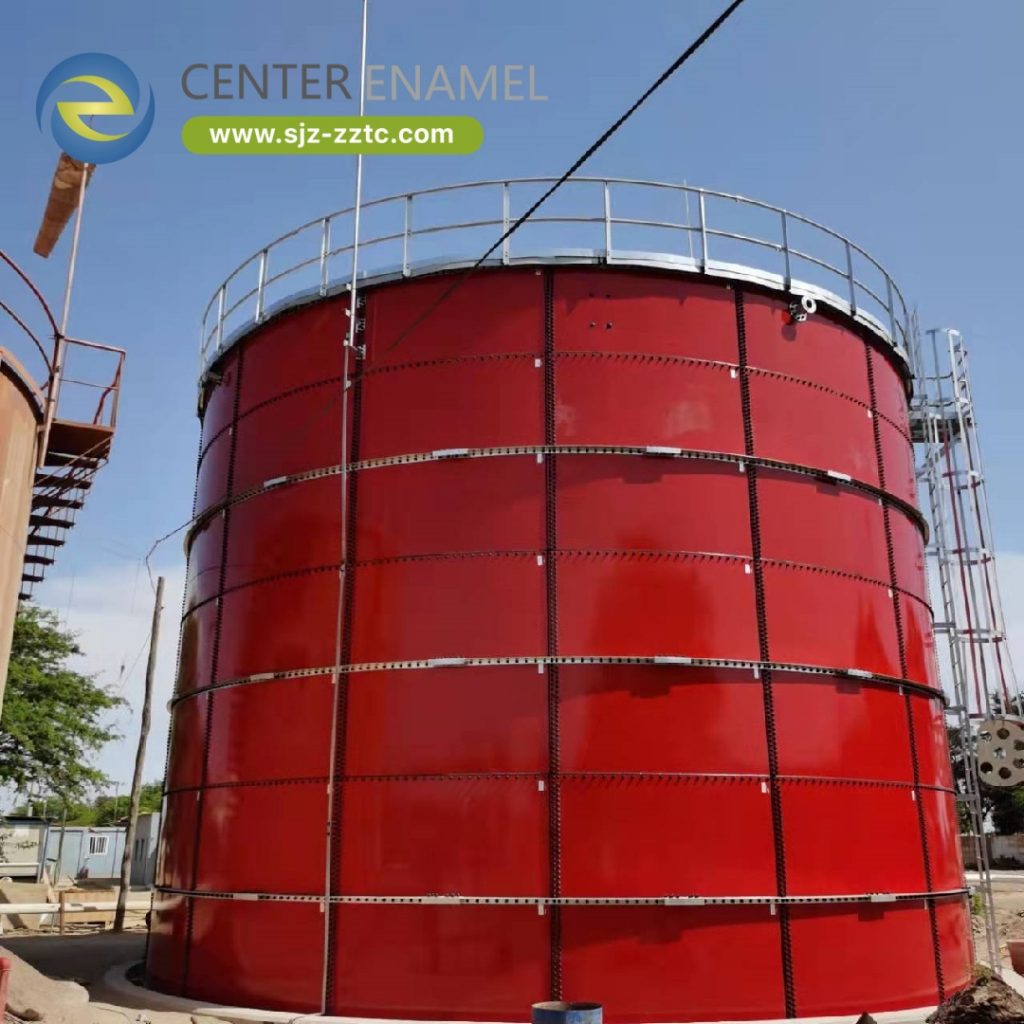
The Myanmar Slaughterhouse Wastewater Treatment Project sector is now a focal point for the Ministry of Natural Resources and Environmental Conservation (MONREC). As Myanmar strengthens its Environmental Conservation Law and implements stricter discharge standards for the Yangon and Bago river basins, Slaughterhouse Wastewater Treatment has transitioned from a basic hygiene requirement into a critical pillar of operational sustainability. Shijiazhuang Zhengzhong Technology Co., Ltd, recognized globally as Center Enamel, stands as the premier EPC Contractor to lead this transformation. We provide comprehensive turnkey solutions that transform high-strength organic waste into a stable, compliant resource, ensuring every project contributes to Myanmar’s industrial green growth.
The Anatomy of Slaughterhouse Wastewater: A High-Strength Challenge
A successful Myanmar Slaughterhouse Wastewater Treatment Project must address the extreme biological and chemical characteristics of meat processing effluent. Slaughterhouse waste is among the most challenging organic streams to treat:
Extreme Organic Load: Effluent from slaughtering and deboning features Chemical Oxygen Demand (COD) levels typically ranging from 5,000 to over 20,000 milligrams per liter, primarily due to blood, dissolved proteins, and fat.
High Fats, Oils, and Grease (FOG): Residual animal fats and tallow create a high FOG content that can clog traditional aeration systems and cause severe odor issues in open lagoons.
Nutrient and Nitrogen Spikes: High levels of Total Kjeldahl Nitrogen (TKN) and Phosphorus from blood and manure wash-down require specialized biological treatment to prevent eutrophication in local waterways.
Pathogen and Solid Management: The presence of feathers, hair, grit, and high bacterial loads necessitates a EPC Contractor with the expertise to design multi-stage sterilization and separation systems.
As an experienced global leader, Center Enamel designs integrated systems that utilize high-rate anaerobic digestion and advanced aerobic polishing to stabilize these pollutants. Our solutions replace land-intensive, odor-prone ponds with precision-engineered reactors that maximize efficiency and minimize the factory’s environmental footprint.
Advanced Treatment Technologies for Myanmar’s Industrial Abattoirs
Center Enamel integrates world-class configurations into our turnkey solutions to manage the specific needs of Myanmar’s livestock processors:
1. CSTR Process (Completely Stirred Tank Reactor)
The CSTR Process is the gold standard for slaughterhouses where manure and blood-rich slurry are processed together.
Mechanism: High-torque mechanical stirring ensures the thick organic slurry and the active microbial biomass are completely mixed, preventing the formation of a "fatty crust" and ensuring stable digestion.
Application: Ideal for large-scale cattle and swine processing plants in Mandalay, where consistent biogas production is utilized for plant heating.
2. UASB Process (Upflow Anaerobic Sludge Blanket)
Mechanism: Wastewater flows upward through a dense blanket of anaerobic granular sludge. It is highly efficient for the liquid-heavy effluent generated during processing and floor washing.
Application: A robust and globally proven method used throughout Southeast Asia to handle high organic loads with a small vertical footprint.
3. IC Process (Internal Circulation)
The IC Process represents the pinnacle of high-rate anaerobic technology for high-volume processors.
Mechanism: It utilizes the biogas produced in the lower section of the reactor to drive a natural internal circulation, allowing for volumetric loading rates 3 to 5 times higher than traditional reactors.
Application: Perfect for modern industrial zones in Yangon where land footprint is restricted and high-efficiency COD removal is required.
4. Aerobic Polishing (SBR/MBR)
To meet the most stringent 2026 discharge standards, we integrate Sequencing Batch Reactors (SBR) or Membrane Bioreactors (MBR) to polish the anaerobic effluent, ensuring low BOD and nitrogen levels for final discharge.
Technical Foundation: Engineering Resilience for Myanmar’s Climate
The success of a Myanmar Slaughterhouse Wastewater Treatment Project depends on the durability of the hardware under the nation's unique conditions: from the intense tropical humidity to the corrosive nature of animal waste. Center Enamel’s turnkey solutions are built on world-leading material science.
1. Glass-Fused-to-Steel (GFS) Tanks: The Indispensable Core
Our flagship GFS tanks are the global benchmark for slaughterhouse wastewater containment. By fusing high-tech glass enamel to specialized steel at temperatures exceeding 820 degrees Celsius, we create a molecular bond that is practically impervious to the environment.
Corrosion Resistance: Slaughterhouse wastewater is chemically aggressive. GFS tanks are naturally resistant across the pH 1 to 14 range, ensuring the tank walls do not corrode, leak, or fail despite constant exposure to organic acids and cleaning chemicals.
Thermal and Humidity Stability: Unlike concrete, which suffers from micro-cracking and seepage under Myanmar's intense humidity and monsoons, GFS tanks maintain structural integrity and a gas-tight seal for decades.
Seismic Resilience: Parts of Myanmar are seismically active. Our GFS tanks are designed with flexible bolted joints that offer superior performance compared to rigid, heavy concrete structures.
2. Fusion Bonded Epoxy (FBE) Tanks: Specialized Support
As an EPC Contractor, we utilize Epoxy Coated Tanks for auxiliary stages such as equalization and treated water storage. Our electrostatic powder coating ensures a defect-free barrier, providing a cost-effective yet durable containment solution.
3. Resource Recovery: Powering the Circular Economy
Biogas Capture: Our anaerobic reactors are equipped with double-membrane gas holders to capture methane. In Myanmar’s energy-conscious industrial market, this biogas can be converted into renewable electricity or used as thermal energy for the rendering process.
Aluminum Dome Roofs: Naturally resistant to corrosive atmospheres, these roofs protect treatment stages from heavy monsoon rainwater dilution, ensuring the system remains efficient year-round.
The Center Enamel Advantage: Why We are the Preferred EPC Partner
In the execution of a turnkey solutions project, the reliability and engineering depth of the EPC Contractor determine the project's long-term ROI.
Asia’s Largest Manufacturing Base: Center Enamel operates the largest and most professional GFS tank production base in Asia, ensuring precision engineering and on-time delivery for projects across Myanmar.
R&D Excellence: We possess over 200 patented enamel formulas and produce our own enamel frit, ensuring our tanks handle the specific chemical aggressiveness of meat-processing organic acids.
Strict Quality Control: Our products comply with ISO 28765, AWWA D103-09, OSHA, and NSF/ANSI 61. Each plate undergoes a 1500 volt high-voltage spark test to ensure zero defects in the coating.
Standard-Setting Authority: As the primary drafter of the China GFS Tank Industrial Standard, Center Enamel defines the quality benchmarks that the global industry follows.
Refined Installation Process: Fast-Track Deployment in Myanmar
Logistics in Myanmar require efficiency and speed. Center Enamel's installation process is engineered for these constraints.
The Jacking System Technology: We utilize a hydraulic jacking system for "top-down" installation. This eliminates the need for high-altitude scaffolding and allows for installation in tight spaces or remote sites where heavy cranes cannot operate effectively.
Zero On-site Welding: All components are prefabricated. On-site installation is a physical assembly using high-strength bolts, eliminating the risk of weld failure caused by Myanmar’s high humidity or dust.
Rapid Commissioning: Our bolted tanks are ready for operation much faster than traditional concrete methods, allowing processors to meet environmental compliance deadlines significantly faster.
Global Project Excellence: Case Studies and Proven Performance
Southeast Asia Industrial Success: Center Enamel has successfully delivered numerous wastewater treatment systems for the region's largest livestock and food producers, proving our ability to navigate tropical and humid climates.
Large-scale EPC Turnkey Projects: We have completed projects with treatment capacities exceeding 10,000 cubic meters per day, proving our ability to scale with the largest industrial integrations.
Cangzhou Integrated Wastewater Cluster: Demonstrating our ability as a Turnkey Contractor to manage massive utility clusters with 13 units of GFS tanks in a complex environment.
Partnering for a Sustainable Myanmar Livestock Industry
The future of the Myanmar Slaughterhouse Wastewater Treatment Project sector depends on the successful integration of production efficiency and environmental integrity. Shijiazhuang Zhengzhong Technology Co., Ltd (Center Enamel) is the EPC Contractor that provides the turnkey solutions required to achieve this balance. From our advanced anaerobic reactors to our durable GFS Tanks, we offer the most resilient infrastructure for the modern abattoir.
By choosing Center Enamel, Myanmar’s industrial leaders are securing a partnership with a global authority dedicated to engineering excellence, energy independence, and the long-term prosperity of the nation’s agricultural and industrial sectors.